Warning Signs Your Doctor May Recommend Advanced Imaging
Talk to Health Expert

Dr. Nikunj Jain
Co-Founder and HOD - Nuclear Medicine ,MBBS, DRM, DNB, FEBNM, FANMB, Dip. CBNC
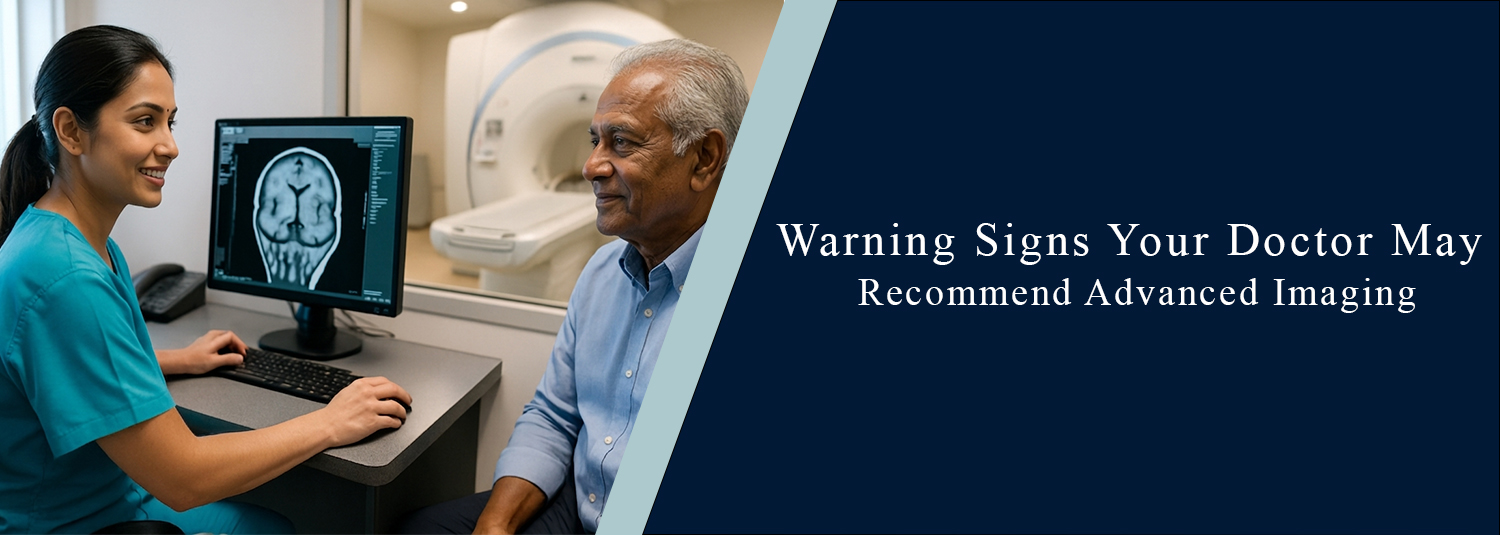
Modern medicine relies heavily on accurate diagnosis, and sometimes basic tests or physical examinations are not enough to understand what is happening inside the body. In such instances, the physicians can recommend high-level imaging tests such as a CT scan, MRI, PET-CT, or ultrasound to have a better picture.
Recognizing the warning signs that may lead your doctor to suggest advanced imaging can help you seek timely medical attention and avoid delays in diagnosis.
Persistent or Unexplained Pain
One of the most frequent periods when a doctor is visited is as a result of pain. The pain passes most of the time; however, when the pain is persistent, and you fail to understand its causes, then it could be something deeper.
Doctors can request imaging in case of pain:
lasts several weeks
gets worse over time
not ill enough to be done with medicine.
Problems such as swelling, tumors, nerve problems, or hidden injuries can be identified through imaging.
Unexplained Weight Loss
Weight loss without any food or physical activity may be an indication of a disease. It may refer to an issue with metabolism, chronic infection, or cancer. In such instances, the use of imaging testing like CT or PET-CT may be used to detect obscured issues within the body.
Abnormal Blood Test Results
Blood tests provide indications but do not always indicate the precise problem.
If your blood work shows:
high tumor markers
Liver or kidney malfunctions.
indications of infection or enlargement.
Your physician might request an examination to determine the location of the issue.
Persistent Headaches or Neurological Symptoms
Regular headaches, confusion, seizures, vision or speech changes should be addressed. Those doctors can also request MRI or CT scanning so that they can examine the brain, blood vessels of the brain, or to locate any possible tumor or bleeding. Problems can be detected before they deteriorate by examining the images at an early stage.
Difficulty Breathing or Chest Pain
Difficulty in breathing or pain in the chest could signify problems in the lungs or the heart. Imaging may look for:
lung infections or lumps
blood clots
heart issues
Speed in imaging is of great importance since there are conditions that may pose a life-threatening situation.
Unusual Lumps or Swelling
Any mass, swelling, or new lump must be examined. The imaging displays its size, location, whether it is harmless or cancerous, and whether it has spread or not. It is beneficial to diagnose it at an earlier stage to facilitate treatment, particularly with cancer.
Digestive Issues That Don’t Improve
Continued gastrointestinal issues, such as stomach pain, bloating, vomiting, or bowel movements, are possible requiring additional tests. The gut disorders, liver or pancreatic issues, tumors, or blockages can be detected with imaging. In case medicine is not effective, imaging is required.
Injury or Trauma
Damage to the inside may not be visible on the surface after an accident or injury. Physicians perform imaging of possible breaks of bones, internal hemorrhaging, or damaged organs. CT and MRI have found special applications in emergencies to determine the level of damage.
Monitoring Known Medical Conditions
Known conditions may require regular imaging in order to monitor how they are progressing. This applies to cancer patients undergoing treatment, individuals with chronic illnesses, or those returning to surgery. Imaging monitors the effectiveness of the treatment, as well as identifies the relapses or issues.
When Basic Tests Are Inconclusive
Even basic tests such as X-rays, blood tests, or ultrasound do not provide a definite answer sometimes. He or she is then taken to be given a sharper examination by doctors, depending on sophisticated imaging. The tests are more detailed and are able to identify issues that would have been missed by simple tests.
Importance of Early Imaging
Diagnosis and treatment may be late if you overlook the warning signs. Improved imaging allows physicians to detect diseases at an early stage and have more success in treating them. It is also beneficial in avoiding problems by providing the right details.
Conclusion
Modern medicine is very keen on advanced imaging since it displays the interior part of the body in detail. Being aware of the signs of warning that require imaging will result in a timely diagnosis and treatment. You should see a doctor and listen to their ideas in case you have constant symptoms, unusual blood analysis, or you cannot describe the changes in your health.
Frequently Asked Questions
In News
Get Our Mobile App
for Easy Access
Book tests, view reports, and manage your health records on the go. Experience convenient healthcare with Molecular Diagnostics and Therapy.
- ✔ Book tests & home collection
- ✔ View reports instantly
- ✔ Track health history
- ✔ Get notifications & reminders
- ✔ Easy appointment management