Best PET-CT Scan in India: How to Choose the Right Diagnostic Centre
Talk to Health Expert

Dr. Nikunj Jain
Co-Founder and HOD - Nuclear Medicine ,MBBS, DRM, DNB, FEBNM, FANMB, Dip. CBNC
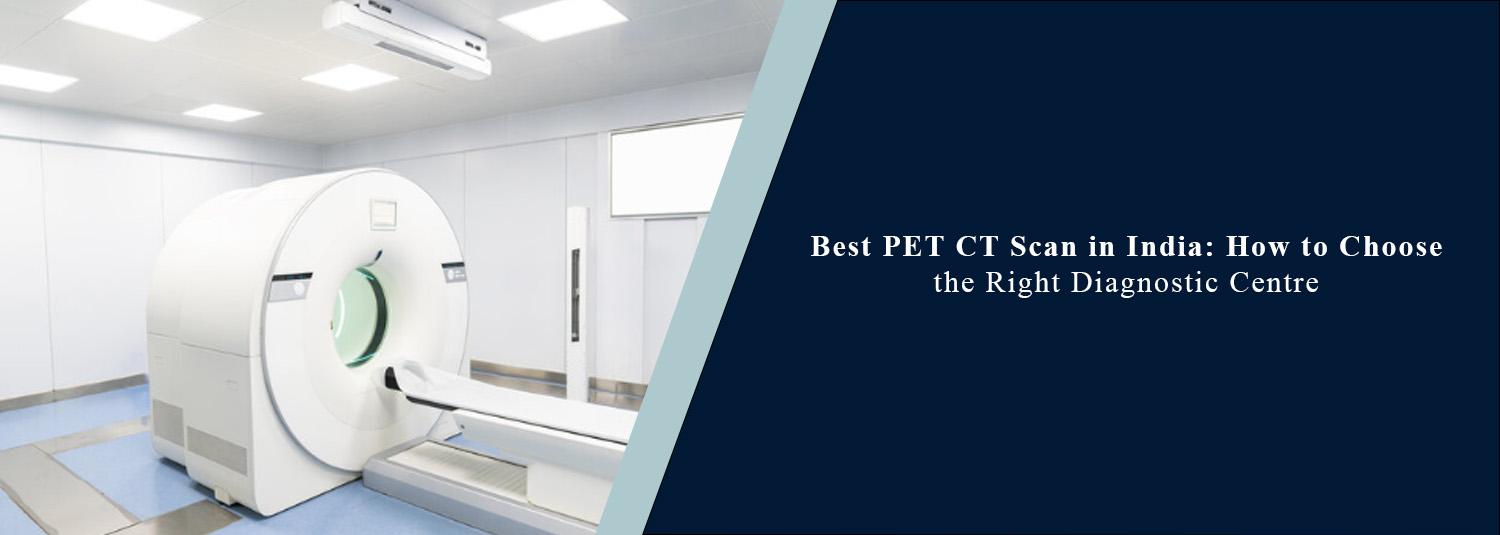
A PET-CT scan is a significant imaging
procedure in the treatment and diagnosis of cancer and certain other diseases,
such as heart problems and brain tumors. It involves a combination of the
specially developed Positron Emission Tomography (PET), which reflects the
metabolic or functional process of a tissue, with the Computed Tomography (CT),
which reveals the structure of the body. These two types of imaging provide
doctors with a lot of information about disease activity and location.
The selection of the diagnostic centre
is an important decision when a doctor recommends a PET-CT scan. Patients tend
to compare centres as far as cost is concerned, location, machine used for the
treatment, the report time, and reviews. But there are a few other things to
note. All factors related to the experience of the medical team, quality
standards, type of PET-CT technology, availability of radiotracer, patient
preparation, and reporting process. Patients should not be swayed by a specific
centre just because they advertise the "best PET-CT scan in India,"
but they should understand the traits of a reliable and fit centre for their
needs.
What Makes a PET-CT
Centre a Good Choice?
The ideal PET centre needs adequate
technology, qualified nuclear medicine specialists and technologists, safe
practices, and a report workflow for patients. Unlike a traditional CT scan,
PET-CT is a special scan that uses a radioactive substance (tracer) and
specific preparation. Some PET scans are sensitive to certain conditions, such
as blood sugar, recent eating and drinking, medications, and medical history,
and must be done at the right time. Hence, the quality of the whole PET-CT
process is critical, and it's not only the scanner.
1. Check the Centre's
Accreditation and Quality Standards
The first thing patients do is check
whether the diagnostic centre has recognised quality certificates or
accreditation. Accreditation certifies that a centre meets established
requirements for various elements of the centre, including equipment,
processes, documentation, and patient care, as well as quality management.
Patients get to know about the accreditation status of the centre by enquiry
rather than just from the advertisement. Molecular Diagnostics and Therapy,
Centres of Diagnosis is NABH accredited, and Laboratory services are NABL
certified.
2. Look at the PET-CT
Technology Available
There have been many advances in PET-CT
technology over the years. The deliberate objective of Digital PET-CT systems
is precise imaging, along with efficient scanning. But one cannot base their
selection of the centre merely on the name of the machine. The scanner needs to
be well maintained and cared for by trained technologists, and the centre
should adhere to imaging and radiation-safety procedures. Molecular Diagnostics
and Therapy offers services for PET-CT that feature advanced PET-CT technology
such as GE Discovery IQ technology. It's also available for the whole body and
by organs through PET-CT on its website.
3. Check Whether the
Centre Offers the PET-CT You Need
PET-CT Scans are not all equal. Many
cancer examinations rely on FDG PET-CT, and there are other special types of
PET-CT, depending on the kind of cancer suspected and the purpose of the PET-CT
scan. Some patients receive PET scans using the tracers PSMA, DOTA, DOPA, or
more.
Please be sure to know that the
diagnostic centre carries out the precise scan specified on a prescription
before you make a booking. The selection of tracer and scan protocol should
depend on the medical needs of the patient. Patients are more easily able to
access a centre providing a broad spectrum of PET-CT exams. Molecular
Diagnostics and Therapy is intended for displaying special services such as
FDG, PSMA, DOPA, DOTA PET-CT.
4. Consider the
Experience of the Nuclear Medicine Team
It is not only about operating a
scanner - PET-CT. The PET is used to get functional information, and the CT is
used to get anatomical information, then interpreted by the nuclear medicine
specialist. The final reporting to be prepared by appropriately trained
specialists who are familiar with the clinical history of the patient and the
indication for examination.
As stated by RadiologyInfo, a PET-CT
report is read by the radiologist or a physician with a special interest in
nuclear medicine, and a copy of the report is sent to the referring physician.
Patients are thus able to enquire about the training and experience of doctors
at the centre that interpret the PET-CT pictures.
5. Ask About the
Radiotracer
A PET-CT exam is a very important part
that utilizes the radiotracer. There are various tracers, and they're intended
for various clinical uses. FDG is widely used, for instance, because it has the
same metabolic characteristics as glucose and will mark regions of enhanced
metabolic activity. There are other tracers that selectively bind to a certain
pathological process, which are also employed for specific cancers and for some
other processes. If you are considering having a PET-CT scan, verify the type
of tracer they are performing the scan with and if it is the right scan to have
for your doctor's directions.
6. Check the
Preparation Instructions
A reliable PET-CT centre should clearly explain how you need to prepare
for the examination. For many whole-body PET-CT scans, patients are asked to
avoid food for several hours before the scan. Sugary or calorie-containing
drinks may also need to be avoided, while water is generally allowed. Patients
with diabetes may require specific instructions. The centre should also ask
about relevant medical conditions, medications, allergies, pregnancy or
breastfeeding where applicable. Molecular Diagnostics and Therapy currently
advises patients undergoing its Digital PET-CT service to fast for 4–6 hours
and provides additional preparation instructions depending on the patient's
situation.
7. Ask How Long the
Complete Procedure Takes
Patients should understand that the total PET-CT appointment is usually
longer than the actual scanning time. After the radiotracer is administered,
the patient generally needs to wait while the tracer circulates and is taken up
by tissues. RadiologyInfo states that this commonly takes around 30–60 minutes,
followed by imaging that generally takes about 20–30 minutes, although the
total time varies depending on the examination. Some specialised examinations
may take longer. A good centre should explain the expected duration beforehand
so patients can plan accordingly.
8. Compare the PET-CT
Scan Cost Carefully
PET-CT scan cost is an important consideration, but the lowest price
should not automatically be the deciding factor. The cost can vary depending on
the radiotracer, type of scan, body area being examined, CT protocol, contrast
requirements, and other services included in the examination. For example,
Molecular Diagnostics and Therapy currently lists different prices for
different PET-CT examinations, including whole-body PET-CT, PSMA PET-CT, DOPA
PET-CT, and cardiac PET-CT. Its published Digital PET-CT pricing starts at
₹9,999 for selected services. When comparing prices, ask what is included in
the quoted amount. This can help avoid confusion about additional charges.
9. Check Report
Turnaround Time
For patients undergoing cancer treatment, PET-CT reports can be an
important part of treatment planning and follow-up. Therefore, report
turnaround time may be an important factor when selecting a centre. However,
fast reporting should not come at the expense of proper image review and
interpretation. Molecular Diagnostics and Therapy states that its Digital
PET-CT service offers reports within 4–6 hours for the listed service, although
the actual reporting time can depend on the examination and clinical
circumstances. Patients should confirm the expected report time at the time of
booking.
10. Consider the
Centre's Location and Accessibility
PET-CT appointments can take several hours because of preparation, tracer
administration, waiting time, and imaging. Choosing a centre that is reasonably
convenient to reach can make the experience easier, particularly for elderly
patients or people undergoing repeated cancer scans. Molecular Diagnostics and
Therapy currently lists PET-CT facilities across locations including Delhi,
Ghaziabad, Noida, Gwalior, and Dehradun, with multiple diagnostic centres
across its network. Patients should choose a location that is convenient
without compromising the quality and suitability of the required examination.
11. Read Patient
Reviews, but Do Not Rely on Them Alone
Online reviews can help you understand a centre's staff behaviour,
cleanliness, appointment experience, waiting time, and general patient
experience. However, reviews should not be the only basis for choosing a PET-CT
centre. A centre's accreditation, medical team, technology, safety practices,
tracer availability, and reporting process are more important when making a
healthcare decision. It is also useful to check whether the information on the
centre's official website is current and clearly explains its services.
12. Ask About
Radiation Safety
PET-CT involves radiation from both the radiotracer and the CT
component. The amount used is selected according to the examination, and the
benefits of medically appropriate imaging generally outweigh the relatively low
radiation risk. A good diagnostic centre should follow appropriate
radiation-safety practices and use suitable protocols. Patients should also
inform the medical team if they are pregnant or breastfeeding, as special
considerations may apply.
Why Molecular
Diagnostics and Therapy Can Be Considered for PET-CT?
Molecular Diagnostics and Therapy provides Digital PET-CT services along
with specialised PET-CT examinations. The organisation lists advanced PET-CT
technology, nuclear medicine specialists, NABH accreditation, and
NABL-certified laboratory services among its facilities and quality
credentials. Its PET-CT services include whole-body and specialised examinations,
with locations across Delhi NCR and other cities. Patients can discuss their
prescription with the centre to understand the appropriate tracer, preparation,
procedure, availability, report time, and current charges before booking.
Questions to Ask
Before Booking a PET-CT Scan
Before finalising a diagnostic centre, patients can ask a few simple
questions. Is the centre accredited? Which PET-CT scanner is being used? Is the
prescribed tracer available? Who will interpret the scan? What preparation is
required? How long will the complete appointment take? What is included in the
quoted price? When will the report be available? Getting clear answers to these
questions can help patients make a more informed choice.
Conclusion
When it comes to finding the best PET-CT scan centre in India, it's not just because of its newest machine or because it's at the lowest cost. A dependable diagnostic centre should offer appropriate PET-CT technology, medical staff trained in the use of the equipment, standards for the quality of the device and procedures, suitable radiotracers, appropriate patient preparation, radiation-safety practices, and reliable reporting. It should be noted that the centre should also be equipped to provide the specific PET-CT scan that is recommended by the doctor. It can be easier to know if the accreditation, technology, medical expertise, preparation support, report time, location, and total cost are comparable to your choice. Using cutting-edge imaging technology and qualified nuclear medicine physicians, Molecular Diagnostics and Therapy provides Digital PET-CT and Specialised PET-CT capabilities in various locations.
Frequently Asked Questions
In News
Get Our Mobile App
for Easy Access
Book tests, view reports, and manage your health records on the go. Experience convenient healthcare with Molecular Diagnostics and Therapy.
- ✔ Book tests & home collection
- ✔ View reports instantly
- ✔ Track health history
- ✔ Get notifications & reminders
- ✔ Easy appointment management