Common Reasons Doctors Recommend Repeat CT Scans
Talk to Health Expert

Dr. Nikunj Jain
Co-Founder and HOD - Nuclear Medicine ,MBBS, DRM, DNB, FEBNM, FANMB, Dip. CBNC
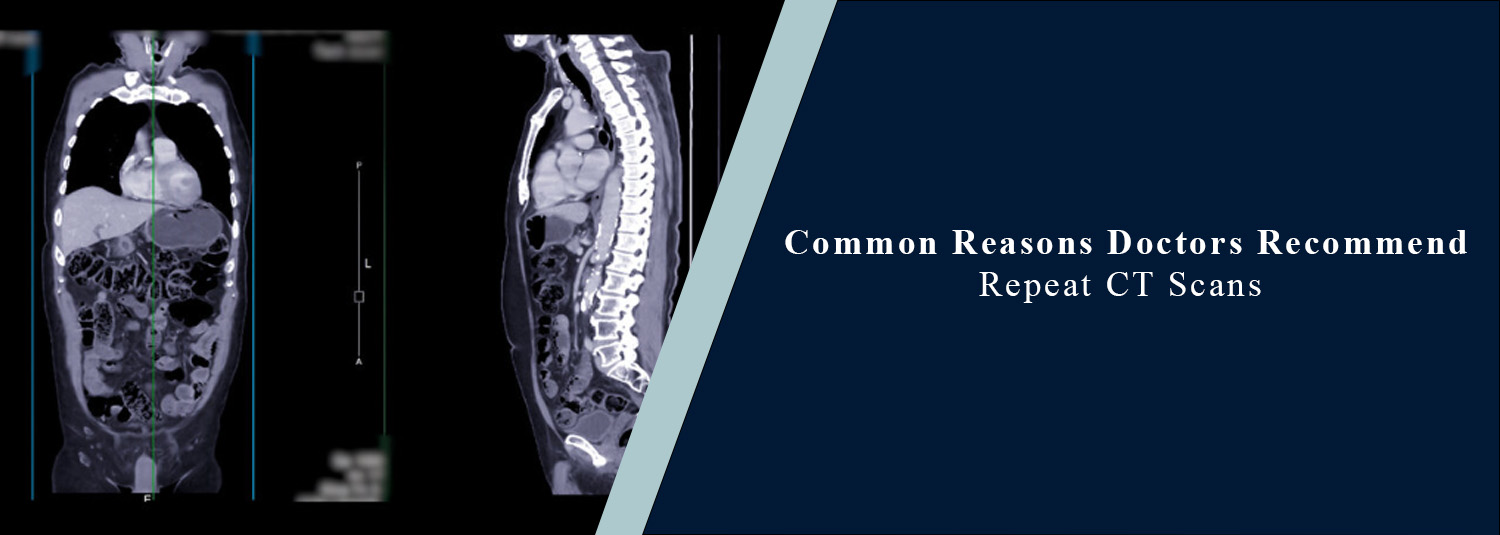
A computed tomography (CT) scan is one of the best imaging studies today to diagnose, monitor, and assess many illnesses. It gives a detailed picture of bones, organs, blood vessels, and soft tissues, which enables doctors to make accurate treatment decisions. Many patients only require a single CT scan, but in certain cases a second scan may be performed. Some people fear that if their condition requires another scan, then they are getting worse. However, repeat procedures are a common routine of medical treatment. They assist physicians in tracking healing, recovery, and how effective the treatment is, comparing past results and identifying new changes. Patients can feel more at ease when they know why they are undergoing repeat CT scans, learn about what kinds of questions CT scans ask of the body, how to prepare for a CT scan, the actual process of doing a CT scan, the information that the CT scan provides, what the CT scan radiation is, and potential side effects from CT scans. At Molecular Diagnostics and Therapy, the use of sophisticated CT imaging technology, as well as skilled and experienced radiologists, creates dependable diagnostic reports for the maximised use of which doctors can draw treatment conclusions.
What Is a CT Scan? A computed tomography (CT) scan is an advanced imaging test that uses X-rays and computers to make detailed cross-sectional pictures of the body. A CT scan usually gives much better images of the organs, blood vessels, bones, muscles, and soft tissues than one would get in a regular X-ray. It can be used to diagnose injuries, infections, tumors, internal bleeding, kidney stones, lung diseases, and a variety of medical conditions.
Why Are Repeat CT Scans Sometimes Necessary?
There is no other intention of doctors taking repeat CT scans unless they have a medical reason. A repeat or follow-up scan is not done unless more information is required to follow up a condition, determine how the treatment is going, or look for new symptoms. A new image can then help the doctor determine if a condition is getting better, staying the same, or getting worse.
Monitoring Cancer Treatment
Cancer care has been a very common reason for repeat scans. Patients might get repeat CT scans to check the effectiveness of the chemotherapy, radiation therapy and/or targeted treatment. Physicians measure a patient's tumours and classify them as grown, unchanged, or shrunk. These are "re-check" scans, to help with planning future treatments.
Checking Recovery After Surgery
After surgery, many patients have a repeat CT scan. The scan assists doctors in ensuring surgery is healing well and that there aren't any complications like infection, fluid pockets, bleeding, or problems in healing. Prompt treatment can be achieved because of early detection of complications.
Evaluating Injuries
Some patients who do have severe accidents or fractures may need some follow-up CT scans. When repeated imaging is performed, a doctor will be able to determine if your bones are healing, if there are internal injuries, and if further treatment or surgery is required. This is common in patients with head trauma, spine trauma, chest trauma, and abdominal trauma.
Monitoring Lung Conditions
Patients who have lung diseases are often advised to have repeated CT scans. Periodic imaging may be needed if a patient is diagnosed with conditions that could result in pneumonia, lung nodules, pulmonary fibrosis, tuberculosis, or chronic lung disease to assess clinical recovery or disease progression. It is good to compare previous to current scans because it gives a lot of information regarding how effective the treatment is.
Following Up on Kidney Stones
Kidney stones are very often evaluated using a CT scan. A follow-up CT scan might be wanted after treatment to see if the stone has passed, shrunk, or is still blocking the urinary tract. This assists physicians in determining if further treatment is needed.
Investigating New Symptoms
Patients may complain of new symptoms following a previous diagnosis. A repeat CT scan may be ordered to determine the cause if pain gets worse, the swelling grows, or if a fever develops or new neurological symptoms occur. A follow-up imaging may reveal any other complications or conditions that may not have existed during the initial imaging.
CT Scan Test Details
You lie on a table that moves through the ring-shaped CT scanner during the scan. The machine rotates around you, taking a detailed picture from different angles. Scans typically last from 10 to 30 minutes, depending on the body part being scanned. Contrast dye will be required for some tests to give better quality images.
CT Scan Preparation
In some cases, your doctor might recommend fasting for a few hours prior to a scan using contrast dye. Wear loose clothing and take off jewelry, watches, belt, and other fabrications that have metal. Tell your health care provider if you are pregnant, if you have kidney disease, diabetes, an allergy, or if you had a reaction to contrast materials before. Preparing according to instructions guarantees top-quality pictures.
CT Scan Procedure
The CT scan procedure is very easy, fast, and painless. For the exam, you lie nearly still your body and the instruments that are used on you are positioned in order to let the scanner capture images. You may be asked to hold your breath for a short period of time in some scans to get better quality images. Patients generally can resume their daily routine after the exam unless suggested by the examiner.
Understanding Your CT Scan Report
Following the scan, a radiologist thoroughly examines the images and writes a report for the CT scan. The report includes a description of the appearance of the organs examined and whether abnormalities in the organs were observed, for example, infections, fractures, tumors, bleeding, inflammation, and other anomalies. Your doctor reviews the report with you and decides if more treatment or imaging tests are needed.
Understanding CT Scan Radiation
Radiation from the CT scan is a worry to many patients. X-rays are used in CT scans, and there is not a great deal of radiation. But the new CT scanners remain optimized to deliver the minimum dose of radiation while delivering high-quality images. Repeat CT scans are only recommended when it is believed they benefit the patient more than they will harm them with radiation.
Are There Any CT Scan Side Effects?
For most patients, a CT scan does not cause any side effects. If contrast dye is used, some people may experience a temporary warm sensation or a metallic taste in the mouth. Rarely, allergic reactions to contrast material may occur. Patients with kidney disease should inform their doctor before receiving contrast because additional precautions may be necessary.
Choosing the Right CT Imaging Centre
If you are searching for a reliable CT scan service, choose a diagnostic centre with advanced imaging technology, experienced radiologists, and accurate reporting. High-quality imaging helps doctors compare previous scans accurately and make the best treatment decisions.
Conclusion
There are many legitimate medical reasons for repeat CT scans, such as monitoring for recovery, to see how treatment is working, to assess injuries, and to determine if the patient has new symptoms. When you know what the CT scan procedure is, how the CT scan works, what is involved in preparing for the scan, what is involved in the actual scanning, what the report will mean, the level of radiation involved, and the potential side effects of having a CT scan, it may help to reduce anxiety about the test. Molecular Diagnostics and Therapy offers state-of-the-art CT scan technology, knowledgeable radiologists, and precise diagnosis reports, which are essential for timely diagnosis and effective treatment of patients.
Frequently Asked Questions
In News
Get Our Mobile App
for Easy Access
Book tests, view reports, and manage your health records on the go. Experience convenient healthcare with Molecular Diagnostics and Therapy.
- ✔ Book tests & home collection
- ✔ View reports instantly
- ✔ Track health history
- ✔ Get notifications & reminders
- ✔ Easy appointment management