DTPA Renal Scan: Procedure, Uses, Preparation & Cost in India
Talk to Health Expert

Dr. Nikunj Jain
Co-Founder and HOD - Nuclear Medicine ,MBBS, DRM, DNB, FEBNM, FANMB, Dip. CBNC
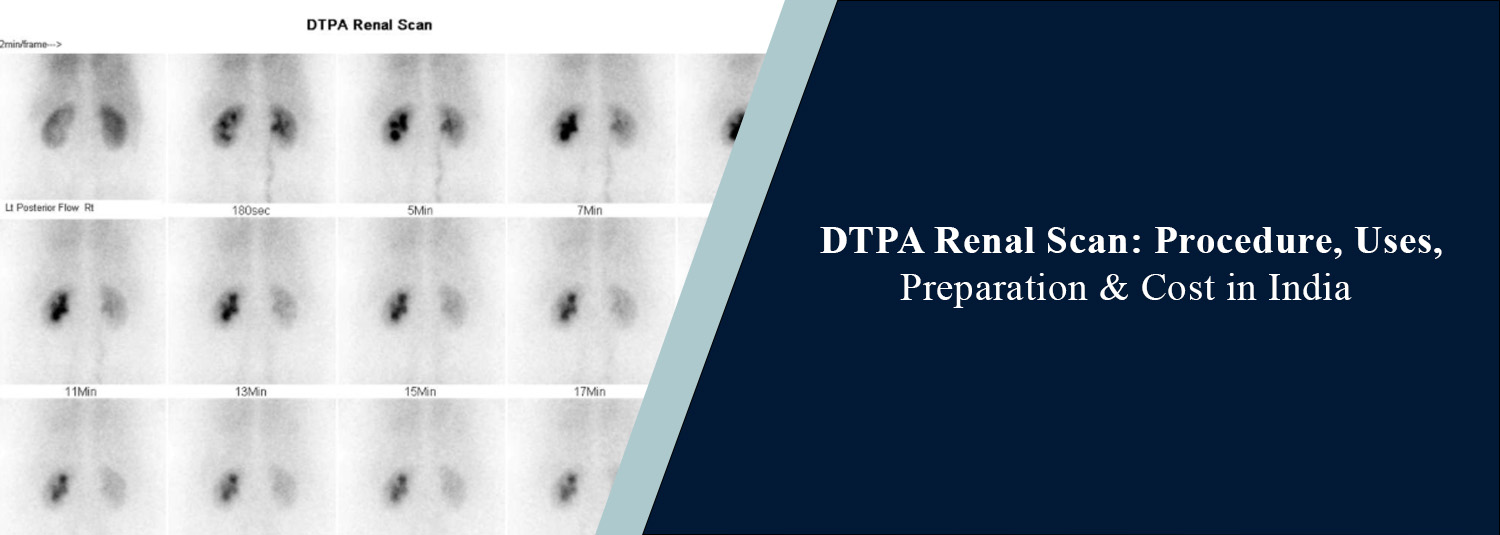
A DTPA Renal Scan is a nuclear medicine
exam that evaluates the function of both kidneys and how the body clears urine.
A DTPA kidney scan provides information about each kidney's function on an
individual basis, whereas some imaging tests show only kidney structure. It can
help doctors look at the health of the kidneys and drainage of urine, and at
other urinary issues. The DTPA renal dynamic scan is done to get more
information regarding kidney function and drainage at Molecular Diagnostics andTherapy.
What Is a DTPA Renal
Scan?
A DTPA Renal Scan is a dynamic renal
nuclear medicine examination. DTPA stands for diethylenetriamine pentaacetic
acid. A small dose of a radioactive substance that's marked with technetium-99m
is injected into a vein. When the tracer enters the kidneys, it is tracked by a
gamma camera, which allows it to be seen as the tracer circulates through the
kidneys and urinary system.
The images and computer-generated
measurements provide information on the delivery of blood to the kidneys, how
efficiently the tracer is filtered and excreted by the kidneys, and its
elimination through the urine. A DTPA scan can also be used to get information
about the function of each individual kidney and can be helpful when the doctor
wishes to compare the performance of the right and left kidneys.
Why Is a DTPA Renal
Scan Done?
A doctor may recommend a DTPA Renal Scan when information about kidney
function or urine drainage is needed. Common uses of a DTPA kidney scan
include:
- Assessing
the function of the right and left kidneys separately
- Evaluating how efficiently the kidneys filter
and excrete the tracer
- Assessing urinary drainage
- Helping evaluate suspected obstruction in the
urinary tract
- Assessing certain kidney-related problems
associated with high blood pressure
- Evaluating kidney function in selected
patients before or after treatment
- Providing functional information when other
kidney tests do not give enough information
Renal scintigraphy can provide information about both kidney function
and urine excretion, which may not be available from structural imaging alone.
The exact reason for the scan depends on the patient's symptoms, medical
history, and other test results.
DTPA Scan Procedure
The DTPA scan procedure generally involves the following steps:
1. Registration and
Preparation
The nuclear medicine staff may talk to
you about your past health history, medications, and past reports before the
scan. Patients may need to drink water prior to the exam (except when your
doctor has limited how much water you drink).
2. Injection of the
Tracer
A small quantity of radioactive tracer
is injected into a vein (typically in the arm). The tracer is then circulated
through the blood to the kidneys.
3. Kidney Imaging
A gamma camera is placed over you as
you lie comfortably on an imaging table, which records images of the kidneys.
The camera looks at all radiation that is emitted from the tracer and captures
a series of images as the tracer passes through the kidneys and urinary system.
4. Computer Analysis
A computer is used to analyze the
images recorded. This enables the nuclear medicine specialist to evaluate
kidney function and drainage and, if necessary, compare the contribution of
both kidneys.
Sometimes special medications are
given, or dynamic imaging may be performed to assess tracer drainage through
the collecting system and ureters, depending on the reason for the exam.
DTPA Renal Scan
Preparation
Preparation for a DTPA renal scan may
differ depending on the purpose of the exam and the patient's health. Patients
who undergo a DTPA renal dynamic scan, listed by Molecular Diagnostics and
Therapy, are not advised to fast and are advised to have meals and to drink
adequate fluid, unless there is a fluid restriction. The centre reports in
12-24 hours. In general, patients should:
- Follow
the specific instructions provided by the nuclear medicine centre.
- Drink adequate water unless fluid intake has
been restricted by a doctor.
- Inform the doctor about medicines being taken.
- Inform the medical team about any recent
illness or medical condition.
- Tell the doctor or technologist if there is
any possibility of pregnancy or if you are breastfeeding.
Some medications may need special consideration depending on the type of
renal scan being performed, so medicines should not be stopped without medical
advice.
How Long Does a DTPA
Kidney Scan Take?
A DTPA kidney scan may be longer or
shorter depending on the patient's kidney function, the type of kidney scan,
and if imaging is required. Typically, the imaging of renal function lasts for
20-30 minutes, or repeated imaging takes place over a period of time, but the
length of time in the centre may be longer depending on preparation, etc. The
nuclear medicine team is able to indicate the duration based on the examination
expected to be done.
Is a DTPA Renal Scan
Safe?
A DTPA Renal Scan is a diagnostic
imaging technique that employs a tiny amount of radioactive substance. The
radiation doses used for nuclear medicine tests are low, and the benefits of
these tests are deemed to be greater than the small risk from the radiation
dose. The shot might sting a little or make the area slightly sore where it was
injected. There are very few allergic reactions seen to radiotracers. The
patient should let the medical staff know if he or she has had a prior response
to any other nuclear medicine exam or known allergies. The patient may be told
to drink plenty of fluids following the scan as the tracer substance is
excreted via the urine unless they have been restricted on fluids after the
scan.
What Is the
Difference Between a DTPA Scan and Other Kidney Tests?
Different kidney tests provide different types of information. An
ultrasound can show the size and structure of the kidneys and may help identify
conditions such as swelling or obstruction. CT and MRI can provide more
detailed anatomical information when needed. A renal nuclear medicine scan, on
the other hand, is particularly useful when the doctor needs information about
kidney function and urine drainage. Therefore, a DTPA scan does not necessarily
replace ultrasound, CT, MRI, or blood and urine tests. Your doctor may
recommend one or more tests depending on your symptoms and clinical condition.
DTPA Renal Scan Cost
in India
The DTPA Renal Scan cost can vary between cities, diagnostic centres,
facilities, and the specific type of renal scan performed. At Molecular
Diagnostics and Therapy, Ghaziabad, the listed price for a DTPA renal dynamic
scan is ₹7,000. The centre also lists good water intake if not restricted and
reporting within 12–24 hours. Patients should confirm the current price and
examination instructions with the diagnostic centre before booking, as charges
and protocols can change.
DTPA Renal Scan in
India at Molecular Diagnostics and Therapy
Molecular Diagnostics and Therapy provides nuclear medicine imaging
services, including the DTPA renal dynamic scan. The examination uses a
radiotracer and gamma camera to assess kidney function and urinary drainage.
Before undergoing the scan, patients should follow the instructions provided by
the medical team and bring relevant medical reports or previous kidney imaging
if advised.
Conclusion
DTPA can be used in some renal scintigraphy/diuretic renography settings, but MAG3 is often preferred over DTPA, particularly in patients with reduced kidney function, because it is cleared more efficiently and gives better image quality at low GFR. It is usually easy to prepare, but may differ depending on the patient's condition and the renal scan type procedure. The cost of a DTPA renal dynamic scan is ₹7000 at Molecular Diagnostics and Therapy, and reports are delivered by us in 12-24 hours.
Frequently Asked Questions
In News
Get Our Mobile App
for Easy Access
Book tests, view reports, and manage your health records on the go. Experience convenient healthcare with Molecular Diagnostics and Therapy.
- ✔ Book tests & home collection
- ✔ View reports instantly
- ✔ Track health history
- ✔ Get notifications & reminders
- ✔ Easy appointment management