DTPA Scan for Kidney Function: Procedure, Cost, and Benefits
Talk to Health Expert

Dr. Nikunj Jain
Co-Founder and HOD - Nuclear Medicine ,MBBS, DRM, DNB, FEBNM, FANMB, Dip. CBNC
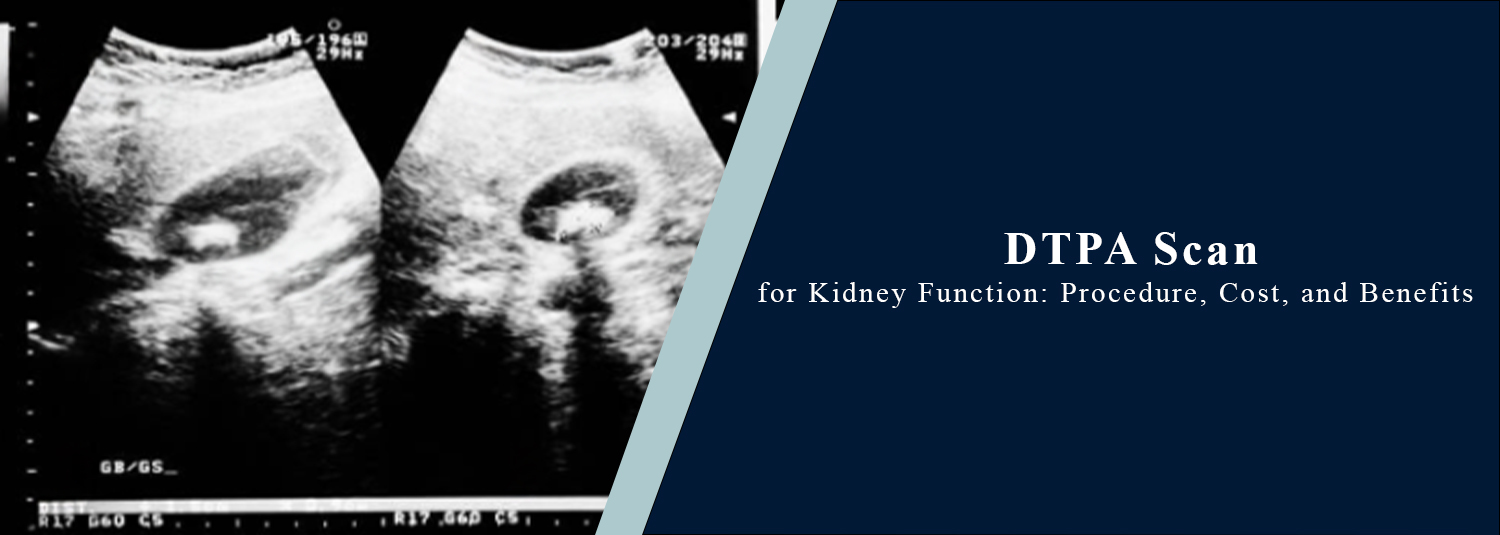
Kidneys are very crucial in ensuring overall well-being as they are involved in detoxifying waste products, balancing fluids, regulating electrolytes, and regulating blood pressure. Regardless of their significance, kidney issues tend to progress without any effect and can be characterized by unobservable signs in the initial phases. The condition might develop to an advanced stage by the time the symptoms are diagnosed.
This is the reason why diagnostic testing must be taken in time and correctly. One of the effective techniques that helps to determine the functioning of the kidneys in detail is a DTPA scan. It assists physicians in identifying abnormalities at a young age and taking the required measures to avoid additional complications.
What Is a DTPA Scan?
A DTPA (Diethylenetriamine Pentaacetate) scan is a special nuclear medicine test to evaluate the functionality of the kidneys as well as the functioning of the heart. It is associated with a small dose of radioactive tracer that is inserted into the bloodstream.
When injected, the tracer is transported to the kidneys, where it is removed by the urine. This process is followed by a gamma camera in real time, thereby enabling doctors to assess the performance of the kidney. In contrast to the traditional imaging tests, predominantly revealing structure in the imaging tests, a DTPA scan yields functional data, which is most useful in the diagnosis of conditions that have a relationship with the kidneys.
Why Is a DTPA Scan Done?
When it is necessary to determine kidney functionality more specifically, a DTPA scan should be used. It assists in the diagnosis as well as the monitoring of different diseases of the kidney. The test is recommended by doctors to assess:
General renal activity (Glomerular Filtration rate or GFR).
Blood circulation to the kidneys.
Obstructions of the urinary system.
Damage or decreased functioning of the kidneys.
The function of each kidney individually.
Kidney performance post-surgery or transplant.
This is particularly a good test to identify problems at an early stage before they lead to any observable symptoms.
Procedure of a DTPA Scan
A DTPA scan is an easy, painless, and least invasive procedure that typically lasts 30 to 60 minutes. It is carried out in a nuclear medicine department under the strict supervision of trained professionals.
The first step involves the injection of a small dose of radioactive tracer in one of the veins, typically in the arm. This tracer is distributed in the blood system, and it gets to the kidneys. A tracking camera records a photographic sequence on time as it passes through the kidneys.
You will be told to lie on a scanning table still, as the camera traces the movement of the tracer.
In other instances, a diuretic injection can also be administered during the test to test the flow of urine and any obstruction in the urinary tract. It is painless, but you will have to experience a small prick when injecting. The tracer exits the body in the form of urine after the scan in several hours. Mostly, increased intake of fluids is encouraged to get it convulsed sooner.
Cost of a DTPA Scan
DTPA scan costs may depend on, among others, the city, the diagnostic centre, and the technology used. The average cost in India lies between the following:
Affordability is crucial, but it is also necessary to find a reputable diagnostic centre that guarantees correct results and adequate safety standards, along with professional control.
Benefits of a DTPA Scan
A DTPA scan has a number of benefits regarding the assessment of the health of the kidneys. It is also one of its major advantages because it can give accurate and practical information regarding the kidneys. It is used to ascertain the efficiency with which the kidneys are processing the blood and eliminating the waste.
The other significant benefit is that it measures the kidneys individually. This will be especially practical in instances when either kidney is possibly performing lower than the other. It assists physicians in their more correct treatment decisions and diagnoses.
The treatment is non-invasive and fast, and tends to be safe. The quantity of emitted radiation is minimal, and it is believed that it is safe for most people. There is also no big preparation or recovery time necessary for the test. Another essential advantage is early detection. A DTPA scan has the ability to detect kidney malfunction at an early stage to enable medical action to be taken. This is capable of paying off complications and enhancing long-term results.
Who Should Consider a DTPA Scan?
A DTPA scan can be called upon those people who manifest signs of problems with their kidneys or might easily develop them. This involves individuals who are going through:
Continuous pain in the abdomen or the flank.
Pitting of the legs or face.
Problems with urinating or pain.
Frequent urinary infections
Hypertension is associated with renal issues.
It is also recommended for those patients requiring an examination before kidney surgery, following a transplant, or to monitor the current kidney conditions.
How to Prepare for the Test?
There is also no need to prepare extensively to undergo a DTPA scan, and there are no major rules that need to be followed. Yet, it is possible to follow several simple steps to ascertain the right results.
Always have plenty of water before the test.
Report any medication you use to your doctor.
Take any dietary or medical guidance.
Inform your physician in case of pregnancy or breastfeeding.
These precautions assist in securing their safety as well as accuracy in the procedure.
Conclusion
A DTPA scan is a very powerful and sensitive diagnostic tool that is used to determine the functioning of the kidneys. It is highly important in early screening, proper diagnosis, and constant follow-ups for the health of the kidneys.
We offer advanced DTPA scan services at Molecular Diagnostics and Therapy with state-of-the-art technology and expert care to be able to guarantee accurate and timely data. When you are having some symptoms or when you need a closer evaluation of how your kidneys are working, do not wait to test. Diagnosis at an early age helps in the prevention of complications and overall health.
Frequently Asked Questions
In News
Get Our Mobile App
for Easy Access
Book tests, view reports, and manage your health records on the go. Experience convenient healthcare with Molecular Diagnostics and Therapy.
- ✔ Book tests & home collection
- ✔ View reports instantly
- ✔ Track health history
- ✔ Get notifications & reminders
- ✔ Easy appointment management