EEG Test Brain Wave Analysis for Neurological Disorders
Talk to Health Expert

Dr. Nikunj Jain
Co-Founder and HOD - Nuclear Medicine ,MBBS, DRM, DNB, FEBNM, FANMB, Dip. CBNC
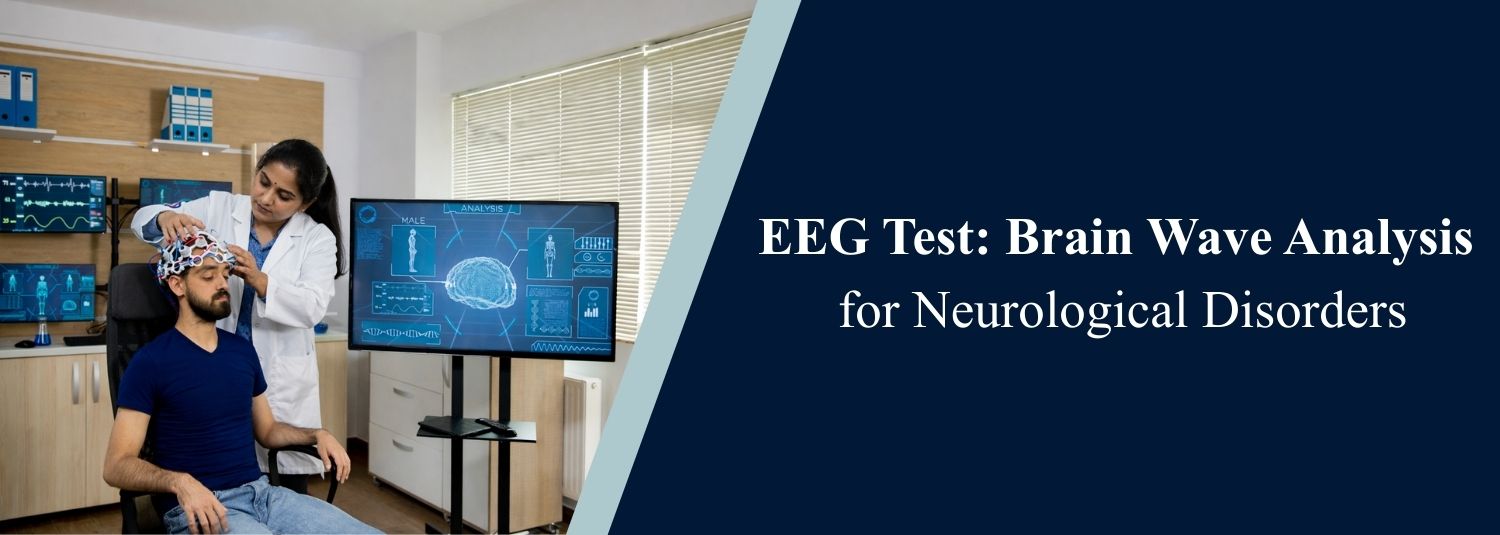
The brain of a human body functions based on electrical signals, and any slight fault in the electrical impulses may influence the memory, movement, sleep, or behaviour. Doctors prescribe an EEG test when they require the brain to be functioning in a particular way, as opposed to just the appearance of the brain. EEG, or Electroencephalography, is a painless and non-invasive procedure that records the activity of brain waves and assists the doctor in detecting neurological disorders at an early stage. EEG testing at Molecular Diagnostics and Therapy is conducted using accurate equipment and under strict supervision in order to help with proper diagnosis and making a medical decision.
This blog is created to make you learn about the EEG test in a simple and comfortable manner, especially when you or a family member of yours has been advised to take this test.
How the EEG Test Works Inside the Brain
Instead of scans that create images, an EEG test focuses on brain activity. Electrodes are small sensors that are attached to the scalp using a soft cap or adhesive. These electrodes are used to identify electrical activities that are generated by cells in the brain and convert them into wave patterns, which are examined by doctors.
The various brain waves denote various brain states, including alertness, sleep, confusion, or abnormality. Any suspicious pattern will indicate a neurological disorder that should be further analyzed.
Conditions Where EEG Plays a Key Role
EEG tests find extensive application in the neurological field because they assist a physician in comprehending the behaviour of the brain in real-time. It is especially helpful when symptoms are not visible on CT or MRI scans.
Doctors commonly recommend an EEG for:
Epilepsy and seizure disorders
Recurrent fainting or unexplained blackouts
Sleep disorders like insomnia or narcolepsy
Brain infections and inflammation
Memory problems and altered consciousness
Head injury assessment and follow-up
The results of the EEG help doctors in arranging further testing or therapy plans with greater confidence.
Types of EEG Tests You May Encounter
EEG tests cannot be restricted to a single format. Doctors can recommend various EEG techniques depending on the symptoms.
Some commonly used EEG types include:
Routine EEG, done while the patient is awake and relaxed
Sleep EEG, where brain activity is recorded during sleep
Sleep-deprived EEG, used when a routine EEG is normal but symptoms persist
Long-term or video EEG monitoring for seizure evaluation
EEG protocols in Molecular Diagnostics and Therapy are selected according to clinical requirements so that meaningful results can be obtained with a high degree of reliability.
What the EEG Procedure Feels Like for Patients
The EEG test seems to be a daunting experience for many patients, yet it is a painless and simple test. No injections, radiation, or electric shock are involved. The electrodes do not insert anything into the brain; they only record signals.
The test lasts between 30 and 60 minutes. Patients should be requested to relax, close their eyes, breathe, or react to light stimulation. Patients are allowed back to their usual activities unless advised to the contrary after the test.
EEG Test Safety and Comfort
EEG is one of the safest diagnostic tests available in neurology. It is safe to be done on children, adults, and elderly patients. The patients who require repetitive EEG tests can safely go through them.
Key safety points include:
No radiation exposure
Non-invasive and painless procedure
Safe for all age groups
No recovery time required
The trained team at Molecular Diagnostics and Therapy ensures patient comfort throughout the test.
Understanding EEG Report Accuracy
EEG reports require expert interpretation. Changes in the brain waves may be caused by stress, sleep deprivation, medication, or underlying disease. That is why the results of EEG are never isolated without being correlated with symptoms and medical history.
Accurate EEG reporting helps doctors:
Confirm or rule out epilepsy
Identify abnormal brain activity patterns
Monitor treatment response
Decide if further testing is needed
Reliable equipment and qualified experts are important for the reliability of reports.
Why EEG Is Still Important in Modern Neurology
Even with advanced imaging like MRI and PET scans, EEG remains essential because it captures brain function, not just structure. Many neurological disorders begin with functional changes that only an EEG can detect.
EEG is necessary, despite the more advanced imaging methods such as the MRI and the PET scan, as it not only measures the structure of the brain, but also its functionality. Numerous neurological diseases start with functional alterations, which are only identifiable by EEG.
EEG helps to close the gap between symptoms and diagnosis to enable doctors to prevent complications by acting early.
Book Your EEG Test with Confidence
EEG testing can be important and timely, in case there is a suspicion of a neurological condition on your part or on the part of your doctor. Molecular Diagnostics and Therapy has reliable EEG testing services with patient-centered treatment and accurate reporting.
Final Thoughts
An EEG test is a powerful tool for assessing the functionality of the brain and diagnosing cases of neurological disorders in early stages. EEG assists the doctor in making sound decisions during uncertain or complicated symptoms or when there is a need to capture real-time brain activity. Molecular Diagnostics and Therapy assures patients and doctors of reliable EEG services with the use of advanced technology, an attentive test procedure, and skilled interpretation. Book your EEG test and take a step of confidence toward clear neurology, by phone 92172 44110.
Frequently Asked Questions
In News
Get Our Mobile App
for Easy Access
Book tests, view reports, and manage your health records on the go. Experience convenient healthcare with Molecular Diagnostics and Therapy.
- ✔ Book tests & home collection
- ✔ View reports instantly
- ✔ Track health history
- ✔ Get notifications & reminders
- ✔ Easy appointment management