Echocardiography (ECHO) Test: Purpose, Procedure, Benefits and Cost in India
Talk to Health Expert

Dr. Nikunj Jain
Co-Founder and HOD - Nuclear Medicine ,MBBS, DRM, DNB, FEBNM, FANMB, Dip. CBNC
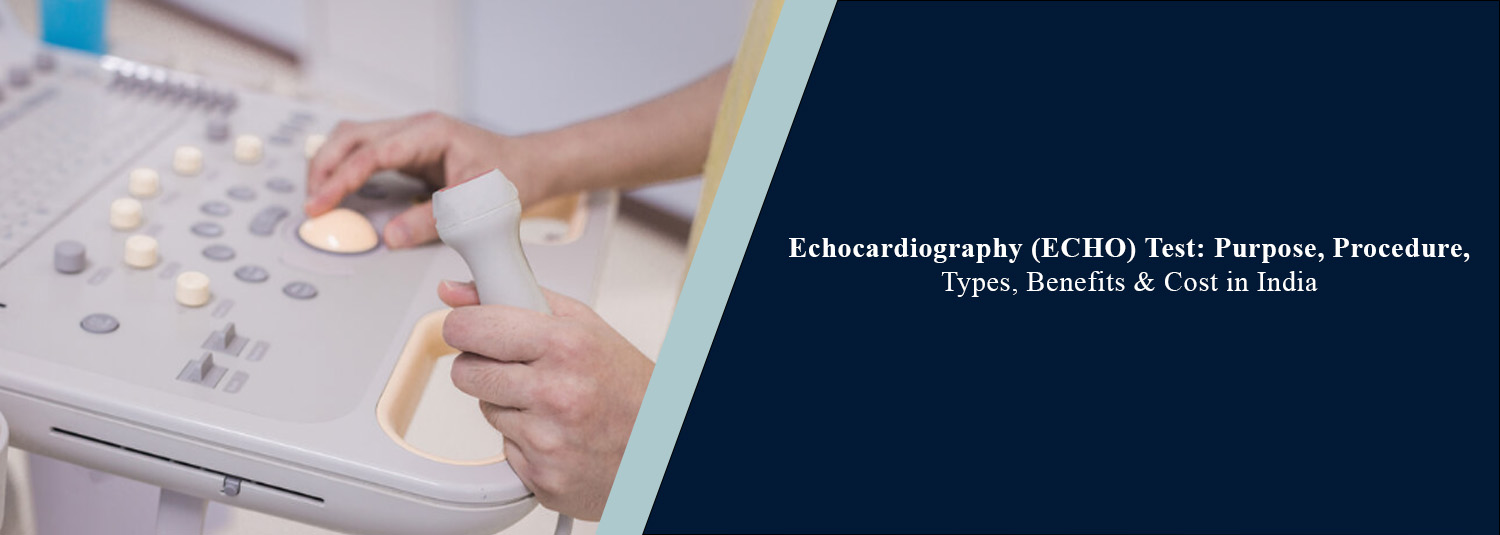
The heart pumps blood all the time to
feed the various organs of the body with oxygen and nourishment. It may also be
recommended to evaluate the function of the heart and is sometimes referred to
as an Echo (echocardiography) test whenever a doctor suspects that there may be
a heart problem. An echocardiogram of the heart uses non-invasive techniques to
produce footage of the heart. Allows the doctor to assess the structure of the
heart, heart valves, strength of the pumping action, and the flow of blood around
the heart. Molecular Diagnostics and Therapy centers provide information on
tests and therapy available for the diagnosis of the patient and given by the
patient's doctor.
What Is an
Echocardiography Test?
An echocardiogram is a type of
ultrasound study of the heart. A machine sends high-frequency sound waves at
the beating heart, creating a real-time moving image of the same. They use the
test to measure the size of the heart's chambers,the size of the heart
chambers, the movement and thickness of the heart walls, the working of the
heart valves, and blood flow through the heart. It can also determine the
function of the heart pump. An echocardiogram is different from an
electrocardiogram (ECG). An ECG gives detailed information about the electrical
activity of the heart, and an echocardiogram gives graphic information about
the structure and functions of the heart.
Why Is an ECHO Test
Performed?
Doctors may recommend an ECHO test for several reasons.
- Evaluating heart function: It can give an idea
of the efficiency of blood pumping from the heart and can indicate poor
functioning of the heart.
- Testing heart valves: This test helps identify
any valves that are blocked or faulty, preventing the heart valves from
closing completely and allowing blood to flow back.
- If the doctor sees signs of difficulty
breathing, fatigue, a puzzling murmur in the heart, and leg swelling, then
he or she might choose to order an echocardiogram.
- Identifying structural abnormalities: It can help
to discover some heart defects present at birth and other abnormalities in
the structure of the heart.
- Monitoring heart disease: If you have heart
disease, you might need more ECHO exams to monitor your disease and the
outcome of any therapy.
How Is the ECHO Test
Procedure Performed?
An echocardiogram is usually painless
and straightforward. The initial step is for the patient to lie on the
examination table, typically on their back or left side. A gel made of water is
put on the chest to ensure good contact with the skin by the ultrasound probe.
The technician scans various sections of the chest with the probe. The probe is
used to bounce sound waves off the heart and receive the reflections that
bounce back. These signals are used to display a moving picture on the monitor.
The patient may be required to move
into a different position or hold their breath at mid-expiration or breathe
briefly to ensure good images. Once the test is completed, a competent doctor
analyzes the images and drafts the report. The test usually takes about 20–45
minutes, depending on the type of echo and the findings.
What Are the Benefits
of an ECHO Test?
ECHO Test has a few advantages when it
comes to heart health. It doesn't use ionising radiation, is generally not
painful, and is not intrusive. It gives a real-time image of the heart, which
helps the doctor determine how the heart is moving and pumping. The test can be
useful in diagnosing some structural defects, assessing valve disorders, and
monitoring heart diseases that have been diagnosed. The results can also be
used to give information to the doctor about whether further tests or treatment
is required. But oftentimes, an ECHO does not show all heart conditions.
Additional tests may be required for the patient depending on his or her
symptoms and medical history.
Is the ECHO Test
Safe?
The ECHO test that is done through the
chest is believed to be very safe. The majority of patients are not hurt except
for a little pressure from the probe. However, there are other risks associated
with specialised procedures, which may involve throat numbing or sedation. The
medical team will explain what you need to do before the procedure.
What Is the ECHO Test
Cost in India?
The ECHO test prices in India vary
according to the city, diagnostic centre, type of echocardiogram, or the
services provided. A typical ECHO will be less expensive than an ECHO with TEE
or a stress ECHO. Please call Molecular Diagnostics and Therapy for up-to-date
pricing and appointment information.
Conclusion
The echocardiogram is useful to review the structure, valves, pumping capacity, and blood flow of the heart. Generally safe, painless, and beneficial to investigate and monitor multiple heart conditions. Follow your doctor's instructions to prepare for an ECHO test; if you have an ECHO test, talk to your health care provider about your test results. You can use Molecular Diagnostics and Therapy to find out which services are offered to help diagnose and for information on appointments.
Frequently Asked Questions
In News
Get Our Mobile App
for Easy Access
Book tests, view reports, and manage your health records on the go. Experience convenient healthcare with Molecular Diagnostics and Therapy.
- ✔ Book tests & home collection
- ✔ View reports instantly
- ✔ Track health history
- ✔ Get notifications & reminders
- ✔ Easy appointment management