Hemorrhoids: Causes, Symptoms, Types & Tests
Talk to Health Expert

Dr. Nikunj Jain
Co-Founder and HOD - Nuclear Medicine ,MBBS, DRM, DNB, FEBNM, FANMB, Dip. CBNC
Hemorrhoids (also called piles) are
swollen and inflamed veins at the end of the rectum or around the anus. They're
a common condition and can affect people of all ages. Symptoms can range from
bleeding when defecating, itching, discomfort, pain, or a "lump"
around the anus.
When more medical investigation is
indicated, Molecular Diagnostics and Therapy provides appropriate diagnostic
services that help doctors assess symptoms. In this blog, we'll talk about
hemorrhoid symptoms, hemorrhoid causes, hemorrhoid types, and hemorrhoid tests,
and under what conditions might a medical assessment be required.
Though hemorrhoids are very common,
rectal bleeding isn't necessarily a sign of hemorrhoids. Other digestive
diseases can present the same symptom, and if bleeding persists should be
checked by a healthcare provider.
What Are Hemorrhoids?
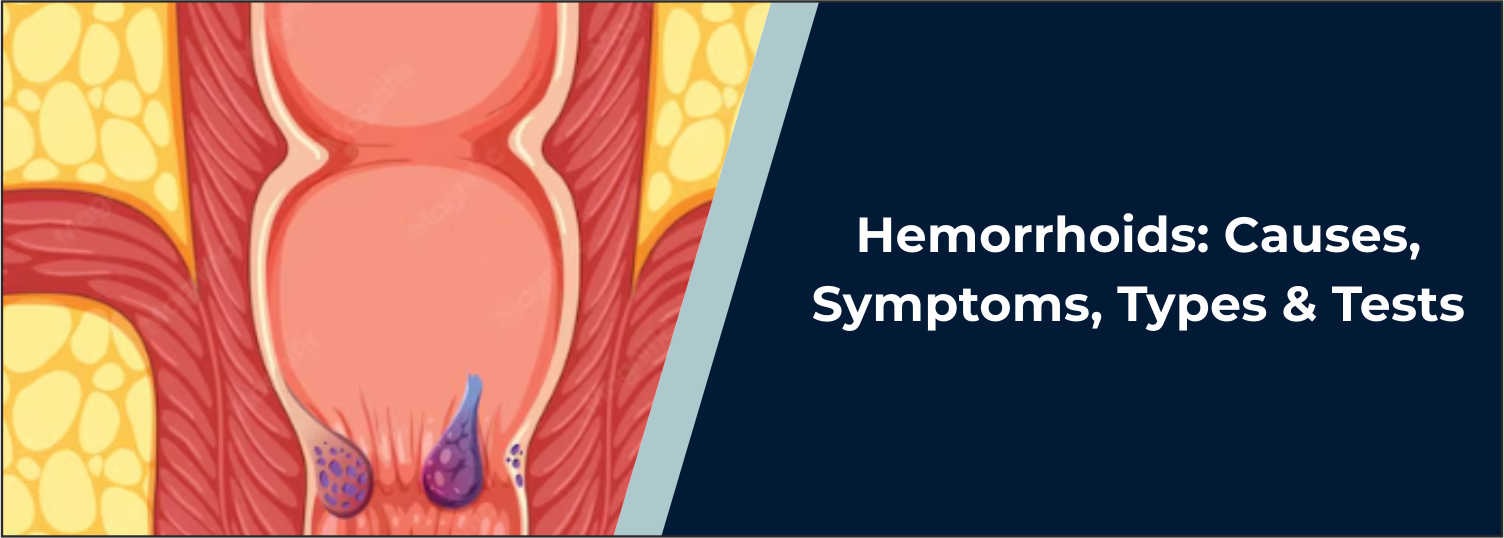
Hemorrhoids are swollen and inflamed
veins and supporting tissues at or in the lower portion of the rectum and anus.
These can emerge due to an increased strain on the veins and tissues in this
location. Hemorrhoids can be of two types, the first being internal hemorrhoids
and the other being external hemorrhoids. Hemorrhoids can be either internal or
external; internal hemorrhoids grow in the lower portion of the rectum or inside
the anus, while external hemorrhoids appear beneath the skin around the anus.
Hemorrhoids can be painful, itchy, swollen, or bleeding (with or without
symptoms).
Types of Hemorrhoids
There are two main hemorrhoids types: internal hemorrhoids and external
hemorrhoids.
Internal Hemorrhoids
Internal hemorrhoids occur in the lower
part of the rectum or inside the anus. Most often, they are not obvious from
the exterior of the body. Usually, the bleeding is bright red and occurs during
and after passing stool. Sometimes they will even push through the anal
opening, forming a type of hemorrhoid known as prolapsed internal
hemorrhoids.
Whether this causes a hemorrhoid to be
either painful or need medical attention depends on how severe it is.
Physicians might also identify internal haemorrhoids by how much they have
prolapsed. The severity of the prolapse can help determine the treatment.
External Hemorrhoids
External hemorrhoids occur under the
skin, around the anus. May lead to itching and irritation, tenderness,
swelling, or pain. But occasionally, there may be a clot in an external
hemorrhoid. This is known as a thrombosed external hemorrhoid, resulting in the
formation of a hard, painful lump on the surrounding skin of the anus.
Hemorrhoids Tests:
How Are Hemorrhoids Diagnosed?
Doctors can detect whether you have
hemorrhoids by reviewing your medical history, asking questions, and performing
a physical examination. The doctor may ask questions about bowel movements,
constipation, loose stools, bleeding, stools being painful to pass, diet, and
toilet habits. For external hemorrhoids, a doctor may examine the surrounding
area for external signs of lumps, swelling, irritation, and changes in the
surrounding area.
If a person suspects that the
hemorrhoids are internal, a digital rectal exam may be done. During this exam,
the doctor inserts a gloved, lubricated finger into the rectum to check for
lesions, lumps, or tenderness. The doctor may not need to do any more tests if
he thinks the symptom is a hemorrhoid. If symptoms cannot be explained
completely by the presence of hemorrhoids, however, or additional tests are
needed to rule out other disorders, the doctor may consider ordering the tests.
Anoscopy for
Hemorrhoids
Anoscopy is one of the tests that could
be done within the anus and lower rectum to look at the interior of the anal
area and lower part of the rectum for the symptoms of hemorrhoids. A small
instrument called an anoscope is slowly put into the anus during the procedure.
This enables the doctor to see if there are abnormalities such as inner
hemorrhoids or if there are any other abnormalities in the lower rectum and
anus. Anoscopy is usually performed during an office visit, and most patients
do not need anesthesia.
Proctosigmoidoscopy
and Colonoscopy
In some cases, your doctor may suggest
a proctosigmoidoscopy or colonoscopy if there are symptoms or rectal bleeding
that require additional testing. During a proctosigmoidoscopy, the doctor can
view the lower portion of the colon and rectum. A colonoscopy is a procedure
that can be used to examine the rectum and the entire colon. Not everyone who
has hemorrhoids requires a colonoscopy. The decision will depend on things like
the patient's age, symptoms, medical history, family history, and the doctor's
decision. Current clinical advice suggests conducting a full colonoscopy in
certain cases of hemorrhoids and rectal bleeding, if there is a suspicion of
some other cause of bleeding.
Are Blood Tests
Needed for Hemorrhoids?
Blood tests are not usually required to
diagnose hemorrhoids. They may be used to assess anemia or the effects/severity
of significant bleeding. If it occurs more than a few times and it's more than
just mild, the doctor might want to do blood tests to help determine if there
is any anemia or to see how bleeding has affected the body. When looking for
another cause of gastrointestinal bleeding, blood tests may also be a piece of
the puzzle. Blood tests are done if symptoms are present, and the doctor deems
it necessary.
Conclusion
Depending on the case, anoscopy, digital rectal examination, or further tests (such as proctosigmoidoscopy or colonoscopy) may be ordered to diagnose hemorrhoids. Blood tests may also be ordered if there is heavy or frequent bleeding. In Molecular Diagnostics and Therapy, the right tests aid the physician in evaluation and investigating other causes as needed. Do not ignore symptoms if rectal bleeding is persistent or the pain is severe or symptoms keep recurring; see a healthcare provider.
Frequently Asked Questions
In News
Get Our Mobile App
for Easy Access
Book tests, view reports, and manage your health records on the go. Experience convenient healthcare with Molecular Diagnostics and Therapy.
- ✔ Book tests & home collection
- ✔ View reports instantly
- ✔ Track health history
- ✔ Get notifications & reminders
- ✔ Easy appointment management