Kidney Cancer: Symptoms, Causes, and PET-CT Role in Detection
Talk to Health Expert

Dr. Nikunj Jain
Co-Founder and HOD - Nuclear Medicine ,MBBS, DRM, DNB, FEBNM, FANMB, Dip. CBNC
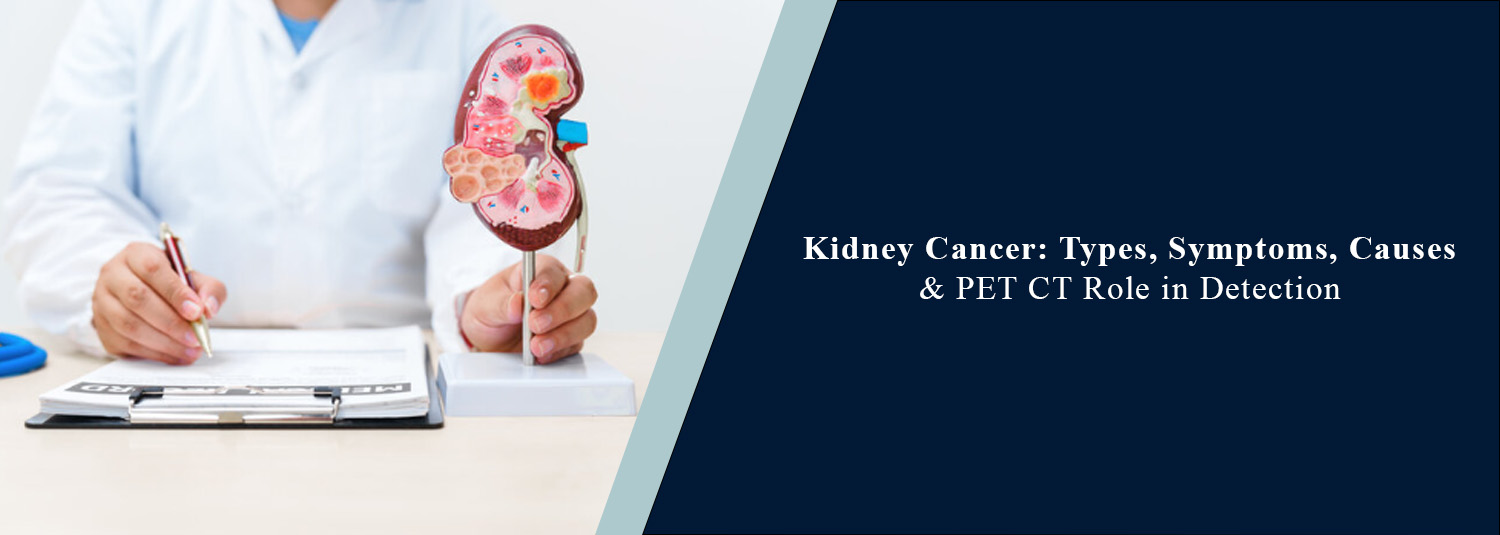
Understanding the symptoms, risk factors, and diagnostic methods for kidney cancer can help people recognise possible warning signs and seek medical advice.
Sometimes a PET-CT scan is used for additional information. We have a diagnostic imaging service to support the diagnosis of medical conditions. Diagnostic imaging services are available at Molecular Diagnostics and Therapy that help doctors determine if there is an abnormality and help plan further testing.
What is kidney cancer?
Kidney cancer develops when changes in kidney cells cause them to grow abnormally. Renal cell carcinoma (RCC) is the most frequent type of kidney cancer in adults. This is due to the presence of abnormal cells in the renal tubules, which filter the fluid and produce urine. Cancer can grow within the kidney and spread to the surrounding tissue, lymph nodes, and other organs. The ability to determine the type of cancer will determine the need for treatment and how much the cancer has advanced. Some kidney tumours may be found incidentally.
Kidney Cancer Symptoms
Some kidney cancer symptoms may not be noticed at all until the cancer is advanced. Symptoms may vary according to the location, size and extent of the tumour. The symptoms may range from blood in the urine (pink/red/brown coloured urine) to constant pain at the back/side of the body.
Other symptoms can include weight loss, reduced appetite, constant tiredness, fever (without an obvious infection) and anaemia. These symptoms can be caused by non-cancerous conditions. If you have blood showing in your urine, constant pain with no obvious cause, or significant changes to your health, then you should seek advice from a healthcare professional.
Causes and Risk Factors of Kidney Cancer
The exact cause of kidney cancer may not be known. Genetic changes can occur that cause abnormal growth of cells. There are risk factors that can increase your chances of developing kidney cancer, but this doesn’t mean you will definitely get cancer. Known risk factors include smoking, being overweight, and having high blood pressure.
Kidney cancer is more common as you get older and is more commonly diagnosed in males. Having a family history of kidney cancer and genetic conditions such as von Hippel-Lindau can increase your risk. Being on long-term dialysis for severe kidney disease is also a risk factor. Kidney cancer can occur even if you don’t have any risk factors.
Kidney Cancer Diagnosis
Your doctor will ask about your medical history and perform a physical examination. The appropriate investigations will be performed. Investigations will depend on your symptoms and suspected tumour. An ultrasound can help identify masses in the kidney. It can help differentiate some fluid-filled cysts. Often a contrast-enhanced CT scan will be performed to look at the size, location, and spread of the tumour. An MRI may be advised to provide more detail or if contrast cannot be used.
Blood tests can be performed to look at kidney function and general health. Urine tests can help identify any blood or issues. A biopsy may be advised to look at the tissue. In some cases, a PET CT scan may be considered. This will depend on the suspected type of kidney cancer and if further information is required.
What Is the Role of PET-CT in Kidney Cancer Detection?
A PET-CT scan is a combined PET and CT scan. The PET scan identifies where the radioactive tracer (fluorodeoxyglucose (FDG)) is. This shows glucose metabolism. The CT scan provides detailed anatomical imaging so your doctor can view the results. However, a PET CT scan is often not the first test to identify the primary tumour. Many renal cell carcinomas will have variable FDG uptake, and as it passes through the urinary tract, it can be difficult to assess some kidney lesions. Often, an ultrasound, contrast-enhanced CT scan, and MRI will be more central to initial investigations.
Assessing Possible Cancer Spread
In some cases, a PET-CT scan can be used to identify if the cancer has spread to the lymph nodes, bones, or other organs. It can give extra information if traditional imaging is unclear or if looking at the whole body can help with clinical decisions.
Supporting Treatment Planning
Findings from a PET-CT scan can help clinicians look at certain cases where more information is needed on disease activity. This will be looked at in conjunction with other imaging and findings.
Evaluating Possible Recurrence
In some cases where patients have had previous treatment for kidney cancer, a PET-CT scan can be considered. This will depend on the clinical situation and if it is likely to provide useful information.
Conclusion
Understanding the types, symptoms, causes and diagnostics of kidney cancer can help you know when to seek medical advice. Often an ultrasound, CT and MRI scan will be used to investigate suspected kidney tumours. At Molecular Diagnostics and Therapy, we offer diagnostic imaging. In some cases, we may recommend a PET-CT scan. This may be recommended by a specialist and could include an ultrasound, CT scan, MRI or PET-CT scan. The results should be considered as part of the overall diagnosis.
Frequently Asked Questions
In News
Get Our Mobile App
for Easy Access
Book tests, view reports, and manage your health records on the go. Experience convenient healthcare with Molecular Diagnostics and Therapy.
- ✔ Book tests & home collection
- ✔ View reports instantly
- ✔ Track health history
- ✔ Get notifications & reminders
- ✔ Easy appointment management