MRI Safety: Common Questions Patients Ask
Talk to Health Expert

Dr. Nikunj Jain
Co-Founder and HOD - Nuclear Medicine ,MBBS, DRM, DNB, FEBNM, FANMB, Dip. CBNC
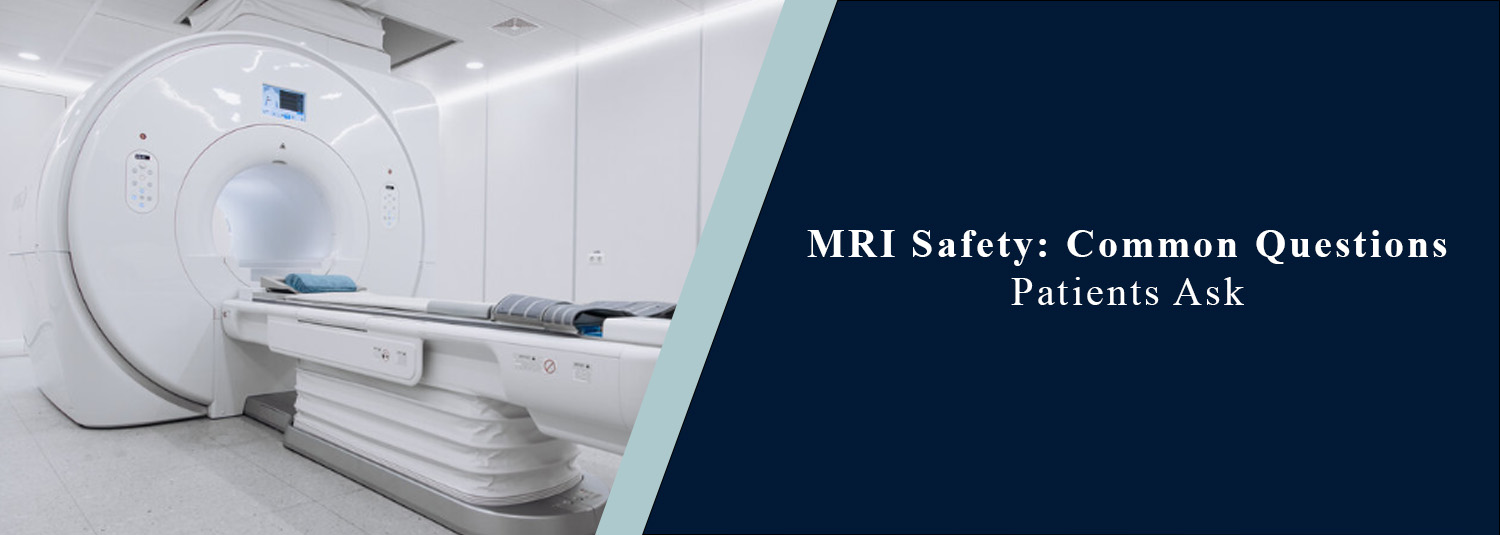
Magnetic Resonance Imaging (MRI) is one of the most non-invasive, advanced diagnostic imaging technologies used today. It is a method of examining the inner organs, soft tissues, joints, brain, spine, and blood vessels in great detail without providing a dose of ionising radiation. The MRI is often used to diagnose many diseases, to determine the status of a disease in some patients while being treated, and for patients undergoing surgery. Even though many patients undergo MRIs, it leaves a lot of people with anxiety over the exam. A variety of safety, preparation, contrast agent, and discomfort-related questions are frequently asked. Patients who have been educated about the MRI scan procedure, facts about MRI scan risks, and proper MRI scan preparation can be comfortable and confident before their appointment. The state-of-the-art MRI technology, patient-centered care, and skilled MRI technologists used by Molecular Diagnostics and Therapy mean patients can be sure their image is accurate, while providing them with a safer and more comfortable experience.
What Is an MRI Scan?
An MRI scan is a non-invasive imaging investigation that is able to provide a detailed image of structures inside the body using a powerful magnetic field, radio waves, and the use of advanced computer technology. MRIs don't use ionising radiation, unlike X-rays and CT scans. It is a good imaging choice for neurological conditions, including the brain and spinal cord, applying to soft tissues of the body (e.g., muscles, ligaments, joints, and internal organs).
If pain persists, there are neurological symptoms, a sporting injury, a tumour, infection, or any other abnormality that does not respond to other imaging techniques, the MSRI may be recommended.
Is an MRI Scan Safe?
A patient's primary concern is usually safety when considering an MRI scan. MRI is extremely safe for most people, as it is not a radiation test. As long as the proper precautions for safety are taken, the magnetic field is not harmful. There are, however, certain implanted medical devices, metallic objects, or fragments that may need further examination before a patient is given the MRI examination, because they can interfere with the powerful magnet.
Are There Any MRI Scan Risks?
While MRI is in general very safe, patients ask about the risks of an MRI scan. The main worry is not with the scan itself, but rather metal within or on the body. The magnetic field may be affected by metal objects and, in extreme cases, be dangerous.
Always tell a health care provider if the patient has a pacemaker, a cochlear implant, aneurysm clip, artificial heart valve, surgical clip, previous metal injury,y or an implanted pump. By carefully screening before the exam is performed, MRI scan risks can be minimised so that patients' safety is guaranteed.
What Are the MRI Scan Side Effects?
Typically, there are no side effects with an MRI scan. There will be no pain or discomfort during the scan. Mild anxiety may be induced as a result of the confined space within the scanner, and temporary warmth about the area being examined may also be felt. Patients who were sedated may be sleepy afterward. Overall, the side effects of MRI scans, when proper safety procedures are observed, are very rare even in serious cases.
What Is an MRI Contrast Scan?
Certain exams need the use of a special dye, or "contrast," for the MRI scan to obtain extra diagnostic information. In a contrast-enhanced MRI scan, a contrast dye is placed into a vein before or while being scanned. The contrast makes the vessels, inflammation, tumours, infection, and some internal organs more visible. Seeing these abnormalities may not be possible during a typical MRI scan, but may be detectable with the use of an MRI contrast scan.
Is MRI Contrast Safe?
Contrast dyes can cause anxiety for patients. In general, most people are safe with the use of modern MRI contrast scan agents. Some mild reactions like nausea, headache, or pain at the site of the injection may occur; however, serious allergic reactions are unusual. Doctors may check kidney function, allergies, previous contrast scans, and medical history before conducting an MRI contrast scan to determine whether it is the right examination to perform.
How Should You Prepare for an MRI Scan?
Preparing for an MRI scan can ensure the process goes smoothly and can improve the quality of the images. Before coming into the MRI room, patients should take out jewellery, credit cards, belts, spectacles, any metallic accessories, hearing aids, as well as hairpins. Loose, comfortable clothing that doesn't have metal clasps is often suggested, although some centres will offer hospital gowns.
There are certain MRI studies that do require that the patient be NPO, especially when using contrast material or sedation. As always, one's doctor or the imaging centre will call for special preparation for the MRI scan.
What Happens During the MRI Scan Procedure?
Knowing what will occur in an MRI scan can help calm fears. Once the patient has passed the safety check, he lies in a comfortable position on the MRI table. The table has a gradual movement into the scanner, and detailed images are acquired.
An MRI scan procedure requires that the patient be as still as possible during the imaging. Movement will diminish the image quality of the MRI. While images are being acquired, the scanner makes loud tapping and knocking noises. Often, earplugs or headphones are given to make it more comfortable. The MRI scan procedure can last from 20 to 60 minutes depending on the body part scanned. Can Claustrophobic Patients Have an MRI? A large number of patients are concerned about the discomfort they experience within the MRI scanner. The helical and other staff members must be alerted in advance that the patient may be claustrophobic. The examination, in many cases, can be completed with the aid of reassurance, relaxation techniques, or mild sedation and/or alternative types of scan. The imaging team will monitor patients carefully during the scan to help keep them comfortable and safe.
Who Should Inform Their Doctor Before an MRI?
Some people need further testing before having an MRI exam. Patients should inform their physicians if they have taken any metal devices, undergone past surgeries with metal implants, have kidney disease, have a contrast media allergy, or have any metal pieces that resulted from previous injuries still within them. Comprehensive medical history enables radiologists to make decisions about the most appropriate imaging method to use.
Why MRI Is One of the Safest Imaging Tests
One of the biggest advantages of MRI is its excellent safety profile. Because it does not use ionising radiation, MRI can often be repeated when necessary for ongoing disease monitoring without radiation exposure concerns. Combined with its outstanding image quality, this makes MRI one of the most valuable diagnostic tools in modern medicine. At Molecular Diagnostics and Therapy, every MRI scan follows strict international safety protocols, advanced imaging standards, and expert radiology interpretation to provide accurate diagnosis while ensuring patient comfort.
Conclusion
An MRI is a safe, non-invasive imaging procedure that offers a lot of detail without radiation risks to patients and can be used in the identification of many conditions. The best way to make your patient feel comfortable before an MRI scan is to educate them on what to expect before, during, and after an MRI scan, as well as the facts about MRI scan risks and possible MRI scan side effects.
If more information is needed, an MRI can be "enhanced" with the use of a contrast dye that gives greater clarity for accurate diagnosis and treatment management. Molecular Diagnostics and Therapy offers reliable MRI imaging services which are focused on safety, precision and early diagnosis through the use of state-of-the-art MRI systems, patient-centric care and an experienced radiologist.
Frequently Asked Questions
In News
Get Our Mobile App
for Easy Access
Book tests, view reports, and manage your health records on the go. Experience convenient healthcare with Molecular Diagnostics and Therapy.
- ✔ Book tests & home collection
- ✔ View reports instantly
- ✔ Track health history
- ✔ Get notifications & reminders
- ✔ Easy appointment management