MRI Scan Advanced Soft Tissue Imaging for Accurate Diagnosis
Talk to Health Expert

Dr. Nikunj Jain
Co-Founder and HOD - Nuclear Medicine ,MBBS, DRM, DNB, FEBNM, FANMB, Dip. CBNC
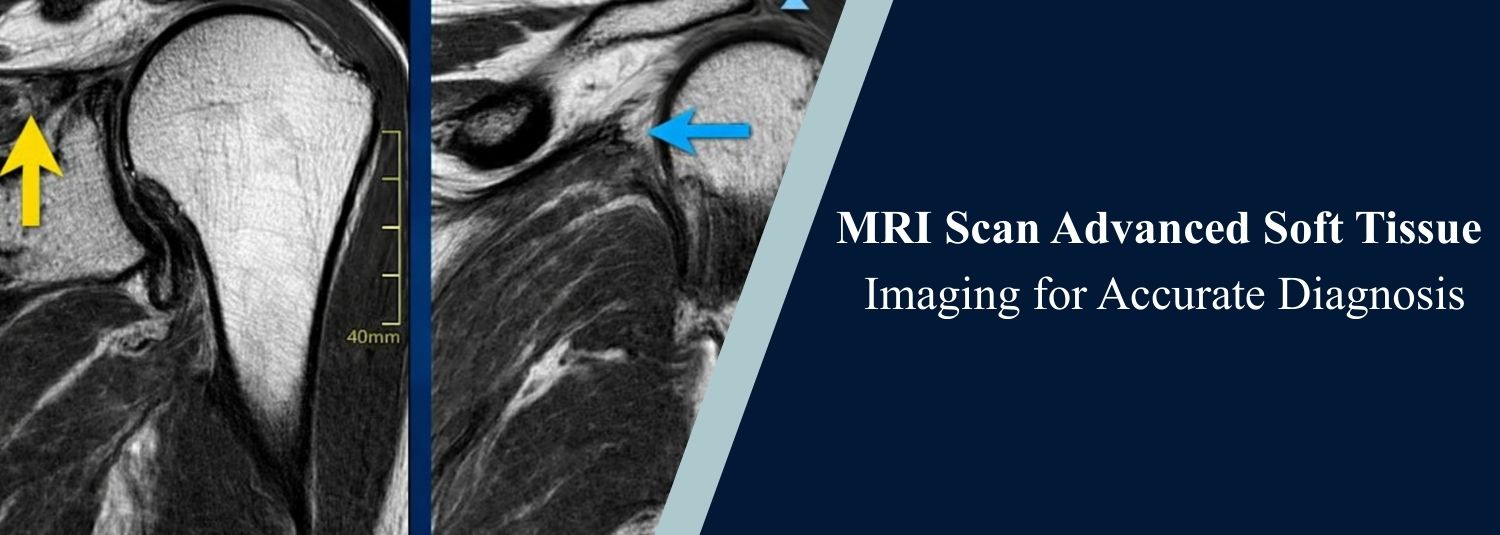
One of the significant aspects of modern healthcare is medical imaging. It assists doctors in discovering conditions that cannot be diagnosed by simple tests or exams. Magnetic Resonance Imaging (MRI) is one of the most effective technologies used in the examination of soft tissuesin the body among all imaging techniques.
At Molecular Diagnostics and Therapy, MRI scans are performed using high-resolution systems that produce detailed images of internal organs, muscles, nerves, and joints. These clear images help doctors make accurate diagnoses and plan the most effective treatment.
What is an MRI Scan?
An MRI Scan is a procedure that involves magnetic fields and radio waves of high magnitude in order to create detailed images of the interior structure of the body. MRI is safer than X-rays or CT, as it does not employ ionizing radiation and thus does not have many harmful effects, especially when you require multiple scans. MRI is particularly useful for visualizing:
Brain and spinal cord
Muscles and ligaments
Internal organs
Blood vessels and nerves
This level of detail makes MRI one of the most powerful diagnostic tools in medicine.
Why is MRI preferred for Soft Tissue Imaging?
MRI also contrasts between various soft tissues very well, which allows physicians to detect minor issues that could be overlooked in other examinations. Physicians prefer MRI as it has the ability to detect the disease at an early age, helps to prevent unnecessary surgery, guides towards the right treatment, and monitors the behaviour and changes of conditions.
At Molecular Diagnostics and Therapy, we provide high-quality MRI scan which are commonly used for neurological disorders, orthopedic problems, abdominal diseases, cardiac conditions, and cancer evaluation.
Conditions Diagnosed Using MRI
MRI is used across many medical specialties. Some of the most common conditions include:
Brain tumors and stroke
Spinal disc herniation
Nerve compression
Joint injuries and ligament tears
Muscle disorders
Liver and kidney diseases
Heart muscle conditions
Cancer detection and follow-up
Because MRI shows both structure and tissue quality, it is especially valuable for detecting early-stage disease before symptoms become severe.
How the MRI Scan Procedure Works?
During the test, the patient has to lie on a table, which passes into a large, tube-shaped machine. The MRI applies high levels of magnetism to the body that contains hydrogen atoms and interacts with them to generate detailed images. The scan is:
Painless
Non-invasive
Radiation-free
Usually completed within 20–45 minutes
In some cases, a contrast agent may be used to highlight specific tissues or blood vessels.
Is MRI Safe?
MRI is quite safe for the majority of individuals. The scans do not involve any radiation, and as such, you can have numerous scans without taking any risk. However, in case you have metallic implants, a pacemaker, or other forms of surgical devices, inform your physician before the scan. In Molecular Diagnostics and Therapy, we make sure that all our safety checks are properly done prior to each MRI to ensure that all patients are comfortable and their worries are at ease.
MRI Compared to Other Imaging Tests
X-rays and CT are beneficial in dealing with bone issues and emergencies, whereas MRI provides a superior image of soft tissues in detail. The ultrasound is also helpful, but it cannot go as deep, and it is also not clear. The advantage of MRI is that it provides very clear images of the internal structures without exposing patients to harmful radiation.
Role of MRI in Early Diagnosis
One of the greatest strengths of MRI is its ability to detect disease at an early stage. Early diagnosis allows:
Faster treatment
Better recovery outcomes
Reduced complications
Improved long-term health
This makes MRI a key tool in preventive and long-term healthcare.
Final Thoughts
MRI has revolutionized medical diagnosis. This is because it is currently one of the safest and best tests due to its capability to generate very detailed soft tissue images that are not irradiated. From brain and spine disorders to joint injuries and cancer detection, MRI plays a central role in improving patient outcomes.
At Molecular Diagnostics and Therapy, we provide high-quality MRI services that deliver accurate images, professional reports, and patient-centered care that assist doctors in identifying issues at the first level and determining the best treatment with confidence.
Frequently Asked Questions
In News
Get Our Mobile App
for Easy Access
Book tests, view reports, and manage your health records on the go. Experience convenient healthcare with Molecular Diagnostics and Therapy.
- ✔ Book tests & home collection
- ✔ View reports instantly
- ✔ Track health history
- ✔ Get notifications & reminders
- ✔ Easy appointment management