MRI for Joint Pain: When Is It Necessary?
Talk to Health Expert

Dr. Nikunj Jain
Co-Founder and HOD - Nuclear Medicine ,MBBS, DRM, DNB, FEBNM, FANMB, Dip. CBNC
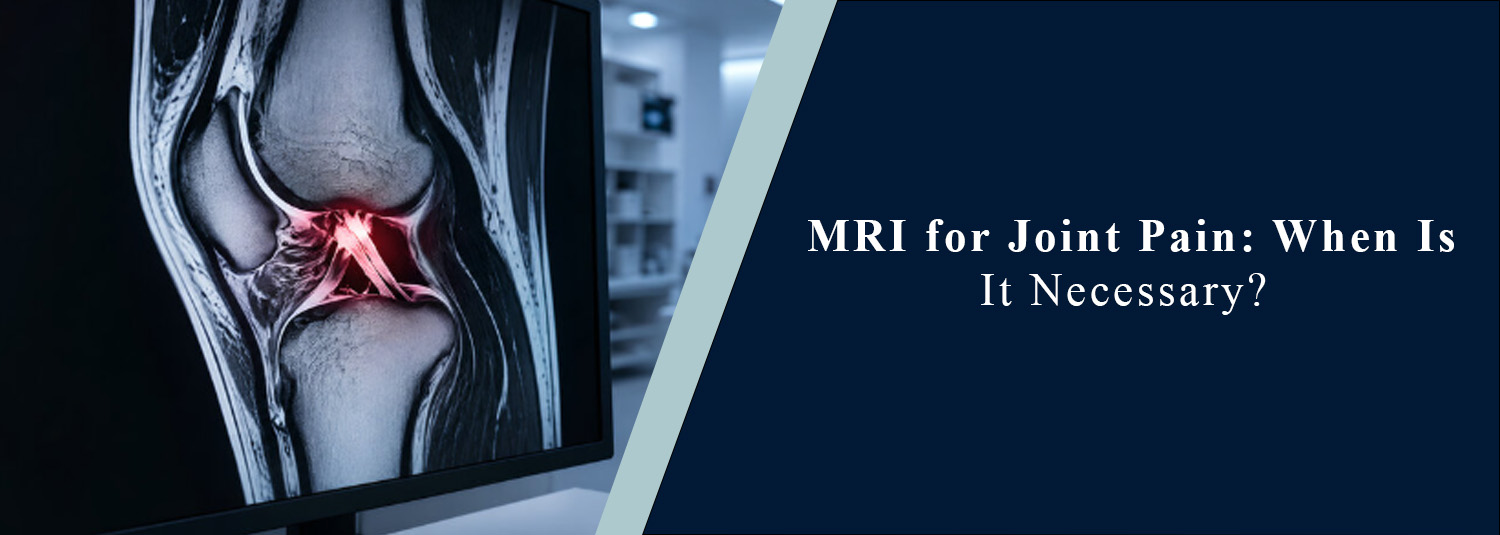
Joint pain is another issue that affects people regardless of their age. It may result from sports injuries, arthritis, ageing, overuse, or a medical condition. Even though rest and medicine may ease joint pain, further diagnostic measures such as MRIs may be required in case of worsening of the situation in order to find out what might cause the pain. In such cases, an MRI scan is among the most effective imaging examinations that can be used.
An MRI scan is quite a strong test that is similar to an X-ray; however, it gives the ability to make images of soft tissues, including cartilage, ligaments, tendons, muscles, nerves, and other structures in the body. With the help of such scans, it becomes possible to diagnose different joint conditions and decide on the right treatment of the issue. If you need an MRI scan near me, our specialists at Molecular Diagnostics and Therapy are glad to help you with that with the newest MRI scanning technology.
What Is an MRI Scan?
The Magnetic Resonance Imaging (MRI) test is an advanced form of diagnostic imaging that works by using a magnetic field along with radio frequencies to create detailed pictures of the body’s internal structure. An MRI test is noninvasive and does not use ionizing radiation, as in the case of an X-ray or CT scan. This makes it useful in diagnosing soft tissues, joints, ligaments, tendons, cartilage, discs of the back, and nerves.
Why Is MRI Recommended for Joint Pain?
There are many causes of joint pain, and it's important to find the correct cause to treat the pain appropriately. MRI imaging can identify injury to the soft tissues around a joint, as well as diseases of the soft tissues. It is capable of detecting arthritis, a bone or joint infection, a ligament tear, tendon injury, cartilage damage, stress fracture, and early arthritis. MRI produces very detailed images and can help the doctor prevent permanent joint damage with diagnosis.
When Is an MRI Necessary?
Not all patients who have joint pain need an MRI. An MRI might be recommended if pain lasts despite treatment, mobility problems result from pain, swelling doesn't go away, or symptoms increase over time. MRI can also be helpful when X-rays are normal, and there is significant pain present as well. The scan gives information on difficulties that are not recognisable on regular X-rays.
MRI After a Sports Injury
The knees, shoulders, ankles, hips and wrists are common sites of sports injuries. MRI imaging may be recommended after an injury if pain, swelling, joint instability, or decreased range of motion persists to assess for tendon injury, muscle injury, cartilage damage and ligament tears. Early identification means treatment and decreased recovery time.
Knee MRI Scan
A knee MRI scan is one of the most requested MRI scans. Patients can use it to treat unrelenting knee pain, sporting injuries, suspected meniscus tear, ligament injuries like ACL and PCL tears, suspected arthritis or unexplained swelling, and for help walking. A knee MRI scan allows for detailed images and can help decide among the optimal choices of surgery, physiotherapy and/or medicines.
Spine MRI Scan and Joint Pain
Joint pain can sometimes be due to spinal issues. MRI of the spine to assess the discs, nerves, vertebrae, and other soft tissues. It is often used for symptoms of neck pain, back pain, pain extending into the arms or legs, numbness, tingling, or weakness of the muscles. An MRI of the spine can detect slipped discs, spinal stenosis, nerve compression, infection, tumors, and other problems related to the spine.
Conditions Diagnosed with MRI
MRI can help diagnose many joint and musculoskeletal disorders. They range from arthritis and ligament injury, tendon tear, damage to cartilage in the joint, bursitis, tear in faulty meniscus, joint infection, inflammatory joint diseases, bone marrow disorders, avascular necrosis, and stress fractures up to cysts as well as tumor involvement. MRI can also be used to track healing following surgery or injury.
MRI Scan Test Details
Patients frequently ask about the details of the MRI scan test before making their appointment. The image is captured while you are lying on a moving table that moves into the MRI machine. You must stay still as the scanner generates detailed images by means of magnetic fields and radio waves. Scans typically last from 20 to 45 minutes depending on the part of the body being scanned. The examination is not painful, but it does make a lot of tapping noises, for which you are provided with earbuds.
MRI Scan Procedure
The MRI scan procedure itself is easy and non-invasive. Patients are required to remove all jewellery, watches, hearing aids, credit cards, and all metal items before the examination. The patient must not make any movements throughout the scan as this can decrease image quality. Certain MRI exams use a contrast to help the MRI distinguish some tissues. Your health care provider will discuss whether or not contrast will be needed.
MRI Scan Preparation
When preparing for an MRI scan, you want to be sure you're getting the most accurate results. Let your health care provider know if you have a pacemaker, metal implants, aneurysm clips, cochlear implants, pregnancy, or serious problems with your kidneys. Use soft, loosely fitting clothing and follow the diet if needed before giving contrast, if it will be used. A patient should discuss with the physician his/her claustrophobia about the examination beforehand.
Is MRI Safe?
Since MRI does not employ X-rays or radioactive materials, they are extremely safe for most patients. Some devices (including implants for medical use) and metal may not be MRI-safe. Medical history is consulted by your health care team before your exam to see if your exam is appropriate.
Conclusion
If the pain you experience in your joints lasts, gets worse, or interferes with how you do your daily activities, it should never be ignored. MRI helps doctors figure out the cause of pain and offers in-depth information that can help them determine the best treatment. If you need an MRI for your knee, spine, or any other joint, knowing how an MRI scan is performed, how to prepare for an MRI, and what you will see during an MRI test helps make you feel better before your appointment. Equipped with proficient MRI technicians and cutting-edge technology, Molecular Diagnostics and Therapy supports quick diagnosis and care with highly qualified MRI specialists.
Frequently Asked Questions
In News
Get Our Mobile App
for Easy Access
Book tests, view reports, and manage your health records on the go. Experience convenient healthcare with Molecular Diagnostics and Therapy.
- ✔ Book tests & home collection
- ✔ View reports instantly
- ✔ Track health history
- ✔ Get notifications & reminders
- ✔ Easy appointment management