Medical PET Scan: PET-CT Helps in Cancer Diagnosis, Reports, Results and PET-CT Scan Costs in Delhi and Ghaziabad
Talk to Health Expert

Dr. Nikunj Jain
Co-Founder and HOD - Nuclear Medicine ,MBBS, DRM, DNB, FEBNM, FANMB, Dip. CBNC
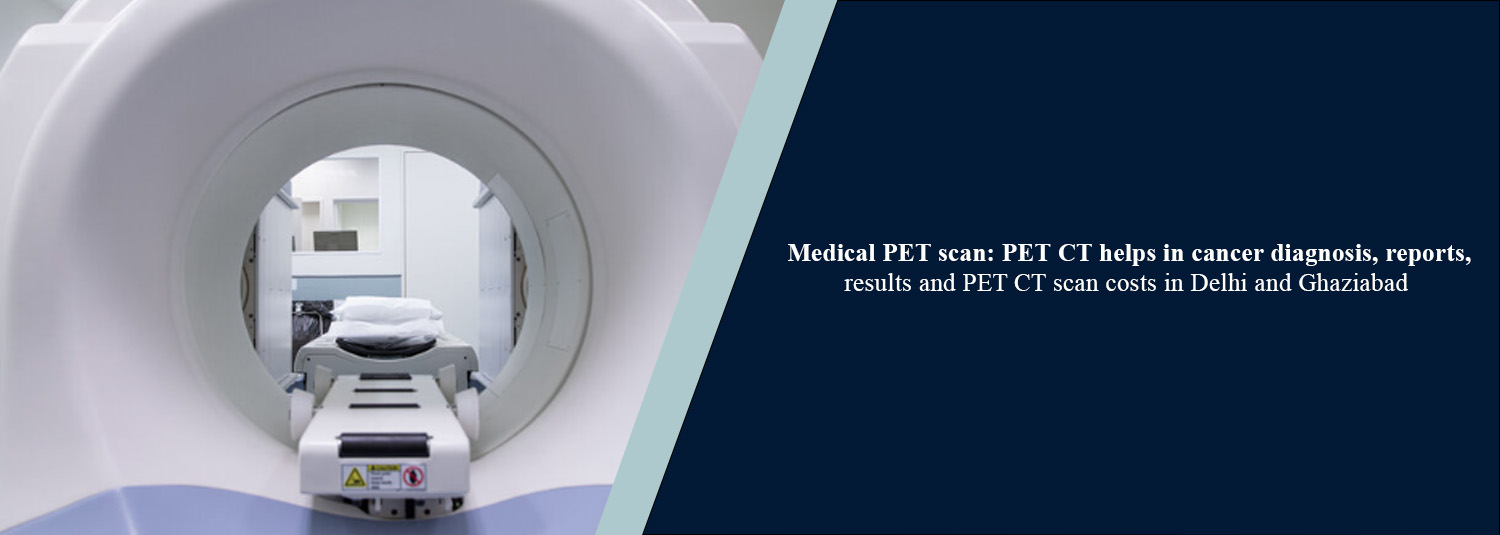
PET-CT is a new, powerful medical
imaging test that combines detailed information about how the tissues are
working with new, detailed information about the structures within the body. It
is commonly used in the treatment of cancer to help diagnose disease, determine
if cancer has spread, monitor treatment, and assess the possibility of a
recurrence.
Where an imaging test primarily detects
the structure of an organ or tissue, a PET scan gives information about its
metabolic activity. Doctors use the combination of CT to determine the location
of an area of increased activity in the body. This renders PET-CT an important
investigation in a few cancers.
What Is a Medical PET
Scan?
PET is an acronym for positron emission
tomography. A radioactive substance, or radiotracer, is used in a small trace
amount; it is a type of nuclear medicine imaging. F-18 fluorodeoxyglucose
(FDG), which works like glucose, is the most commonly used PET tracer. Most
cancers have either increased metabolism or demand increased glucose levels
compared to normal tissues around them. Changes in this activity are observed
with PET imaging. The CT then shows very detailed anatomical information, which
aids in determining the location of the area with enhanced uptake of the tracer
and what that area looks like.
How Does PET-CT Help
in Cancer Diagnosis?
CT with PET is used at various points
in the evaluation of cancer. Doctors suggest it to check for cancer, find out
how much cancer is present or whether treatment is working, or to look for signs
of cancer coming back. PET-CT also helps to identify regions of higher
metabolic activity to be evaluated further. As for absorption into the body,
though, higher quantities of tracer do not necessarily equate to cancer.
Alternatively, PET-CT findings are due to infection/inflammation and should be
correlated with clinical symptoms, the patient's medical history, and other
investigations. Hence, PET-CT scans should not be viewed as a single test for
making a cancer diagnosis.
When Is PET-CT
Recommended for Cancer?
The decision to perform a PET-CT depends on the type and stage of
cancer, symptoms, previous investigations, and the clinical question being
asked. Doctors may recommend PET-CT to:
- Help
evaluate a suspected or known cancer
- Assess whether cancer has spread to other
parts of the body
- Evaluate response to treatment
- Look for possible recurrence
- Help assess the extent of disease
- Support treatment planning in selected cases
Not every cancer requires PET-CT. The treating doctor decides whether
the information provided by the examination is useful for the individual
patient.
What Happens During a
PET-CT Scan?
Patients are oftentimes instructed
before the test. Depending on the type of PET-CT being performed, these come in
the form of a fast for several hours; usually just water is allowed. For
patients with diabetes, extra guidance is necessary as the examination is
affected by blood glucose levels. A technologist is responsible for inserting
an IV line and giving the radiotracer. Then the patient is allowed to lie quiet
for about a half hour to an hour, with the tracer circulating and being
absorbed by the tissues.
Following this wait period, the patient
then lies on the scanning table. The PET scan is done first and then the CT
scan. The total on-table scan time is typically around 30 minutes, but includes
preparatory and tracer uptake times. The patient is required to stay still
during imaging to get accurate images.
Understanding Your
PET-CT Scan Report
The images are then looked at and
analyzed by a trained specialist after the scan. A PET-CT report usually has
multiple sections: type of study, clinical history, comparison with prior
exams, technique, findings, and impression, unless the study was not requested
specifically to get an impression or conclusion; then that is not included. The
findings section details what was observed during various investigations in the
body.
The impression or conclusion is
especially significant since it shortly recaps the key findings and contains
recommendations for subsequent steps in the investigation. Patients should not
read the report word for word and number by number without medical direction.
If the finding is reported as an alarming one, it is not so alarming when its
meaning is considered in relation to the patient's history and past imaging
tests.
What Do PET-CT
Results Show?
PET-CT results provide both metabolic
and anatomical information. The report refers to areas of increased or
decreased activity of increased uptake, the location of the area, and how it
looks during the CT scan. The doctor compares the current PET-CT to previous
images to see if there are any changes over a period of time. Previous scans
are particularly useful, in that they indicate if the abnormality is new,
stable (not changing), or changing. Depending on the results of the PET-CT
scan, the doctor recommends further imaging, other imaging, laboratory testing,
or a biopsy. Therefore, the final resolution should always consider the patient's
full clinical data set.
PET-CT Scan Cost in
Delhi and Ghaziabad
The PET-CT scan cost varies depending on the type of examination, tracer
used, and the facility where the scan is performed. Different PET-CT studies
have different prices, so patients should confirm the exact examination and
current charges before booking. At Molecular Diagnostics and Therapy, a Whole
Body Digital PET-CT scan is currently listed at a starting price of ₹9,999. Our
centre also lists other specialized PET-CT examinations at different prices,
including 18F-DOPA and PSMA PET-CT studies. The centre's current listing also
states that Digital PET-CT services are available across Delhi, Noida,
Ghaziabad, and nearby regions. Because prices and available examinations
change, patients should confirm the applicable PET-CT scan price for their
specific prescription before scheduling the test.
Factors That Affect
PET-CT Scan Price
The PET-CT scan price depends on several factors, including the type of
tracer, the body area being examined, and whether a specialized PET-CT study
has been prescribed. For example, a routine Whole Body FDG PET-CT and a
specialized tracer-based scan such as PSMA PET-CT are different examinations
and have different costs. Patients should also check whether the quoted price
includes the radiotracer, scan, reporting, and any additional components of the
examination.
PET-CT Report and
Follow-Up
Once the PET-CT images have been interpreted, the report is provided to
the referring doctor. The doctor then combines the report with symptoms,
examination findings, previous imaging, and other test results to decide the
next step. If the report recommends additional imaging or a biopsy, this does
not necessarily mean that cancer is confirmed. Sometimes further testing is
needed simply to clarify an uncertain finding. Keeping previous PET-CT scans
and other relevant imaging reports also helps specialists compare changes over
time.
PET-CT at Molecular
Diagnostics and Therapy
Molecular Diagnostics and Therapy provides Digital PET-CT services using
advanced imaging technology for patients who require PET-CT as part of their
diagnostic or treatment evaluation. The centre's Digital PET-CT service is
listed with the GE Discovery IQ scanner and current Whole Body PET-CT pricing
starting at ₹9,999. The centre also lists specialized PET-CT examinations for
specific clinical requirements. Patients should bring their prescription and
relevant previous reports or scans when visiting for a PET-CT examination. The
exact preparation and examination protocol vary according to the type of PET-CT
prescribed.
Conclusion
The medical PET component gives you
information on metabolic activity, and the second, CT component gives you
detailed anatomical information. When used together, PET-CT aids the physician
in evaluating cancer, being a useful tool for assessment of spread of the
cancer, monitoring response to treatment, or is used to investigate if the
cancer has returned when clinically applicable.
It is important to become familiar with the information in your PET-CT report and information in PET-CT results; however, your treating doctor should always be consulted. The cost of the PET (positron emission tomography) scan also depends on the type of scan and tracer. Molecular Diagnostics and Therapy is committed to providing Digital PET-CT services to its patients in Delhi and Ghaziabad.
Frequently Asked Questions
In News
Get Our Mobile App
for Easy Access
Book tests, view reports, and manage your health records on the go. Experience convenient healthcare with Molecular Diagnostics and Therapy.
- ✔ Book tests & home collection
- ✔ View reports instantly
- ✔ Track health history
- ✔ Get notifications & reminders
- ✔ Easy appointment management