PET-CT Scan in India: Cost, Procedure, Uses & What Patients Should Know
Talk to Health Expert

Dr. Nikunj Jain
Co-Founder and HOD - Nuclear Medicine ,MBBS, DRM, DNB, FEBNM, FANMB, Dip. CBNC
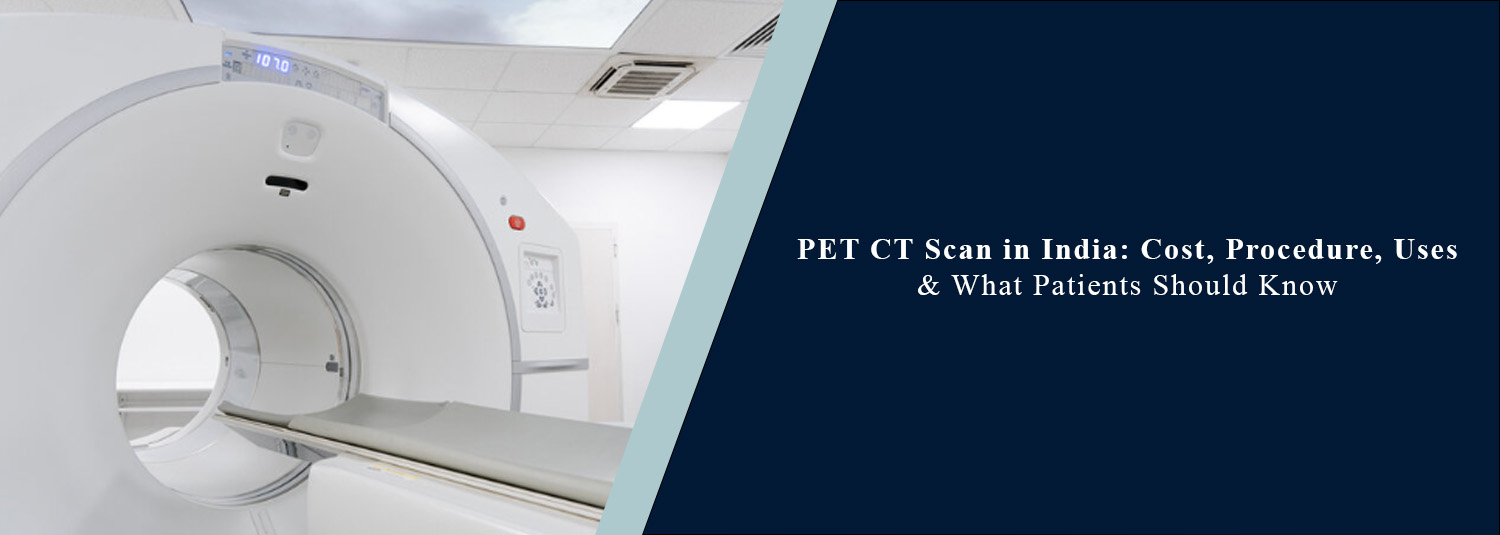
PET-CT scan is an extremely detailed
imaging test that takes place using both Positron Emission Tomography (PET) and
Computed Tomography (CT) scans. CT shows detail and location of organs and
tissues while PET indicates changes in metabolic activity within the body. They
provide doctors with a clearer picture of what goes on inside the body. PET-CT
is frequently used for cancer treatment. It is used to diagnose some cancers,
find out if cancer has spread, assess how well treatment has worked, and
monitor for recurrence of cancer following treatment. But PET-CT is also
employed for specific heart, brain, and other health problems.
What Is a PET-CT
Scan?
The PET-CT (also known as a PET scan)
is a combined PET and CT scan conducted in the same scan session. A small dose
of a radioisotope, or “radiotracer,” is administered, typically through
intravenous injection, prior to the scan. FDG, a compound that mimics glucose,
is the most popular tracer for PET scans used in many cancer cases. However,
certain cancer cells consume more glucose than their normal counterparts, and
as a result, they absorb more FDG and have a different appearance on the images
produced by PET. The CT component is used to form images of the anatomy, and
the PET component is used to get information about activity present in tissues.
By combining these images, the doctor can better sense and grasp abnormal
regions.
Why Is PET-CT Used?
There are various indications for the
use of PET-CT depending on the patient's disease and the type of tracer which
is included. The importance of its use is listed as cancer evaluation. A PET-CT
might help doctors locate an active tumor, determine if cancer has spread to
other areas of the body, see how treatment is working, or search for cancer
returning. It is also used for some neurological diseases and cardiovascular
diseases as well.
PET-CT for Cancer
PET-CT is routinely used in the
diagnosis and staging stages, when making a treatment plan, and for subsequent
follow-up of cancer. PET-CT is used to detect regions of higher or lower
glucose or targeted tracer uptake than other regions in the body in some
cancers. This assists a doctor in determining whether the disease is active or
not, and if it has spread from the primary site.
PET-CT is also useful while treating
cancer. Alterations in the patient's metabolism enable doctors to gauge if the
tumour is treating with the drug. Sometimes the scan is also used to see if
there is a repeat disease following treatment. But PET-CT cannot be used for
all kinds of cancer and all patients. Various cancers have different scanners
and imaging techniques, so the test is carried out as recommended by the
treating physician.
What Is a Whole Body
PET-CT Scan?
In a whole-body PET-CT scan, a large
area of the body is mapped within a single test. It is used frequently in
oncology, where clinicians want to detect activity of cancer somewhere other
than where they initially found it. The amount of area to be scanned depends on
the clinical indication and scan protocol. A whole-body PET-CT scan helps a
doctor identify potential areas of spread of cancer as well as the general distribution
of the disease (active cancer). While a whole-body PET-CT is used for routine
health screening for all, it's not the same as a regular test done for this
purpose. A doctor should determine the need for this exam based upon the
symptoms, medical history, previous test results, and/or the diagnosis of a
known cancer.
What Happens During a
PET-CT Scan?
Typically, a PET-CT scan starts with
certain preliminary checks and preparation. An intravenous line is inserted
into the arm so that the radiotracer is given through this route. Once the
patient has been given the tracer, the patient rests until the tracer has
circulated throughout the body and is taken up by tissues. This time is
typically 30 to 60 minutes for many types of PET scans.
Then the patient is asked to lie on the
scanning table. The patient's head is placed in the PET-CT scanner, which scans
the table as it moves within the scanner. Patients should be immobile during
the scan to ensure good quality imaging is obtained. The actual length of time
for the scan is typically about 30 minutes, but the whole appointment takes a
lot longer due to preparation time and the time that the tracer needs to pass
through the system. Overall time depends on the type of scan and clinical
requirements of the patient.
How Should You
Prepare for a PET-CT Scan?
Preparation varies depending on the type of PET-CT and tracer being
used. For many whole-body FDG PET-CT scans, patients are asked to remain
fasting for several hours before the examination. Sugary or calorie-containing
drinks also need to be avoided before the scan because blood sugar levels and
food intake affect the distribution of the tracer. Water is generally allowed,
but patients should follow the specific instructions provided by their doctor
or diagnostic centre. People with diabetes need special preparation because
blood sugar levels affect FDG PET imaging. Patients should also inform the
medical team about their medicines, allergies, recent illnesses, and existing
medical conditions. Women should inform their doctor if they are pregnant or
breastfeeding.
Is a PET-CT Scan
Painful?
A PET-CT scan is generally considered a non-invasive and mostly painless
examination. The main discomfort comes from the injection used to administer
the radiotracer. Some patients find it uncomfortable to remain still on the
scanning table for a period of time. People who are anxious in enclosed spaces
also feel some discomfort, although the PET-CT scanner is relatively open
compared with some other imaging equipment.
How Much Does a
PET-CT Scan Cost in India?
The PET-CT scan cost in India varies significantly depending on the type
of scan, radiotracer used, body area being examined, facility, and clinical
requirement. As a general reference, current pricing published by Molecular
Diagnostics and Therapy lists several PET-CT examinations in the range of
approximately ₹10,000 to ₹30,000, while its 18F-FDG whole-body PET-CT is listed
at ₹24,000. Our centre also advertises a standard Digital PET-CT starting from
₹9,999, so the actual price depends on the specific scan prescribed. Therefore,
patients should not assume that every PET-CT scan has the same price. Before
booking, ask the centre which tracer and protocol are used and what is included
in the quoted charges.
What Factors Affect
PET-CT Scan Cost?
Several factors affect PET-CT scan charges. The type of radiotracer is
one of the most important factors. Standard FDG PET-CT and specialised scans
using tracers such as PSMA, DOTA, DOPA, or other targeted tracers have
different prices. The area being scanned also matters. A whole-body scan, brain
PET-CT, cardiac PET-CT, and targeted PET-CT have different costs. The type of
CT performed as part of the examination, the use of contrast, the technology
available at the centre, and the reporting requirements also affect the final
price.
PET-CT Scan at
Molecular Diagnostics and Therapy
Molecular Diagnostics and Therapy provides Digital PET-CT imaging
services using advanced PET-CT technology. The centre lists whole-body and
specialised PET-CT examinations, including 18F-FDG, PSMA, DOTA, DOPA, and other
tracer-based scans. The centre's published information states that its Digital
PET-CT service is available across Delhi NCR and nearby regions. Patients
should check the specific scan price and preparation requirements before
booking because the cost and preparation vary according to the prescribed
examination.
What Should Patients
Know Before Booking a PET-CT?
A PET-CT scan should generally be performed based on a doctor's
recommendation. The right tracer and scan protocol depend on the suspected
disease and the purpose of the examination. Patients should carry previous
medical reports and imaging scans when advised, follow fasting instructions
carefully, and inform the centre about diabetes, medications, allergies,
pregnancy, or breastfeeding. It is also important to arrive on time. The radiotracer
used for PET imaging has a short effective period, and delays sometimes affect
the planned schedule. After the scan, patients are generally advised to drink
plenty of water unless their doctor has given different instructions. The
radiotracer loses its radioactivity over time and is gradually cleared from the
body.
Conclusion
A PET-CT scan is a combination of
information about the structure of the body and information about activity
within tissues. This is important in modern cancer treatments and in certain
heart and neurological diseases, and is therefore a useful imaging technique.
Cancer PET-CT imaging is used to determine if cancer has spread, to monitor
treatment response, and to detect recurrence of cancer. A full-body PET-CT scan
is suggested if doctors require the image to provide a view of the disease in a
wider area of the body.
The cost of a PET-CT scan bill in India depends on medical necessity and the facility, type of tracer used, and scan. Before scheduling a PET-CT, check the actual price and include what is being charged for the exam. Digital PET-CT imaging and a suite of specialised PET-CT exams are available at Molecular Diagnostics and Therapy. Patients are advised to communicate with the centre about the prescription and the process of the scan, with regard to the method of the examination, preparation, and cost, before the examination is carried out.
Frequently Asked Questions
In News
Get Our Mobile App
for Easy Access
Book tests, view reports, and manage your health records on the go. Experience convenient healthcare with Molecular Diagnostics and Therapy.
- ✔ Book tests & home collection
- ✔ View reports instantly
- ✔ Track health history
- ✔ Get notifications & reminders
- ✔ Easy appointment management