PET and CT Scan: What Is the Difference?
Talk to Health Expert

Dr. Nikunj Jain
Co-Founder and HOD - Nuclear Medicine ,MBBS, DRM, DNB, FEBNM, FANMB, Dip. CBNC
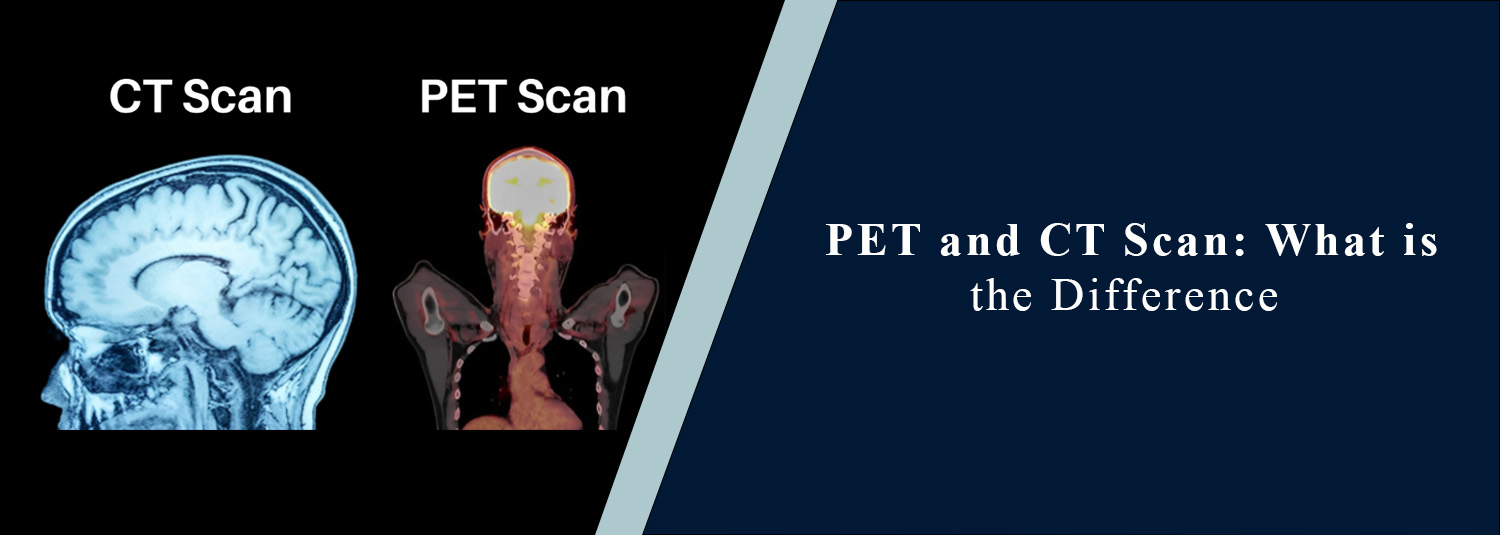
PET scans and CT Scans are two crucial
diagnostic procedures employed in a variety of situations to assess various
ailments, including cancer. PET and CT are commonly referred to as the same
test but actually provide different types of information. This difference
explains to patients why their physician suggests one or both of these tests.
The main use of a CT is to get detailed
images of the body's anatomy, and the main use of a PET is to get information
about the metabolic activity and body function of tissues. A PET-CT scan is an
imaging technique that integrates both PET and CT in one examination, enabling
physicians not only to perform a structural analysis, but a functional analysis
as well.
What Is a CT Scan?
CT is an acronym for Computed
Tomography. It is a special form of X-ray imaging that produces detailed
cross-sectional images of the body with the help of X-rays and computer
processing. These are either viewed on their own or combined to create 3D
images. CT gives detailed information about the organs, bones, blood vessels,
and other tissues, unlike a conventional X-ray, which only produces a
two-dimensional image.
It is also a relatively speedy examination,
and it is also useful in many routine and emergencies. A contrast dye is
administered either orally or intravenously depending on the particular region
being scanned and why the scan is being performed. Some organs, blood vessels,
or abnormal areas show up more clearly using contrast.
What Is a PET Scan?
PET is short for Positron Emission
Tomography. In PET, differences in metabolic activity between tissues are
measured, while in CT only anatomical structures are visible. A radioisotope,
or radiotracer, is a small amount of radioactive material injected into a vein,
typically during a PET scan. A popular PET tracer is radioactive glucose.
Areas of high tracer uptake versus
normal areas are different on PET images, since many cancer cells consume more
glucose than normal cells. PET can thus contribute additional information about
the processes that take place in tissues which would not be measurable if only
anatomy were known.
PET and CT Scan: Main
Difference
The main difference between PET and CT
is that they provide different information. The primary role of computed
tomography is to depict the nature and location of an abnormality in terms of
its structure. PET gives information regarding the metabolic activity or
function of a tissue. For instance, a CT scan determines if a mass is large or
small and its location, and a PET scan determines if it has high metabolic
activity. Combining the two scans enables doctors to make comparisons between
those different types of information for the same examination.
CT Scan Procedure
The process of a CT scan is fast and
simple. The patient is laid on a table that passes through the big round
opening in the CT machine. This scanner captures multiple X-ray images of the
body from various angles. These images are then fed into a computer, which is
used to generate detailed images of the area being studied. The patient is
asked to keep still during the scan to get clear images. In cases that require
contrast, it is administered before or during the exam. The specific
preparations depend on the kind of CT scan you are getting.
PET Scan Procedure
The downside is that the PET scan
procedure is longer than a regular CT scan, because the substance injected into
the body (the tracer) takes time to spread through the body before it decays
and does the work of the CT scan. Once the radiotracer has been given to the
patient, the child remains very still for about 30 to 60 minutes. During this
time, being inactive and resting is suggested. The patient then rests on the
scanning table, and the PET scanner takes pictures of the patient. The actual
scan lasts approximately 20 to 30 minutes, but the entire appointment only
takes a few minutes longer if this time is required to fill out charts for
preparation or uptake of the tracer.
What Is a PET-CT
Scan?
PET-CT scanning is a combination of PET
and CT scanning using one scan. The PET component gives information on
metabolic activity, and the CT component gives detailed information on the
structures of the body. The scans are taken side-by-side that allows doctors to
correlate a region of higher metabolic activity with its precise anatomical
location. When both kinds of information are required, this is a more
comprehensive source of information than either source alone. In cancer care,
PET-CT is used for detection, to identify if cancer has spread, post-treatment assessment,
and other assessments in case of recurrence.
When Is a CT Scan
Used?
There are many reasons for CT scan
recommendations. It is used to assess an injury, an infection, bleeding,
abnormalities of organs, and some kinds of tumors. In particular, if detailed
anatomical information is needed, there are benefits to using CT. It is done
rapidly, too, and it is useful when physicians have to examine a patient
without running a long imaging process. The specific type of CT scan performed
depends on the part of the body being scanned and the doctor's clinical
question used to inform the scan type.
When Is a PET Scan
Used?
Doctors use PET for information about
the metabolism of tissue or the activity of cells when it is important. It
plays a significant part in many cancer assessments. PET is used in cancer
treatment to determine areas of metabolism, to gauge the tumor's severity, and
to track the tumor's response to treatment. However, a high level of metabolic
activity doesn't always indicate the presence of cancer. Some infections and
inflammatory diseases reveal an increased level of activity on the image. This
is important, so PET results are correlated with the patient's clinical
history, symptoms, and other studies.
CT Scan Accuracy:
What Should You Know?
CT scans can provide detailed and useful images, but there is no single
accuracy percentage that applies to every CT scan. The usefulness of CT depends
on the body part being examined, the condition being investigated, the scan
protocol, the use of contrast when appropriate, and other clinical factors. A
CT scan may be highly useful for one condition but may not be the preferred
test for another. Doctors and radiologists interpret CT findings in the context
of the patient's overall clinical information rather than relying on the scan
alone.
PET vs CT: Which One
Is Better?
There is no single test that is better for every situation. PET and CT
serve different purposes. CT is particularly useful when detailed anatomical
information is needed. PET is useful when information about metabolic activity
is important. When both types of information are clinically required, a PET-CT
scan can combine them in one examination. The choice of imaging test should
therefore be based on the patient's symptoms, medical history, and the question
the doctor needs the scan to answer.
Are PET and CT Scans
Safe?
Both PET and CT involve exposure to radiation, although they use
radiation in different ways. CT uses X-rays, while PET uses a radioactive
tracer. In PET-CT, both techniques are performed as part of the same
examination. Doctors recommend these tests when the expected medical benefit
justifies the associated radiation exposure. Patients should inform their
healthcare team if they are pregnant or may be pregnant and should discuss
relevant medical conditions, allergies, and medications before the examination.
PET-CT at Molecular
Diagnostics and Therapy
At Molecular Diagnostics and Therapy, PET-CT imaging is supported by
modern diagnostic technology and experienced nuclear medicine professionals.
PET-CT can provide combined metabolic and anatomical information when this
examination is clinically appropriate. The scan is performed according to the
required protocol, and the findings are interpreted by trained specialists.
Patients are also provided with the necessary preparation instructions before
the examination.
Conclusion
There are two imaging methods (PET and
CT), and each gives a different kind of information. The main use of CT is to
obtain detailed anatomical information, and information on PET is for metabolic
activity and tissue function. A PET-CT scan is a fusion of both, which enables
the doctor to look at an abnormality through both a functional and anatomical
lens. It is especially useful in cancer treatment to monitor disease and
response to treatment and also potentially monitor any recurrence of the
disease.
The selection between a CT scan, PET, or PET CT scan is typically based on the specific information required for diagnosis and/or treatment planning and your individual clinical situation. Molecular Diagnostics and Therapy offers highly sophisticated diagnostic imaging services for clinical circumstances that are clinically appropriate to support the patient and their physician.
Frequently Asked Questions
In News
Get Our Mobile App
for Easy Access
Book tests, view reports, and manage your health records on the go. Experience convenient healthcare with Molecular Diagnostics and Therapy.
- ✔ Book tests & home collection
- ✔ View reports instantly
- ✔ Track health history
- ✔ Get notifications & reminders
- ✔ Easy appointment management