What Is Image-Guided Diagnosis and Why Is It Important?
Talk to Health Expert

Dr. Nikunj Jain
Co-Founder and HOD - Nuclear Medicine ,MBBS, DRM, DNB, FEBNM, FANMB, Dip. CBNC
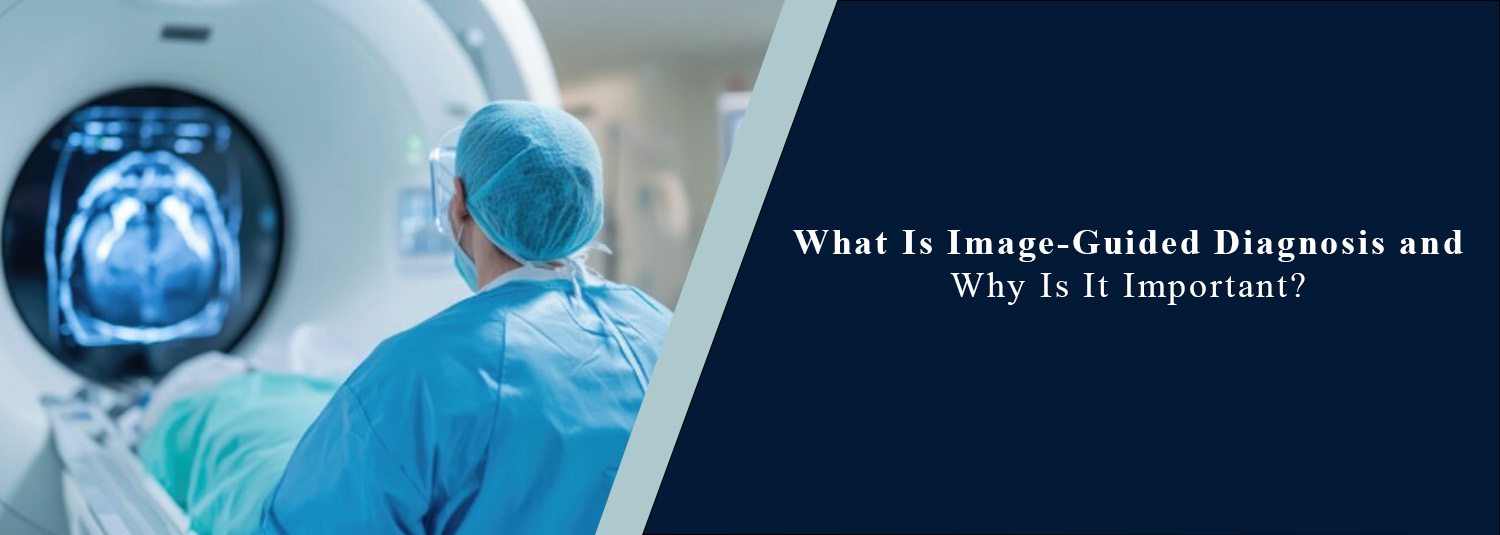
Today's healthcare relies on a variety of technologies and
machines to get an inside look at what's going on within the body. Physicians
start by looking at the symptoms and medical history, performing a physical
examination, and taking blood tests; in some cases, however, they want to
examine the internal organs and tissues further. Here, medical imaging comes in
handy. Image-guided diagnosis is a method in which medical imaging is used to
aid the medical exam, diagnose internal structures, and collect information
that aids further medical decisions. Various imaging methods yield varying
views of the body.
This is based on the region of the body being examined and the
medical information needed, and may involve an ultrasound scan procedure; a CT
scan procedure; or an MRI scan procedure. Advanced diagnostic imaging services
at Molecular Diagnostics and Therapy assist doctors in gaining crucial data on
various organs, tissues and body systems.
What Is Image-Guided Diagnosis?
Image-guided diagnosis is a generic term to cover the use of
imaging to assist in the diagnosis of a medical problem. Imaging is when
medical providers are able to look into the body without opening it in a
surgical way. Imaging gives data on bones, organs, blood vessels, muscles,
etc., depending on the test. This information, along with symptoms, medical
history, physical examination, and laboratory findings, is used by doctors. An
imaging technique does not replace a whole medical evaluation. Rather, it
offers further details that aid physicians in their understanding of the
patient's situation.
Why Is Image-Guided Diagnosis Important?
Many health problems involve changes that happen within the body
that don't show up in a regular physical exam. For instance, an injury might
involve a bone or an internal organ, a growth can occur within the body, or
there may be inflammation of tissues that are not penetrable from the outside.
Diagnostic imaging allows physicians to take a closer look at these areas. It
helps to identify abnormalities, determine location and extent of some
conditions, and aid doctors in planning additional tests or treatment.
Depending on the medical question, a different type of imaging might be
utilized.
Understanding the Ultrasound Scan Procedure
An ultrasound scan
procedure uses sound waves to create images of structures inside the body. A
healthcare professional places a small device called a transducer on the skin.
A gel is applied to help the sound waves travel between the device and the
body. The sound waves create echoes that are converted into images. Ultrasound
is commonly used to examine the abdomen, pelvis, thyroid, blood vessels, and
other structures. It can also be used during pregnancy and for certain
soft-tissue examinations.
One advantage of
ultrasound is that it does not use ionising radiation. The preparation for an
ultrasound scan procedure depends on the body part being examined. Some
abdominal scans may require fasting, while other examinations may require a
full bladder or no special preparation.
Understanding the CT Scan Procedure
CT scan is a procedure that involves taking X-rays of the body
with the help of computer technology to make detailed pictures of the inside of
the body. When having the X-ray, the patient lies on a table that is pushed
inside a large ring-shaped scanner. A number of pictures are captured by the
scanner and then combined together to form a detailed picture of the body.
A CT scan is helpful in looking at other parts of the body such as
bones, chest, abdomen, pelvis, brain, and more.
Contrast dye is sometimes used to make some blood vessels, organs,
or tissues more visible. Preparation for a procedure with a CT scanner varies
depending on the region that needs to be scanned and with or without the use of
a contrast dye. Patients should tell the health care team about any kidney
problems, allergies, any earlier reaction to a contrast dye, and any medicines
used.
Understanding the MRI Scan Procedure
The MRI scan procedure involves a powerful magnetic field and
radio waves that produce detailed images of the body. Whereas MRI does not
employ ionising X-ray radiation like CT. The patient is placed on a table that
moves into the MRI machine during the scan. The exam may take longer than
for some other imaging studies, and the patient must try to stay still during
the scan to obtain images. Patients are required to have safety checks before
receiving an MRI scan procedure. They should notify the health care
professionals of implants, pacemakers, metal devices, prior surgery, or any
metal particles in the body.
How Do Doctors Choose the Right Imaging Test?
There is no single imaging test that is best for every condition.
An ultrasound scan is helpful to examine organs and for live imaging. A CT scan
yields information about the bones and the body's internal structures. The MRI
is used to acquire detailed images of many soft tissues. Medical practitioners
determine the correct test according to the symptoms, the individual's history,
the area of the body being tested, and the type of information they need.
Sometimes more than one scan may be required as each scan offers different
information.
Image-Guided Diagnosis and Treatment Planning
Imaging is not only
useful for finding a possible problem. It can also help doctors plan what to do
next. Images can provide information about the location, size, and extent of
certain abnormalities. This may help doctors decide whether additional tests,
monitoring, medicines, a procedure, or another form of treatment is needed.
Imaging may also be used to monitor changes after treatment. For some medical
procedures, imaging can also help doctors guide instruments to a specific area.
This can be useful for selected biopsies, drainage procedures, and other
image-guided interventions.
Are Imaging Procedures Safe?
The safety of an imaging
examination depends on the type of test and the patient's individual situation.
Ultrasound does not use ionising radiation. MRI uses a magnetic field and radio
waves rather than X-rays. CT uses ionising radiation, and the scan is performed
when the expected medical benefit is considered appropriate. When contrast
material is needed, the medical team considers the patient's health and medical
history. Patients should always share relevant information about pregnancy,
kidney problems, allergies, medicines, implants, and previous contrast
reactions.
Preparing for Your Imaging Procedure
Preparation depends on
the examination. An ultrasound scan procedure may require fasting or
other instructions depending on the area being examined. A CT scan procedure
may require specific preparation, particularly when contrast material is being
used. An MRI scan procedure requires safety screening for certain
implants and metal devices. Patients should always follow the instructions
given for their specific test. If anything is unclear, contact the diagnostic
centre before the appointment.
Image-Guided Diagnosis at Molecular Diagnostics
and Therapy
At Molecular
Diagnostics and Therapy, diagnostic imaging services support doctors in
evaluating a wide range of health concerns. Whether an ultrasound scan
procedure, CT scan procedure, or MRI scan procedure is
recommended, the type of imaging depends on the patient's individual medical
needs. Image-guided diagnosis helps provide important information about
structures inside the body and supports doctors in making informed decisions
about further evaluation and care.
Conclusion
One of the key aspects of modern medicine is image-guided
diagnosis, whereby the doctor analyzes the internal structures of the body
without having to perform exploratory surgery. Information provided by
different imaging methods is different. An ultrasound scan procedure involves
sound waves, a CT scan uses X-rays and computer technology, and an MRI scan
uses magnetic fields and radio waves.
These tests can assist in finding and assessing abnormalities, determining the location and growth of some disorders, and planning future medical therapy. At Molecular Diagnostics and Therapy, ultrasound, CT, and MRI imaging services support image-guided diagnosis and help provide useful information for doctors and patients during the diagnostic process.
Frequently Asked Questions
In News
Get Our Mobile App
for Easy Access
Book tests, view reports, and manage your health records on the go. Experience convenient healthcare with Molecular Diagnostics and Therapy.
- ✔ Book tests & home collection
- ✔ View reports instantly
- ✔ Track health history
- ✔ Get notifications & reminders
- ✔ Easy appointment management