What Is Molecular Imaging? A Beginner's Guide
Talk to Health Expert

Dr. Nikunj Jain
Co-Founder and HOD - Nuclear Medicine ,MBBS, DRM, DNB, FEBNM, FANMB, Dip. CBNC
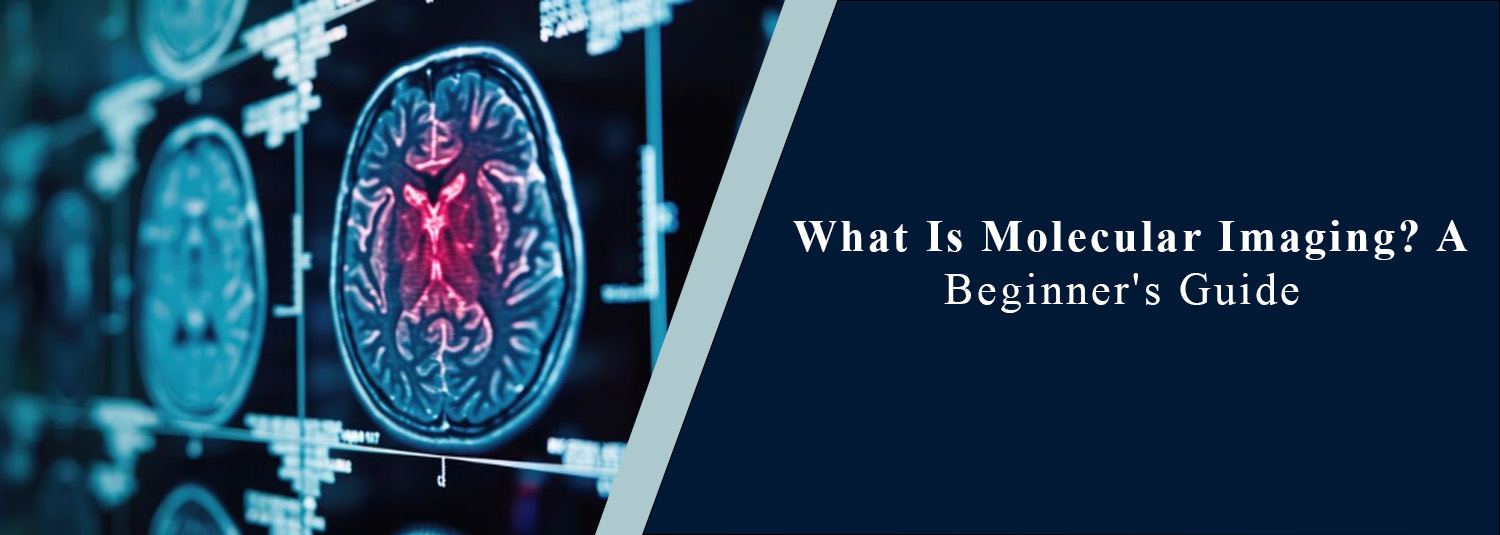
The field of modernized healthcare is continuously developing, and one of the key developments in medical diagnosis is molecular imaging. Molecular imaging has the potential to provide information on how organs, tissues, and cells are functioning within a person's body, instead of just revealing the structure of organs, like more traditional imaging. This helps to identify diseases in much earlier stages, sometimes before any physical changes occur from the usual scans.
Early diagnosis is one of the most vital in successful treatment. Early diagnosis of a disease allows for more effective treatment planning and patient response regardless of the diagnosis or disease severity, whether it involves cancer, heart disease, neurological disease, or infection. That is why it is necessary to use advanced molecular imaging in medicine.
If your doctor has recommended that you have a molecular imaging test, you've probably wondered what it is, why it is recommended, and what it does. This is a book of introduction to the subject in clear, easy-to-understand English. Providing cutting-edge molecular imaging technology and highly trained nuclear medicine professionals, Molecular Diagnostics and Therapy helps deliver accurate diagnostic services, supporting early detection of disease and effective treatment planning.
What Is Molecular Imaging?
Molecular imaging is an advanced form of medical imaging that enables the physician to visualize the activity of organs, tissues, and cells within the body. While size alone or shape would be seen in an organ, molecular imaging also shows the biological and chemical processes occurring in the organ that may signal the presence of disease.
A small amount of a specially-prepared tracer material is administered to the body during the examination. This tracer is sent to the area being studied and helps to mark the activity of abnormal cells. This detailed imaging is then produced on special imaging equipment which used by doctors to check the function of various organs. Molecular imaging looks at function, not just structure, which means that it may identify disease so much earlier than traditional imaging.
How Does Molecular Imaging Work?
The approach with a molecular imaging test starts with the introduction of a small amount of a radioactive imaging tracer or targeted imaging tracer. The tracer depends on the organ/tissue studied. The tracer enters the body and circulates in the blood, then concentrates in certain tissues. Advanced imaging systems are used to detect the tracer and provide detailed images of the working function of cells and organs. These images are used to examine abnormal activity and to track the course of a disease or assess the effectiveness of treatment.
Why Is Molecular Imaging Important?
Molecular imaging is one of the best features, as it enables the assessment of disease before structural damage is seen. Several illnesses start at the cell level, and although these changes may be seen in normal X-ray, ultrasound, or CT scans in early stages, they often do not show up on the more traditional imaging procedures.
Physicians thus have better opportunities to treat patients at an early stage and to prevent possible complications from developing or treat them as early as possible, thereby positively impacting the life of the patient. In addition, molecular imaging can facilitate the physician's understanding of disease severity and determine the best possible treatment for the patient.
Conditions Diagnosed Using Molecular Imaging
In many branches of medicine, advanced molecular imaging is applied for diagnosis. It is important for the diagnosis and monitoring of cancer, heart disease, brain disorders, thyroid disorders, bone disorders, kidney disease, and some infections.
Molecular Imaging is used in cancer care to help detect tumors, to determine if a cancer has spread, to monitor the success of treatment, and to identify if a cancer has returned after treatment. In cardiology, used to assess blood flow through the coronary arteries and aid in the diagnosis of CAD.
Molecular imaging technologies are used in neurology to assess conditions like Alzheimer's disease, Parkinson's disease, epilepsy, and some types of disorders that affect the way your body moves. It is also helpful in the evaluation of thyroid function, bone metabolism, kidney function, and occult infections.
Types of Molecular Imaging Tests
This is because there are several imaging technologies within the field of molecular diagnostic imaging. The most frequently used are PET scans, SPECT scans, PET-CT scans, and SPECT-CT scans. The practical tests carried out differ for various diseases and depend on the symptoms and history. These imaging technologies offer much useful information, and with them, the doctor can make a better diagnosis and design a treatment plan tailored to each patient.
What Happens During a Molecular Imaging Test?
It varies according to the kind of exam. For most patients, a small amount of imaging tracer may be injected into the body to provide an image. An oral and/or inhaled tracer may be used for some exams as appropriate to the condition being assessed. Patients are then given the tracer and typically wait for a certain time for it to reach the target organ. They are then placed on the scanning table, and detailed images of them are taken by the imaging system. The exam is usually painless, and the patient may be asked to lie still to get the best possible pictures.
How Should You Prepare?
The preparation required before undergoing a molecular imaging test varies depending on the type of scan to be taken. Some tests need to be performed when a patient has not eaten anything for a period of time, and there are some tests for which a patient can eat without any restrictions beforehand.
Patients should wear clothes that they are comfortable in and come into the scan without anything metal (i.e., jewellery, etc.). The doctor should also be told if one is pregnant, breastfeeding, a diabetic, has allergies, or is taking any medications. Careful preparation enhances the quality of the images and helps ensure diagnostic accuracy.
Is Molecular Imaging Safe?
Yes. Molecular imaging is considered safe when performed under medical supervision. The amount of imaging tracer used during the examination is very small and follows strict international safety standards.
Most patients experience no side effects, and the tracer naturally leaves the body over time. Doctors only recommend the examination when the expected diagnostic benefits are greater than any potential risks. Patients can discuss any concerns with their healthcare provider before the examination.
Benefits of Advanced Molecular Imaging
There are many benefits of advanced molecular imaging. It allows doctors to detect disease earlier, evaluate organ function, monitor treatment response, and make more accurate diagnoses.
It also helps avoid unnecessary procedures by providing detailed information about the exact location and activity of disease. In many cases, it allows doctors to personalize treatment according to each patient's condition, improving the chances of successful outcomes.
Because it focuses on how the body functions rather than simply how it looks, molecular imaging has become one of the most valuable tools in modern medicine.
Choosing the Right Molecular Imaging Center
If you are searching for a molecular imaging center, it is important to choose one with experienced nuclear medicine specialists, advanced imaging technology, and accurate reporting.
High-quality equipment and expert interpretation play a major role in ensuring reliable diagnoses and effective treatment planning. Choosing a trusted imaging centre also reduces the chances of repeat examinations and improves patient confidence.
At Molecular Diagnostics and Therapy, patients benefit from advanced imaging technology, experienced specialists, and comprehensive diagnostic services designed to support early detection and better healthcare outcomes.
Conclusion
In many diseases, molecular imaging has revolutionized the way doctors can diagnose and manage disease. It enables the study of how organs and tissues work on the cellular level, so it's an earlier method for detecting medical conditions compared to many other types of traditional imaging. Molecular diagnostics imaging offers important information that can help to make an accurate diagnosis and develop personalized treatment for cancer, heart disease, neurological disorders (neuro), thyroid (thyroid), and infection. If your physician suggests molecular imaging, it can be beneficial to understand the procedure in case you feel your examination confidentially. A reliable Molecular Imaging center, like Molecular Diagnostics and Therapy, provides high-quality imaging, accurate reporting, and expert medical care for improved health.
Frequently Asked Questions
In News
Get Our Mobile App
for Easy Access
Book tests, view reports, and manage your health records on the go. Experience convenient healthcare with Molecular Diagnostics and Therapy.
- ✔ Book tests & home collection
- ✔ View reports instantly
- ✔ Track health history
- ✔ Get notifications & reminders
- ✔ Easy appointment management