Alzheimer’s Disease: Types, Symptoms, Causes and PET-CT as a Diagnostic Tool
Talk to Health Expert

Dr. Nikunj Jain
Co-Founder and HOD - Nuclear Medicine ,MBBS, DRM, DNB, FEBNM, FANMB, Dip. CBNC
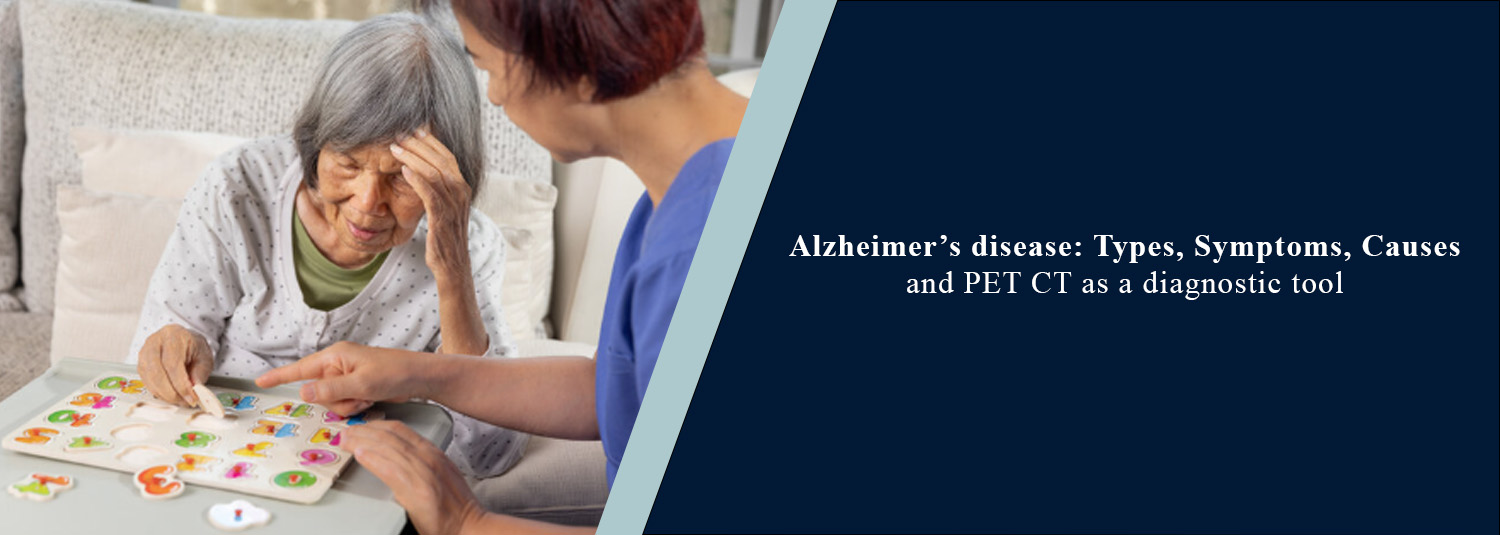
Alzheimer's disease is a case of change
that happens in the brain and causes the changes in memory, thinking, learning
and behaviour. It's the most prevalent type of dementia and can cause an
increasing sense of difficulty with everyday tasks over time. While more often
seen in older adults, Alzheimer's disease doesn't happen to everyone as they
get older.
Early identification of the Alzheimer's
indicators can facilitate patients and their families to look for medical
advice, looking at options for care and making plans for the future. To explore
abnormalities in brain function and brain structure, physicians may consider
taking some blood tests, imaging tests of the brain, and in some cases, imaging
tests with PET (positron emission tomography). Diagnostic imaging services at
Molecular Diagnostics and Therapy aid in the assessment of different medical
conditions and allow the doctor to collect information when formulating plans
for additional investigations.
What Is Alzheimer’s
Disease?
Alzheimer’s disease is a progressive
neurological disease that causes damage to brain cells. As the disease
progresses, it will cause damage to connections within the brain. It affects
memory first and then other areas of the brain responsible for language &
reasoning, judgement & decision-making. This can cause difficulties with
remembering conversations, recent events and places, knowing how to do certain
tasks, and the inability to do certain things for oneself.
Unlike forgetful moments, some of which
everyone experiences throughout life, Alzheimer’s disease is a different
pathology. However, if these problems continue or worsen and cause trouble with
your memory, it is important to have them checked by a health care provider.
Early assessment can help determine what may be causing the person to have
problems with memory and thinking, and rule out other conditions that might be
causing these problems.
Alzheimer’s Symptoms
Typically, Alzheimer's symptoms start
slowly and over time begin to become more evident. Signs and symptoms and their
development differ in patients. Common symptoms include:
Memory loss: Forgetting recent events, repeating questions, or frequently misplacing
everyday objects.
Difficulty planning: Struggling to manage finances, organise tasks, follow instructions, or
solve familiar problems.
Language difficulties: Having trouble finding the right words, following conversations, or
explaining thoughts clearly.
Confusion about time and place: Forgetting dates or becoming disoriented in familiar surroundings.
Changes in mood and behaviour: Experiencing increased anxiety, irritability, apathy, or unusual
emotional responses.
Difficulty performing daily activities: Finding familiar tasks, such as
cooking, shopping, or managing medicines, increasingly challenging.
As Alzheimer’s disease advances, patients may require greater support
with personal care and everyday decisions. Sudden confusion, however, is not
typical of gradually progressing Alzheimer’s disease and needs urgent medical
assessment because it may indicate another medical problem.
Alzheimer’s Causes
and Risk Factors
We don't yet know what causes
Alzheimer's disease. It is thought to be caused by a combination of genetic,
biological, and environmental factors. Alzheimer's progresses with the
formation of two proteins, amyloid-beta and tau. Abnormal buildup of Tau can
result in tangles within the cells, and amyloid beta can get trapped between
brain cells in plaques. These changes are linked to damage to brain cells and
impaired communication between them. There are several potential risk factors
for Alzheimer's disease.
Age: Increasing age is the strongest known risk factor, although Alzheimer’s
disease is not an inevitable consequence of ageing.
Family history and genetics: Having a close relative with Alzheimer’s may increase risk. Certain
genetic variants, including APOE-e4, are associated with increased risk but do
not guarantee that someone will develop the disease.
Cardiovascular health: High blood pressure, diabetes, high cholesterol, smoking, and physical
inactivity can affect overall brain health and may contribute to cognitive
decline.
Previous head injury: Certain serious head injuries have been associated with an increased
risk of dementia.
Other memory problems may be caused by a deficiency of vitamins, changes
in thyroid function, side effects of medication, depression, or sleep
disorders. Medical testing can aid in determining these possibilities.
Types of Alzheimer’s
Disease
Alzheimer’s disease can be described according to the age when symptoms
begin and the genetic factors involved.
1. Early-Onset
Alzheimer’s Disease
Early-onset Alzheimer’s refers to when
the disease develops at a younger age (<65 years). This occurs at a much
younger age than late-onset Alzheimer’s (40s/50s patient age) and occurs less
frequently. Some cases are due to an inherited mutation in the genes; however,
many cases are non-genetic.
2. Late-Onset
Alzheimer’s Disease
Late-onset Alzheimer's disease is the
more typical case and typically occurs when individuals reach the age of 65 and
beyond. There are many factors: age, genetics, and general health.
3. Familial
Alzheimer’s Disease
Familial Alzheimer's disease is when a
family history of Alzheimer's disease exists. An autosomal dominant form of
Alzheimer's can appear at an earlier age and is caused by rare inherited
mutations. But simply having a family history isn't enough to cause the
disease, though.
How Is Alzheimer’s
Disease Diagnosed?
Unfortunately, there are several steps
in the diagnosis of Alzheimer's since no one test will work for every person.
Generally, symptoms, medical history, medications, and functioning in daily
life are reviewed first. There are tests of memory, attention, language, and
problem-solving functions. Bloodwork can help to determine the presence of
other factors which may affect cognition. To check the structure of the brain
and to see if there are other causes, such as a stroke, bleeding, or a tumour,
an MRI or CT scan might be performed.
Doctors might suggest specialised tests
for the changes in the body associated with Alzheimer's disease in certain
patients. These might include a PET scan or, as appropriate, other biomarker
tests. Depending on clinical assessment and the patient's symptoms, as well as
whether the result might affect the diagnosis or treatment, a choice between
methods is made.
PET-CT for
Alzheimer’s Disease: What Does It Show?
PET imaging can give information on
brain activity or on certain specific changes in the brain which may indicate
Alzheimer's disease.
FDG PET Imaging
FDG PET scan shows patterns of brain
glucose use. Brain cells consume glucose for energy; some brain diseases can
cause characteristic decreases in brain metabolic activity. Identifying these
patterns and trends can guide physicians in their investigation of cognitive
decline when a diagnosis is unclear.
Amyloid PET Imaging
Special amyloid tracers identify
amyloid plaques in the brain with Amyloid PET. It might assist in deciding, in
some patients, whether significant amyloid deposition occurs or not. But just
having an amyloid scan doesn't necessarily mean that their symptoms are
attributed to Alzheimer's disease.
Tau PET Imaging
Tau PET involves the use of specialised
tracers to aid in the diagnosis of abnormal tau build-up. This is not always
available and may not be needed for all patients. PET-CT scans for Alzheimer’s
disease are not always required however may be used if further information is
required by a specialist. Symptoms, cognitive testing, medical history, and
other investigations will need to be considered along with the results.
Diagnostic imaging services are
available at Molecular Diagnostics and Therapy to help diagnose certain medical
conditions. This should be discussed with your neurologist or treating
physician to decide which investigation is required. Certain tracers for brain
PET scans will need to be checked for availability with the diagnostic centre.
Conclusion
Alzheimer’s disease is a progressive
disease that can affect the brain, leading to problems with memory, thinking,
and daily living. Knowing the symptoms, causes and types of Alzheimer’s can
help families recognise any changes and receive the correct medical advice.
Clinical assessment and cognitive testing are key.
MRI, CT and specialised PET scans may be used to gain more information. PET-CT scans for Alzheimer’s disease are not always needed and should only be recommended if required for the individual’s medical needs. Diagnostic imaging services are available at Molecular Diagnostics and Therapy to help diagnose certain neurological conditions. If you or a family member are experiencing ongoing or worsening memory issues, please speak to a qualified healthcare professional for the correct assessment.
Frequently Asked Questions
In News
Get Our Mobile App
for Easy Access
Book tests, view reports, and manage your health records on the go. Experience convenient healthcare with Molecular Diagnostics and Therapy.
- ✔ Book tests & home collection
- ✔ View reports instantly
- ✔ Track health history
- ✔ Get notifications & reminders
- ✔ Easy appointment management