Bone Cancer: Symptoms, Causes, Types & PET CT as a Diagnostic Tool
Talk to Health Expert

Dr. Nikunj Jain
Co-Founder and HOD - Nuclear Medicine ,MBBS, DRM, DNB, FEBNM, FANMB, Dip. CBNC
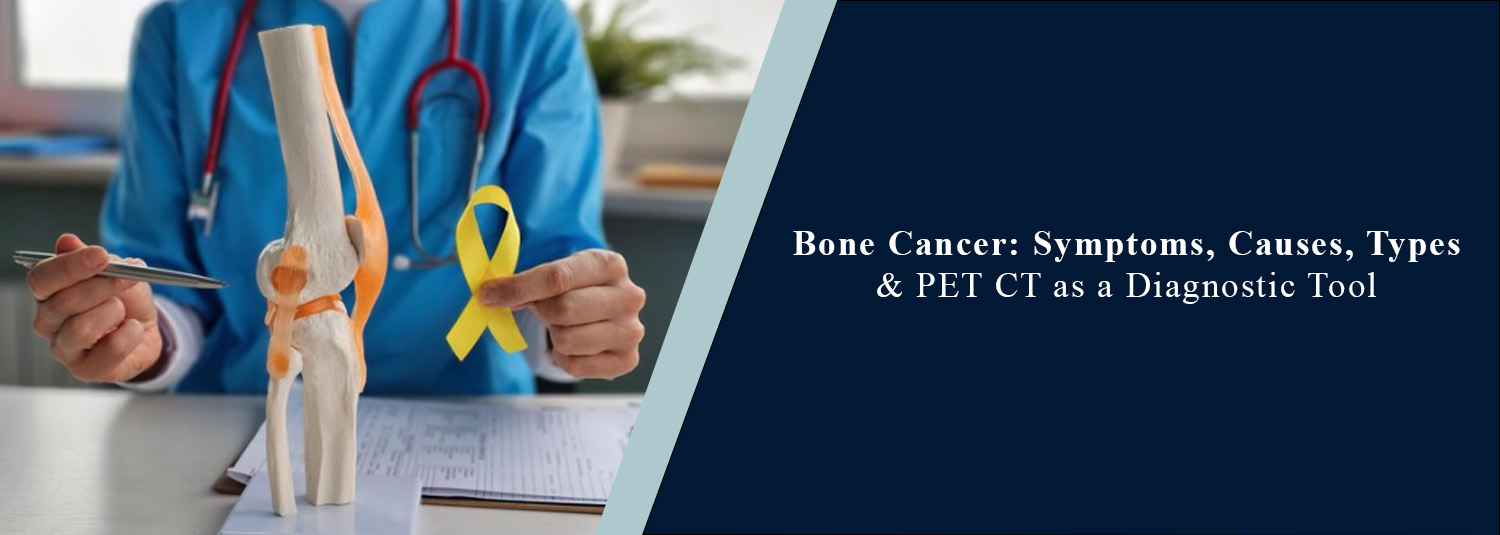
Bone cancer is a relatively uncommon
form of cancer that starts in the bone structure. It affects various bones at
various ages, depending on the type of cancer. Metastatic (secondary) bone
cancer develops when cancer cells in the body break free, travel to the bone,
and activate there. Primary bone cancers develop in the bone or bones. The
majority of cancer that spreads to the bones in adults is not primary bone
cancer, but rather a type of secondary cancer.
Persistent bone symptoms need to be
assessed early, as symptoms of bone pain, swelling, and changes have many
causes, most of which are not cancer. Based on suspicion of the condition,
doctors use physical exam, blood tests, X-rays, Computed Tomography (CT),
Magnetic Resonance (MR), PET or PET-CT, and biopsy. A bone cancer PET-CT is
more useful for evaluating the extent of disease, the identification of other
areas of involvement, and assessing treatment response in selected patients to
give both anatomical and metabolic information.
What Is Bone Cancer?
Bone cancer affects abnormal cells in
bones that become cancerous and start to grow out of control to form a
cancerous tumor. Primary bone cancers are a kind of cancer that is known as
sarcomas. Major types of primary bone cancers are osteosarcoma, Ewing sarcoma,
chondrosarcoma, and chordoma. They have different patterns of growth and
treatment and develop from different types of cells or tissues. People should
also not confuse primary bone cancer with bone metastases. Cancer that spreads
into bone is referred to as secondary or metastatic bone cancer. Cancer can
spread to the bones, including breast, prostate, and lung cancers.
Bone Cancer Types
Osteosarcoma
Primary bone cancer is a type of cancer
that occurs in cells that normally make new bone (osteosarcoma). Usually it
happens in children, teenagers, and young adults, but can happen at any age. It
often occurs in the long bones, especially in the area around the knee.
Ewing Sarcoma
A second kind of bone cancer, more
commonly encountered in kids and youngsters, is known as Ewing sarcoma. It
occurs in the bones or within the surrounding soft tissues and develops in the
pelvis, legs, chest wall, and elsewhere.
Chondrosarcoma
In chondrosarcoma, the
cartilage-producing cells turn into those that make cancer. It is more common
in adults and is found in the pelvis, thigh bone, upper arm, or ribs.
Chordoma
Chordoma is one of many rare forms of
bone tumor that usually occur in the spinal column around the base of the skull
or in the sacrum region.
Bone Cancer Causes
In most instances, the exact cause of
primary bone cancer is not identified. But some factors have been recognized as
contributing to the development of bone cancer. Some bone cancers are more
common in people who have been previously treated with high radiation doses or
some of the chemotherapy drugs. Some inherited diseases and genetic syndromes
also make a person more susceptible to certain types of bone tumors. Other
diseases that are linked to a higher risk of osteosarcoma include Paget disease
of bone, especially in the elderly. If a person has a risk factor, this does
not imply that he/she will inevitably develop bone cancer. A large number of
people with risk factors do not go on to contract the disease.
Bone Cancer Symptoms
Bone symptoms are different based on
the site of the tumor, its size, and type. Pain is a very common symptom, and
it also isn't always present at the onset of bone cancer. If pain persists or
there is pain in or around a bone that is not typical for an injury, it is
important. But some also have swelling or a lump close to the involved bone. If
a bone breaks for no apparent reason, then it also needs medical evaluation.
You may experience other symptoms, such as unexplained fever or other
non-specific symptoms. These symptoms are caused by injury, infection,
arthritis, benign bone growth, and other ailments. So, if someone does have
bone pain, it is not necessarily related to cancer.
How Is Bone Cancer
Diagnosed?
A series of steps is typically required
to make a diagnosis of bone cancer. A doctor starts by asking about a patient's
symptoms and health history, as well as a physical exam, followed by imaging
tests based on the symptoms and findings. When a bone tumour is suspected, one
of the first imaging tests performed is usually an X-ray. It reveals
alterations in the shape, form, and size of a bone.
Further imaging such as a computed
tomography [CT] scan, magnetic resonance [MRI] scan, a bone scan, and/or
positron emission tomography [PET] scan are advised if an abnormality is found.
A biopsy is very important because sometimes images are ambiguous and do not
make it easy to determine if a suspicious bone lesion is cancer. A biopsy is
when tissue is removed to look for cancer cells by a pathologist.
Role of PET-CT in
Bone Cancer
PET-CT combines two imaging techniques. PET provides information about
metabolic activity, while CT provides detailed anatomical information. The most
commonly used PET tracer is FDG, a radioactive form of glucose. Many cancer
cells use glucose at higher rates than normal cells, which can make areas of
increased metabolic activity visible on PET. CT helps show the exact anatomical
location of these abnormalities. A bone cancer PET CT may therefore provide
useful information when doctors need to evaluate the extent of disease or look
for additional areas of involvement.
PET-CT for Staging
Bone Cancer
Staging determines how extensively cancer has developed or spread and
helps doctors plan appropriate treatment. PET-CT may help identify
metabolically active disease in different parts of the body. This can be
particularly useful when doctors need to assess whether disease is present
beyond the original tumor. CT provides anatomical information, while PET can
highlight areas with increased metabolic activity. The exact role of PET-CT
varies according to the type of bone cancer and the individual patient's clinical
situation. Other imaging tests, particularly MRI, may also be important for
evaluating the local extent of a bone tumor.
Conclusion
There are very small number of cases of
bone cancer, and it refers to several types of the disease, including osteosarcoma,
Ewing's sarcoma, chondrosarcoma, and chordoma. Persistent pain, swelling, a
lump, unexplained fracture, and unexplained fever are among the bone cancer
symptoms, but none of them are exclusive to cancer and can be caused by other
conditions. It is beneficial for patients to know the bone cancer causes and
bone cancer types so that they are aware of why sometimes they need further
evaluation. X-rays, other imaging procedures like CT scans, MRI scans, or
PET-CT scans, and at times biopsy give important information.
A PET-CT is used to get a metabolic response to the cancer in addition to the anatomical information and can sometimes be used to diagnose disease distribution, to gauge response to therapy, or to monitor for future disease recurrence, if clinically appropriate. Molecular Diagnostics and Therapy has advanced services available in PET-CT and diagnostic imaging to assist cancer evaluation and monitoring of treatment based on individual clinical needs and physician's recommendations.
Frequently Asked Questions
In News
Get Our Mobile App
for Easy Access
Book tests, view reports, and manage your health records on the go. Experience convenient healthcare with Molecular Diagnostics and Therapy.
- ✔ Book tests & home collection
- ✔ View reports instantly
- ✔ Track health history
- ✔ Get notifications & reminders
- ✔ Easy appointment management