How to Prepare for an MRI Scan: Do’s and Don’ts?
Talk to Health Expert

Dr. Nikunj Jain
Co-Founder and HOD - Nuclear Medicine ,MBBS, DRM, DNB, FEBNM, FANMB, Dip. CBNC
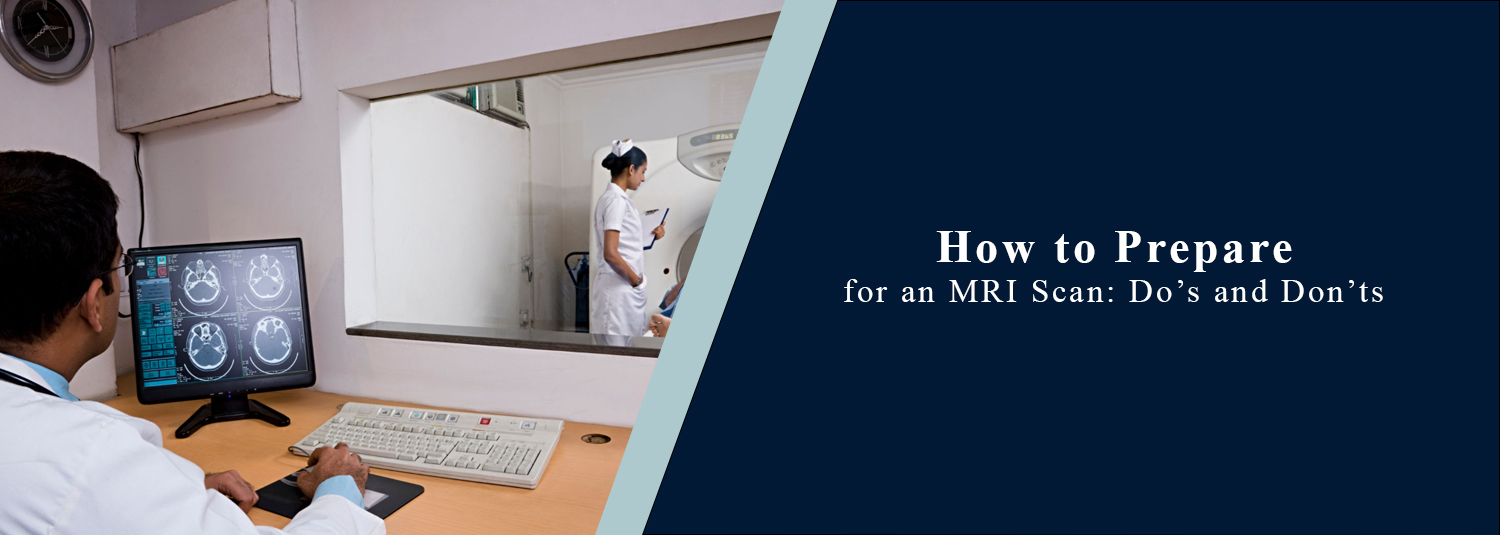
One of the most sophisticated diagnostic instruments in modern healthcare is Magnetic Resonance Imaging (MRI). It assists physicians in recording detailed photographs of the internal organs, soft tissues, brain, and spine without exposing the body to radiation. Since MRI is based on the effect of strong magnetic fields, any external influence can affect the precision of the scan. That is why it is necessary to prepare it well, not only because it is safe, but also to obtain accurate results.
When you are booked for an MRI scan,
you are a little anxious and do not know what to expect. The positive thing is
that preparation is easy and can be handled. With the help of several
straightforward tips, it is possible to streamline the process and make it
easy, pleasant, and stress-free.
Why Preparation Matters?
The effectiveness of an MRI scan depends on preparation. The machine employs very strong magnets, and that is why any metallic object, however small, can disrupt the imaging process. It can even be a danger to health in certain situations.
Other than safety, appropriate
preparation is what makes the difference between the clear images that are
captured and those that are not. Inadequate preparation might lead to smeared
scans, time wastage, or redoing the process. To patients, it is an unwarranted
stress and time. In the case of doctors, it may postpone diagnosis and
treatment.
Simply put, proper preparation will
ensure that you and your healthcare professional obtain the best and most
timely outcomes.
Do’s: What You Should Do Before an MRI Scan
There are some steps that you must
follow before your MRI appointment. They are easy yet very effective in
guaranteeing a smooth experience.
- Give your medical history: Provide information on implants, surgeries or
chronic conditions. Special attention is needed before an MRI for devices
such as pacemakers, metal clips, or cochlear implants.
- Respond to food and drink requirements: Generally, it is permissible to eat normally.
But when you are getting a scan with contrast dye or an abdominal scan,
then you might be requested to fast for a few hours.
- Select the right clothing: Wear loose, comfortable clothes with no metal
zippers, hooks or buttons. In case of necessity, a gown will be given by
the diagnostic centre.
- Show up on time during your appointment: This will allow you to fill out paperwork and
unwind until the time to be scanned.
- Remain composed and speak: In case you are nervous or claustrophobic, explain the situation to the technician beforehand so he or she can help you.
These minor measures can go a long way
in enhancing your comfort as well as the quality of the scan.
Don’ts: What to Avoid Before an MRI Scan
It is also important to know what you should avoid as much as doing. Some errors may disrupt the scan or cause complications.
- Wear no metal objects: Jewellery, watches, hairpins, and even metal
clothing should be taken off.
- Do not use makeup and cosmetics: There are products with metallic particles
that can disrupt the scan.
- Keep no electronics: Phones, credit cards and smartwatches may be
ruined by the magnetic field.
- Better not miss the fasting rules: In case the doctor has told you to stop
eating, do it exactly as you should.
- Do not conceal medical facts: It is always best to reveal any implants, allergies, or conditions to prevent the risk.
These are some of the errors that
should be avoided to make your MRI scan effective and safe.
Quick Overview: Do’s vs Don’ts
|
Do’s |
Don’ts |
|
Share complete medical history |
Do not wear metal objects |
|
Follow dietary instructions if given |
Avoid makeup with metallic content |
|
Wear comfortable, metal-free clothing |
Do not bring electronics into the room |
|
Arrive early and stay relaxed |
Do not ignore medical advice |
What Happens During the MRI Scan?
The knowledge of the process can be used to mitigate anxiety. You will be lying on a flat table inside a machine that is large and tube-shaped when undergoing an MRI scan. The procedure is absolutely painless, and it involves having to sit still during a given period.
When taking pictures, the machine makes a loud tapping or humming noise. These are the normal noises, and it means that the scan is being done. Earplugs or headphones are usually given to you to help you feel at ease.
The scan normally takes between 20 and 60 minutes, which is based on the area under examination. In others, a contrast dye can be injected into a vein to enhance the clarity of the images. This is not considered a hazardous practice, and it is administered only when required and in case of a medical condition evaluation.
Tips for a More
Comfortable Experience
Although MRI scans are safe, some
individuals might be uncomfortable with the enclosed space. Some easy tricks
can help you remain calm during the procedure:
- Pay attention to deep breathing slowly.
- Close your eyes to help you feel less in
prison.
- Play music in case the facility provides it.
- Report to the technician anything that makes you feel uncomfortable.
These minor details can create a huge impact on your experience in general.
Final Thoughts
The process of MRI scan preparation is not very complex, yet it is of great importance. The practice of the recommended dos and avoiding the common dons makes the procedure safe, efficient, and accurate. Wearing the right clothing, telling your medical history, and all these steps are provided to achieve better imaging results.
An MRI scan is an effective tool that can be used to identify and track a broad spectrum of health problems. Being a serious preparer, you not only make the process easier on yourself but also assist your doctor in making more and quicker decisions concerning your health.
Frequently Asked Questions
In News
Get Our Mobile App
for Easy Access
Book tests, view reports, and manage your health records on the go. Experience convenient healthcare with Molecular Diagnostics and Therapy.
- ✔ Book tests & home collection
- ✔ View reports instantly
- ✔ Track health history
- ✔ Get notifications & reminders
- ✔ Easy appointment management