What Is a PET-CT Scan and When Do You Need It?
Talk to Health Expert

Dr. Nikunj Jain
Co-Founder and HOD - Nuclear Medicine ,MBBS, DRM, DNB, FEBNM, FANMB, Dip. CBNC
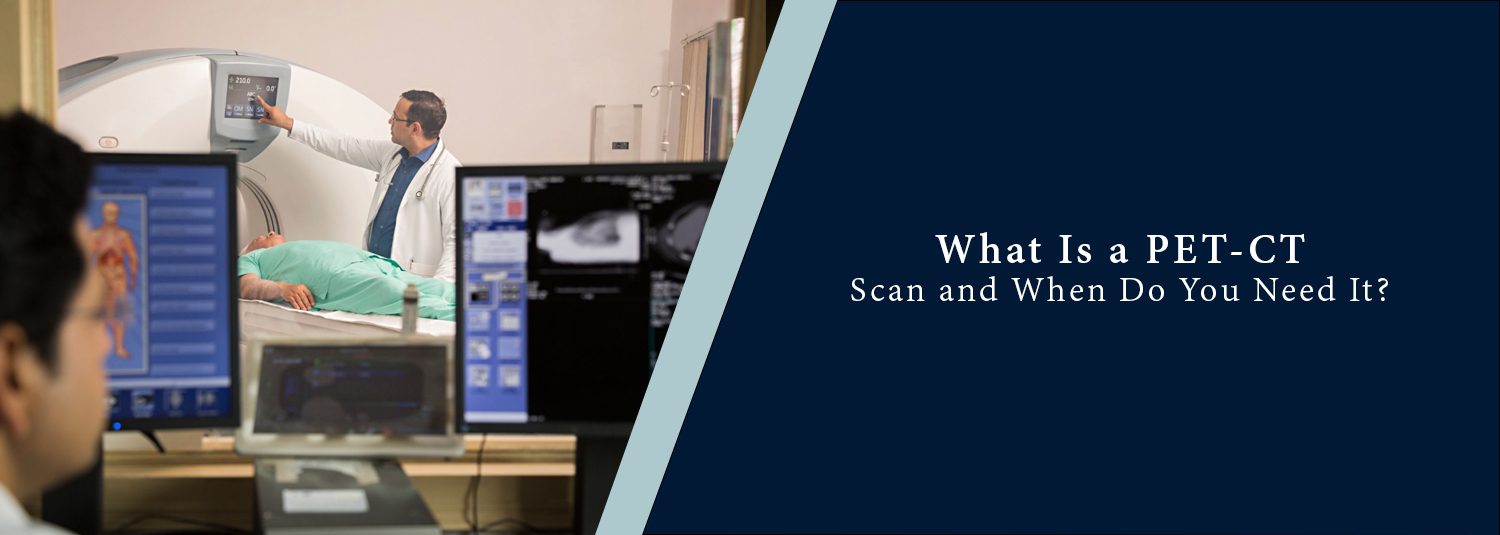
Early and accurate diagnosis is an important element of successful treatment in contemporary medicine. The PET-CT scan is one of the most sophisticated imaging techniques which are in the modern world. It is a combination of two strong technologies that give more detailed information about the functioning of the body, not only how it looks. In the event that you or your doctor has been told to consider a PET-CT scan, you may be asking yourself what this is, how it works, and when it is really required. A knowledge of this can assist you in becoming more confident with regard to the process and its significance.
What is a PET-CT Scan?
A PET-CT scan is a combination of two imaging processes: PET (Positron Emission Tomography) and CT (Computed Tomography). As a combination, they offer an informational system of functionality and structure regarding the body.
PET component assists in identifying a metabolic activity by making use of a small dose of radioactive material, mostly a glucose-based substance. Cancer cells and some of the abnormal tissues take more glucose than normal cells; they are therefore more active on the scan.
The CT component allows one to see in-depth pictures of the inner organs, bones, and tissues of the body. When these two scans are used, there is a very accurate and very complete picture of what is taking place inside the body that doctors get.
How Does a PET-CT Scan Work?
A PET-CT scan is an easily and safely conducted procedure, under medical supervision. A radioactive tracer is injected into the body of a patient in small proportions. Once it has circulated, the scan will then be conducted with the help of a specialized machine.
The scanner identifies the regions that have high metabolic activity and fuses them with a detailed anatomy map. This enables the doctors to identify the exact locality and the nature of abnormalities. Finally, the procedure itself is quite fast since the dissection can be completed in a few hours (preparation included).
Key Features of PET-CT Scan
PET-CT scans are unique since they involve a combination of two forms of information in a single test. The major benefits are:
Early diagnosis of diseases.
Demonstrates the structure and functioning of tissues.
Assists with the proper staging of cancer.
Monitors treatment effectiveness
Determines disease recurrence.
That is why PET-CT is one of the most effective instruments in contemporary diagnostics, particularly in oncology.
When Do You Need a PET-CT Scan?
Not all conditions need PET-CT scans. They tend to be prescribed when a comprehensive functional imaging of the organ is required, especially in complicated or severe illnesses.
PET-CT is commonly used in the following situations:
Diagnosis and staging of cancer.
PET-CT is used to identify tumor size and spread to other body areas to establish whether the cancer has spread or not.
Monitoring cancer treatment
The PET-CT is a scan administered by the doctors to check the effectiveness of treatments such as chemotherapy or radiation therapy.
Detecting recurrence
It is able to tell the presence of cancer that has come back following a treatment; in many cases, even before the appearance of symptoms.
Heart conditions
PET scans are able to evaluate blood flow to the heart and see scars of damaged heart tissue.
Brain disorders
It assists in the assessment of neurological disorders like epilepsy or alzheimer disease.
PET-CT vs CT Scan: What’s the Difference?
PET-CT, as well as CT, is a highly sophisticated imaging method used for different purposes. Some brief comparison:
This comparison indicates that PET-CT has widespread use in complicated cases, particularly in cancer diagnostics and treatment.
Is a PET-CT Scan Safe?
PET-CT represents a relatively safe procedure with a high degree of medical supervision. The quantity of radioactive tracer is minute, and it is normally excreted in less than a day.
But some precautions are observed:
Having the scan is a procedure that is normally discouraged by pregnant mothers.
Patients can be required to fast before the procedure.
Consuming water after the scan assists in expelling the tracer.
Physicians would always consider the positive complications and the low-risk factors before prescribing the test.
How to Prepare for a PET-CT Scan?
It is essential to prepare it, but the results can be obtained with ease. Patients should normally avoid heavy meals and activities before the scan. It is advised that one wear comfortable clothes, and any medical history must be disclosed to the healthcare professional. When instructions are accurately followed, the quality of images will be improved, and the diagnosis will be more reliable.
Conclusion
PET-CT scan is an image measurement that is one of the most sophisticated ones that can be offered nowadays, which provides an original mix of functional and structural information. It is important in identifying, diagnosing, and managing severe conditions, particularly cancer.
Although it is not mandatory for all patients, it is necessary for a detailed and early diagnosis. PET-CT scans frequently assist physicians by detecting diseases at the metabolic level; therefore, initiating the treatment process at the appropriate time, which leads to greater success.
In Molecular Diagnostics and Therapy, we offer the state-of-the-art PET-CT imaging using the latest technology and highly qualified specialists being able to deliver a precise image that has been properly timed in order to detect the disease at the right time. We believe in patient comfort, safety, and precision, in assisting you to make positive moves to better health with confidence.
Frequently Asked Questions
In News
Get Our Mobile App
for Easy Access
Book tests, view reports, and manage your health records on the go. Experience convenient healthcare with Molecular Diagnostics and Therapy.
- ✔ Book tests & home collection
- ✔ View reports instantly
- ✔ Track health history
- ✔ Get notifications & reminders
- ✔ Easy appointment management