
CT Scan High-Resolution Cross-Sectional Imaging Explained
Talk to Health Expert

Dr. Nikunj Jain
Co-Founder and HOD - Nuclear Medicine ,MBBS, DRM, DNB, FEBNM, FANMB, Dip. CBNC
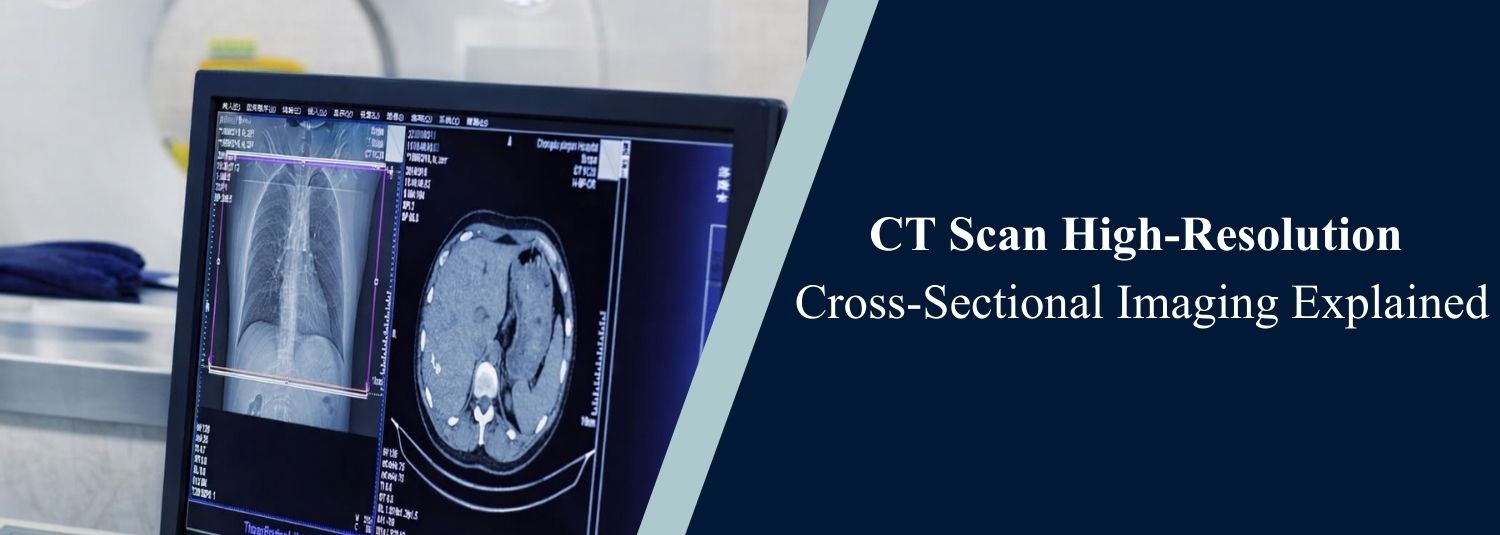
Imaging has changed the way physicians diagnose and treat diseases. The CT scan, or the Computerized Tomography, is a highly widespread test. It provides cross-sectional images of the body, which are detailed. In a CT scan, physicians are able to view organs, bones, blood vessels, and tissues very well. This is why it is a significant tool in modern medicine.
At Molecular Diagnostics and Therapy, CT scans are performed using advanced multi-slice systems that deliver high-resolution images while keeping radiation exposure as low as possible for the patient.
What is a CT Scan?
A CT scan is an examination that involves multiple X-rays (images), which are taken at various angles. These images are assembled, creating detailed crossover sections of the body. The images allow physicians to view the internal structure layer by layer, unlike a standard X-ray.
The CT scans are performed to examine the brain, chest, abdomen, pelvis, spine, and joints. They come particularly handy in cases of emergencies when an accurate and quick diagnosis has to be done.
Why is a CT Scan Important in Diagnosis?
With the help of CT scans, doctors are able to discover most of the medical issues early. They reveal the extent of damage and allow the doctor to determine the progress of treatment. CT imaging is particularly valuable because it provides:
Rapid results
High anatomical detail
Precise localization of abnormalities
Guidance for biopsies and surgeries
In Molecular Diagnostics and Therapy, CT scans are very important in cancer diagnosis, trauma examination, and internal organ examination.
Conditions Diagnosed Using CT Scan
CT scans are used across almost all medical specialties. Some of the most common conditions diagnosed include:
Brain hemorrhage and stroke
Head injuries and fractures
Lung infections and tumors
Heart and blood vessel diseases
Liver, kidney, and pancreatic disorders
Abdominal pain and appendicitis
Cancer detection and staging
Because CT provides such detailed images, it is often the first imaging test recommended in serious or urgent cases.
How the CT Scan Procedure Works?
During the CT scan patient lies on a motorized table and is taken into a circular-shaped scanner. The scanner goes around the body, and in a couple of seconds, it captures numerous images. The procedure is:
Painless
Non-invasive
Usually complete
ted within 5–15 minutes
In some cases, a contrast dye may be given orally or intravenously to enhance the visibility of blood vessels and organs.
Is a CT Scan Safe?
The CT scans tend to be safe in their use. Unnecessary repetition of scans is to be avoided because X-ray radiations are utilized. The most recent CT equipment is able to deliver reduced doses of radiation and provide good image quality. At Molecular Diagnostics and Therapy, strict protocols are followed to ensure patient safety and minimize radiation exposure.
Pregnant women and children should always inform their doctor before undergoing a CT scan.
CT Scan vs Other Imaging Tests
Every imaging test has its purpose. Soft tissues are better visualized using MRI, whereas ultrasound is better with real-time pictures. The CT scan is quick and provides anatomic, detailed images. In an emergency, a CT scan is mostly preferred over an MRI due to its speed and increased accessibility. They, too, are superior to other tests in identifying bone fractures and internal bleeding.
Role of CT Scan in Emergency Medicine
The CT scanning is one of the tools that is of the highest importance in the emergency rooms. It allows physicians to locate internal trauma, bleeding, organ trauma, and life-threatening issues quickly. A CT scan can determine within seconds whether treatment is required or not in cases of trauma, e.g. car crash or a head injury, making the difference between life and death.
Advances in CT Scan Technology
CT technology continues to improve rapidly. Newer systems now offer:
Multi-slice imaging for faster scans
3D reconstruction of organs
AI-assisted image analysis
Lower radiation exposure
Enhanced contrast imaging
These innovations have made CT scanning more accurate, safer, and patient-friendly.
Final Thoughts
The CT scan is one of the most powerful modern diagnostic tools. Its detailed cross-sectional images are helpful in early detection of diseases, correct judgement of injuries, and good treatment planning by the doctors. From emerging cases, cancer screening, and check-ups, CT scans have been a major contributor to better patient outcomes.
At Molecular Diagnostics and Therapy, advanced CT services ensure detailed imaging, expert interpretation, and patient-centered care, helping doctors make fast and confident clinical decisions.
Frequently Asked Questions
In News
Get Our Mobile App
for Easy Access
Book tests, view reports, and manage your health records on the go. Experience convenient healthcare with Molecular Diagnostics and Therapy.
- ✔ Book tests & home collection
- ✔ View reports instantly
- ✔ Track health history
- ✔ Get notifications & reminders
- ✔ Easy appointment management
