NCV Test Early Detection of Nerve Damage and Neuropathy
Talk to Health Expert

Dr. Nikunj Jain
Co-Founder and HOD - Nuclear Medicine ,MBBS, DRM, DNB, FEBNM, FANMB, Dip. CBNC
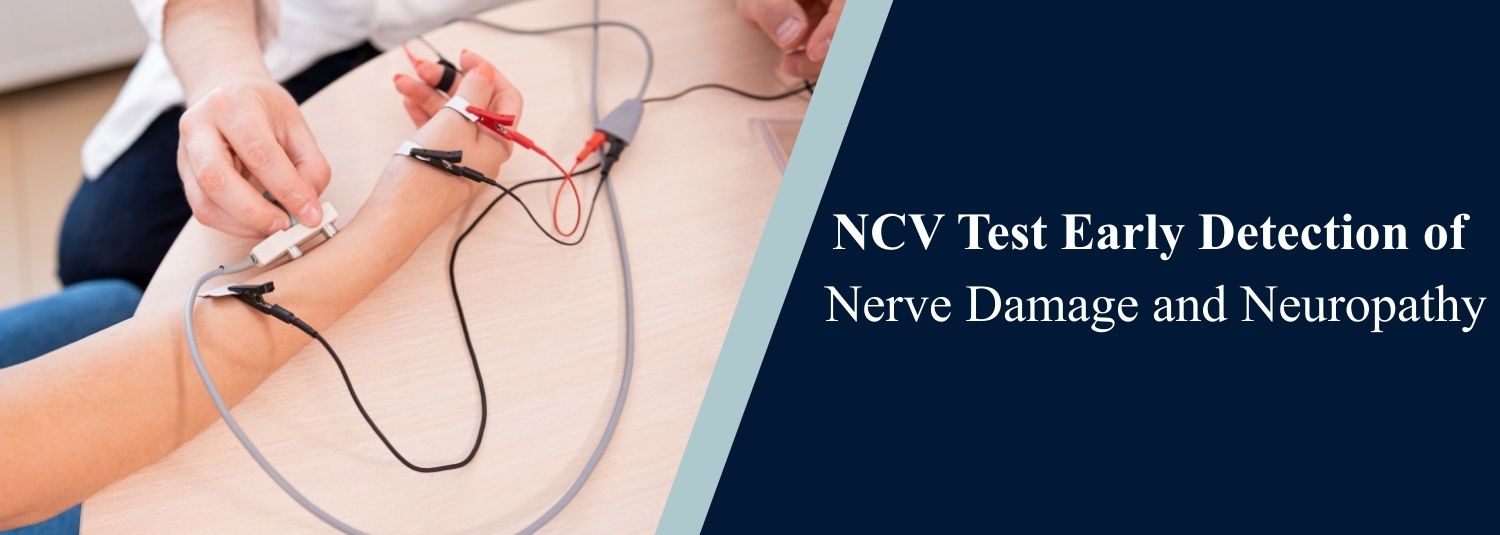
The disorders related to nerves are increasing due to lifestyle changes nowadays, diabetes, a lack of vitamins, excessive amounts of time in front of the screen, repetitive motions, and aging. The fact that there are nerve issues may be accompanied by numbness, tingling, burning pain, or weak muscles. The NCV test, or the Nerve Conduction Velocity test, is one of the most accurate tests to check nerve conditions and issues.
At Molecular Diagnostics and Therapy, we have the latest equipment to conduct NCV tests. This assists physicians in identifying nerve issues at an early stage.
What is an NCV Test?
An NCV test is a neurological investigation that examines the speed of electrical signals in your nerves. Healthy nerves transmit signals fast and smoothly. Damaged nerves convey the signals slowly or irregularly.
This test helps doctors identify:
Nerve damage
Nerve compression
Peripheral neuropathy
Disorders affecting nerve-muscle communication
It is often performed along with an EMG (Electromyography) for a complete evaluation of the nervous system.
Why is the NCV Test Important?
The damage to nerves may silently increase and become extreme before you realize anything. Early detection of it through the NCV test allows doctors to take timely action to prevent irreversible nerve damage. Doctors commonly recommend NCV testing for patients experiencing:
Numbness or tingling in hands or feet
Muscle weakness
Burning or electric shock-like pain
Loss of coordination or balance
Symptoms of diabetic neuropathy
Suspected carpal tunnel syndrome
At Molecular Diagnostics and Therapy, NCV testing helps clinicians identify the exact cause of symptoms rather than relying only on physical examination.
How the NCV Test Works?
During this test, electrodes of a small size are placed on the skin covering certain nerves. A weak electrical impulse will be delivered, and the reaction is measured. The machine measures:
Speed of nerve signal
Strength of nerve response
Any delay in signal transmission
In case of abnormal results, the nerves might be damaged. The test is painless and non-invasive, and is generally done in approximately 30 to 45 minutes. A majority of the patients only experience tingling for a short time.
Conditions Diagnosed Using the NCV Test
The NCV test is used to diagnose numerous nerve disorders, such as peripheral neuropathy, among diabetic patients. It identifies carpal tunnel syndrome, ulnar nerve pressure, radiculopathy (pinched nerve), sciatica, Guillain-Barré syndrome, myasthenia gravis, and accident-caused nerve trauma as well. It is equally useful in monitoring nerve recovery after surgery or injury and in evaluating chronic nerve disorders.
Who Should Get an NCV Test?
Physicians usually prescribe an NCV test to individuals who have either suffered back or neck pain for a long time, have had muscle weakness with no apparent cause, experienced numbness in their hands regularly, or have had some difficulty with coordination. People who are involved in repetitive hand work exposure, such as office workers, drivers, and factory workers, also experience a high likelihood of nerve compression.
Early NCV test is of great advantage to older adults and individuals with diabetes, because nerve damage in these groups silently spreads. NCV tests are frequently included in routine neurological evaluations for high-risk patients.
Benefits of the NCV Test
The NCV test has numerous advantages. It detects nerve damage early, identifies the location of the nerve damage, distinguishes nerve and muscle issues, selects therapy, and displays disease progression. Above all, by timely diagnosis using an NCV test, permanent nerve damage and long-term disability can be prevented.
Is the NCV Test Safe?
Yes. The NCV test is very safe. It is radiation-free, has no injections, and has no dangerous chemicals. These electric pulses are mild, and they never cause tissue damage. Others may experience mild discomfort, although severe side effects are very rare.
NCV Test vs Imaging Tests
MRI and CT scans show the structural abnormalities in the body, but the NCV test shows how effectively the nerves are working. Nerve issues may not be spotted on imaging, yet they are easily located using the NCV test. This is one of the reasons why the two methods are frequently used by neurologists to make an accurate diagnosis.
Final Thoughts
The NCV test is one of the important tests to identify nerve damage and neuropathy at an early stage. It allows doctors to treat issues and conditions early, thus preventing long-term issues.
In case of unexplained pains, numbness, and weakness, an NCV test will result in clear answers and a recovery plan. At Molecular Diagnostics and Therapy, advanced NCV testing ensures accurate diagnosis, expert interpretation, and patient-focused neurological care, helping patients protect their nerve health and quality of life.
Frequently Asked Questions
In News
Get Our Mobile App
for Easy Access
Book tests, view reports, and manage your health records on the go. Experience convenient healthcare with Molecular Diagnostics and Therapy.
- ✔ Book tests & home collection
- ✔ View reports instantly
- ✔ Track health history
- ✔ Get notifications & reminders
- ✔ Easy appointment management