MRI Scan Today Advanced Imaging Uses, Safety & Clinical Applications
Talk to Health Expert

Dr. Nikunj Jain
Co-Founder and HOD - Nuclear Medicine ,MBBS, DRM, DNB, FEBNM, FANMB, Dip. CBNC
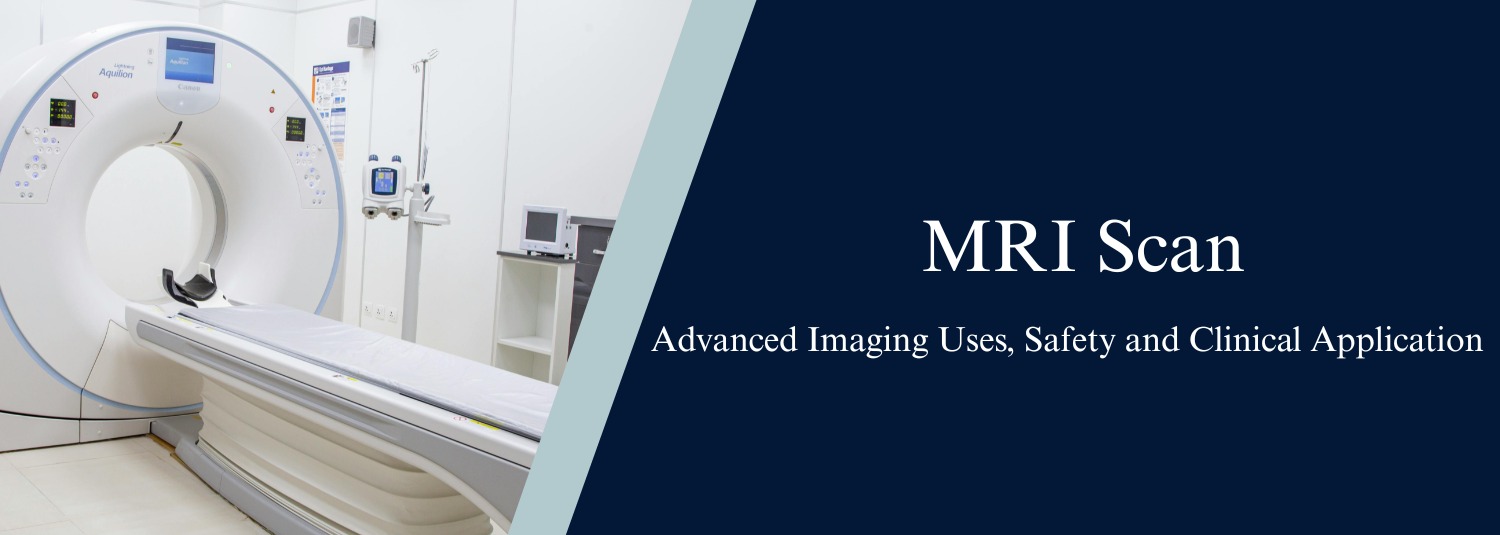
Magnetic Resonance Imaging (MRI) has become one of the most popular and best diagnostic tools in the healthcare field. An MRI scan uses a strong magnetic field and radio waves that produce detailed images of organs, tissues, and structures inside the body. Nowadays, MRI plays an important role in the world of diagnosis and treatment planning. At Molecular Diagnostic and Therapy, we provide advanced and accurate MRI scans to detect many health conditions at an early stage. In this blog, we will discuss how MRI works, its advanced uses, safety measures, and some clinical applications.
What is an MRI Scan?
An MRI scan is an imaging test that provides clear, high-quality images of soft tissues, the brain, spinal cord, muscles, ligaments, and internal organs. MRI does not use ionising radiation, such as Alpha, beta, and gamma rays, and is a safe option for regular imaging. MRI is mainly recommended when detailed visualisation is needed, especially for conditions where early and excellent diagnosis is important.
Advanced Uses of MRI Scan:-
MRI technology has evolved far more than basic imaging. The commonly used advanced MRI techniques include:
1. Functional MRI (FMRI) - It is used for measuring brain activity, which can detect changes in blood flow. mostly used for nerve-related disorders, brain mapping, and some pre- surgical planning.
2. Diffusion MRI (DMRI) - It helps in the detection of early strokes, injuries of the brain, and tumours, which can analyse water movement within the tissues.
3. Cardiac MRI (CMRI) - It provides a detailed image of our heart, helps in the diagnosis of heart muscle disease, congenital defects and any blood flow-related problems.
4. Whole-Body MRI - It is mainly used for cancer screening, metastasis detection, and some other response of monitoring treatment. It is an advanced feature of MRI used in today's healthcare.
Clinical Applications of MRI:-
MRI scans are widely used across most diagnostic centres and with multiple specialities.
MRI scans are usually done in the modern healthcare field for multiple specialities, which include:
Neurology - MRI is the best technology for the diagnosis of brain tumours, multiple sclerosis, epilepsy, stroke and disorders related to the spinal cord.
Orthopedics - It helps to detect ligament tears, joint injuries, cartilage damage, and injuries related to sports with great precision.
Oncology - MRI plays an important role in detecting, staging, and monitoring. It also supports targeted planning of treatment and monitoring responses of tumours to therapy.
Gynaecology and Obstetrics - In this, MRI is used to evaluate uterine fibroids, masses of the ovary, pelvic pain, and abnormalities in the fetus.
Abdominal and Pelvic Imaging - It helps to find liver diseases, disorders of the kidney, issues in the prostate, and gastrointestinal conditions without radiation exposure.
MRI and Molecular Diagnostics and Therapy:-
At Molecular Diagnostic and Therapy, our focus is to identify diseases at levels such as genetic, protein, and cellular. So that the doctor can start your treatment on time and for your long-term health.
MRI supports this approach by:-
Detecting tissue changes in the early stage before symptoms appear.
Monitoring response for targeted therapies.
It also helps doctors adjust treatment plans, which are based on imaging results.
In most cancer care, MRI can help to identify the behaviour of tumours, guide, and determine the evolution of treatment effectiveness, which is more accurate than traditional methods.
Safety of MRI Scans:-
MRI is a safe diagnostic tool for patients because it does not use radiation; however, some precautions should be taken, which include.
Metal implants, such as a pacemaker, cochlear implant, and some metal clips, are not safe for an MRI scan.
The patient must remove his/her jewellery, watches, and any metallic objects before the scan.
Some MRI scans require contrast dye, which is generally safe, but should be discussed if you have problems or allergies related to the kidneys.
During pregnancy, an MRI should only be done when it is needed, but under medical care, especially after the first trimester.
What to Expect During an MRI Scan?
An MRI scan mostly takes 20 to 60 minutes. The patients are asked by the technicians to lie straight on a table that slides into the machine. An MRI machine makes sounds like tapping or knocking during the scan, but at that time, earplugs or headphones are provided. The whole procedure is painless, and the patients can return to their regular activities immediately after the scan.
Conclusion
MRI scans play an important role in medical diagnoses and managing diseases. From neurological disorders to cancer detection and heart conditions, MRI delivers unmatched clarity and accuracy. At Molecular Diagnostics and Therapy, MRI scans are done professionally and with care so the patient stays stress-free and feels comfortable during the scan.
Frequently Asked Questions
In News
Get Our Mobile App
for Easy Access
Book tests, view reports, and manage your health records on the go. Experience convenient healthcare with Molecular Diagnostics and Therapy.
- ✔ Book tests & home collection
- ✔ View reports instantly
- ✔ Track health history
- ✔ Get notifications & reminders
- ✔ Easy appointment management