Mammography in 2026 Early Breast Cancer Detection & Latest Advances
Talk to Health Expert

Dr. Nikunj Jain
Co-Founder and HOD - Nuclear Medicine ,MBBS, DRM, DNB, FEBNM, FANMB, Dip. CBNC
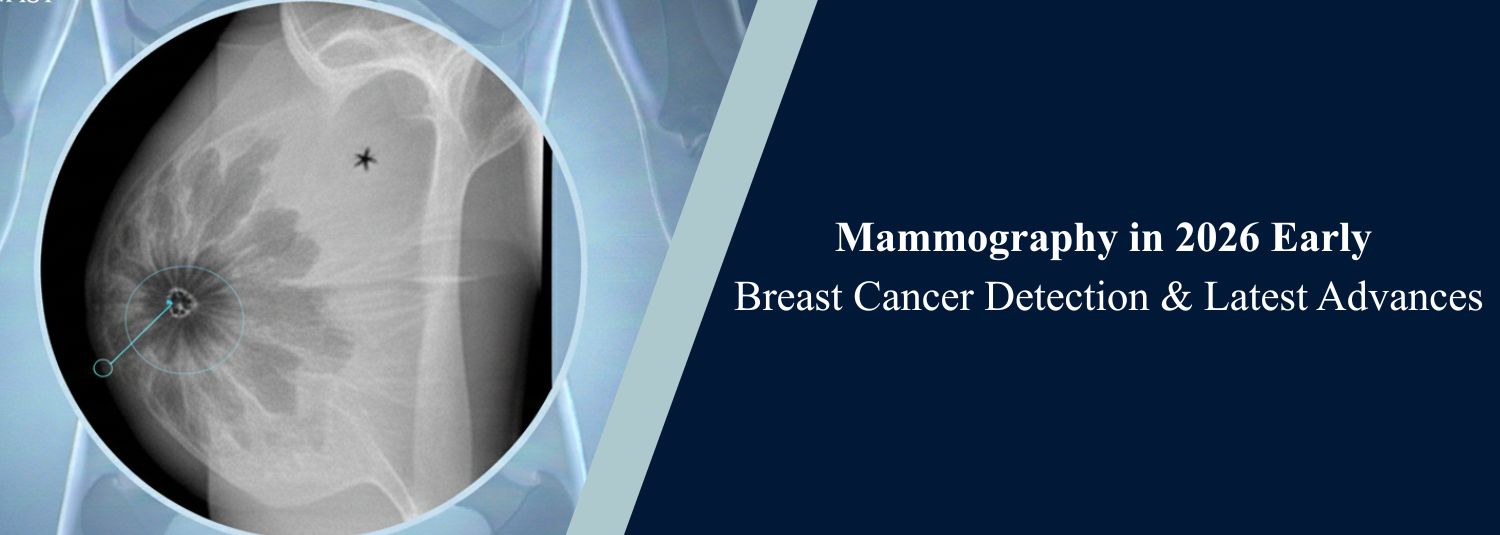
One of the cancers that occurs and is prevalent among women across the globe is breast cancer. The survival has been greatly enhanced due to the ability of doctors to detect it at an early stage and the availability of the newer tools of screening. To this day, a mammogram, a type of breast X-ray, remains the most widely and most recommended method of early breast cancer detection in 2026. It employs emerging technologies such as 3D and artificial intelligence.
At Molecular Diagnostics and Therapy, modern mammography systems are designed to provide high-quality imaging with minimal radiation exposure, helping doctors identify breast abnormalities at the earliest possible stage.
What is Mammography?
A mammogram is a specific low dose of X-ray test that examines the breast tissue to detect early cancer, lumps, cysts, or any other changes. It is capable of detecting any alterations in the breast prior to any lump feeling in the examination. There are two main types of mammography:
Screening mammography is done routinely in women without symptoms.
Diagnostic mammography is done when a woman has symptoms like a lump, pain, or nipple discharge.
Mammography is considered the gold standard for breast cancer screening worldwide.
Why Mammography is Still Essential in 2026?
Although there are numerous new techniques of imaging, mammography is the most effective test used to detect breast cancer. Its greatest advantage is that it has the capability of early detection of cancer, most of the time even before any indications are visible. Early detection gives:
Higher chances of successful treatment
Less aggressive therapy
Lower healthcare costs
Better quality of life
In 2026, doctors strongly emphasize preventive screening rather than waiting for symptoms.
Latest Advances in Mammography Technology
Mammography has transformed in many ways, and modern systems are far more advanced than traditional machines.
Digital Mammography
Digital machines also have better contrast to give clear pictures that are more useful to women who have dense breast tissue.
3D Mammography (Tomosynthesis)
This technology gives a number of photos of varying angles to form a stratified 3-D image. That assists in detecting cancer more precisely and minimizes false outcomes.
Artificial Intelligence (AI)
The use of AI programs to assist radiologists involves the marked spots of suspicion, which makes them more accurate and reduces human error.
Contrast-Enhanced Mammography
There are certain situations when doctors apply special dyes to point out abnormal blood flow, which accompanies tumors.
Reduced Radiation Dose
The latest machines have lower radiation consumption, and yet the image quality is high, so that the test is safe.
Who Should Get a Mammography?
Even without the symptoms, the doctors normally prescribe regular mammography to women who are over 40 years old. Starting at an early age may be necessary among women who have a family history of breast cancer or who have genetic risk factors. Certainly, mammograms play a crucial role in women who:
Have a family history of breast cancer
Carry BRCA gene mutations
Have had previous breast conditions
Experience breast pain or lumps
At Molecular Diagnostics and Therapy, we provide screening plans that are personalized based on the risk factors of the individual.
Common Signs That Require Mammography
You should consider a diagnostic mammography if you notice:
A breast lump
Change in breast size or shape
Skin dimpling or thickening
Nipple discharge
Persistent breast pain
Redness or swelling
Early imaging helps differentiate between harmless changes and serious conditions.
Is Mammography Safe?
Yes, a mammography is very safe. It employs an extremely small amount of radiation, and the advantages of early detection of cancer are greater compared to the minute risks. Women experience light pressure upon pressing the breast flat, but it does not last long, lasting more than a few seconds to take clearer pictures. The aspects of patient comfort, privacy, and safety are handled with care at Molecular Diagnostics and Therapy.
Mammography vs Other Breast Imaging Tests
Although the ultrasound and MRI are also performed to examine breasts, mammography is the test most requested by a physician. Ultrasound is normally applied to examine lumps, and in the case of high-threat patients or complicated cases, MRI is used. Mammography is the test that has been proven effective in reducing the death from breast cancer due to early detection of the cancer.
The Future of Breast Cancer Screening
In 2026 and beyond, mammography is expected to become even more personalized, with AI-driven risk assessment and customized screening schedules. Integration with genetic data and lifestyle factors will allow doctors to predict individual cancer risk more accurately. Mobile mammography units and digital reporting systems are also improving access to screening in rural and underserved areas.
Final Thoughts
Mammography remains the support of breast cancer screening in 2026. It can now be easily obtained, more correct and safer than ever before, due to the new tools such as AI, 3-D imaging, low-dose radiation, and so on. Constant screening will save lives. Women must not wait until they start showing any signs of sickness. At Molecular Diagnostics and Therapy, we offer high-quality mammography, professional interpretation, and patient-centered care to aid in the detection of cancer at the earliest stage and to provide a better outcome.
Frequently Asked Questions
In News
Get Our Mobile App
for Easy Access
Book tests, view reports, and manage your health records on the go. Experience convenient healthcare with Molecular Diagnostics and Therapy.
- ✔ Book tests & home collection
- ✔ View reports instantly
- ✔ Track health history
- ✔ Get notifications & reminders
- ✔ Easy appointment management