Understanding the Medical Importance of DEXA Scan
Talk to Health Expert

Dr. Nikunj Jain
Co-Founder and HOD - Nuclear Medicine ,MBBS, DRM, DNB, FEBNM, FANMB, Dip. CBNC
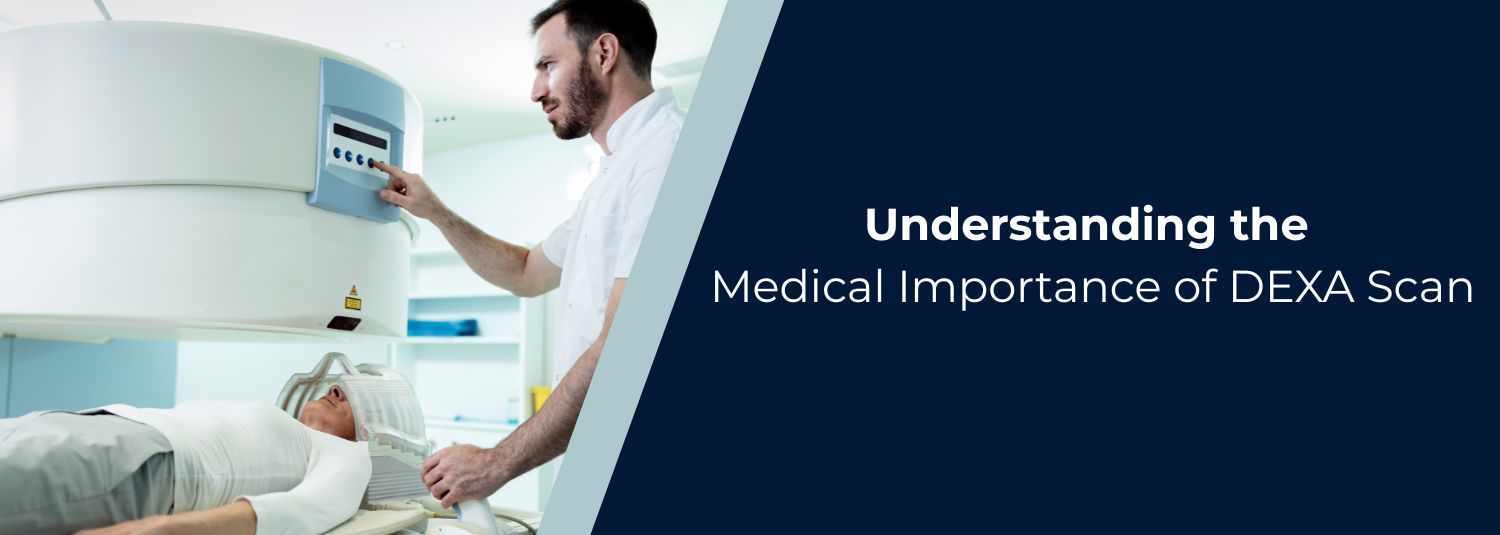
Bone care is usually overlooked until the time comes when there is a break in the bones or chronic pain in them. Many individuals forget that their bones might get weak slowly and will not display any symptoms. That is when the significance of performing a DEXA Scan comes in. A DEXA Scan is useful in enabling doctors to analyze how strong their bones are, right before the symptoms emerge. Awareness of the importance of performing a DEXA Scan will enable individuals to work on their bones and health on time. Molecular Diagnostics and Therapy does the DEXA Scan with utmost care and attention in their work.
What is a DEXA scan?
A DEXA Scan is also known as Dual Energy X-ray Absorptiometry. It is a special type of scan. It calculates bone density. Basically, it provides information about how weak or how strong your bones are. A DEXA Scan involves minimal exposure to X-rays. It is considered to be extremely safe and painless.
Mainly, physicians use the test for the diagnosis of disorders involving the bones and the analysis of fracture risk.
Why is a DEXA scan Medically Important?
Bones gradually become weaker due to aging, especially in women after menopause. This condition requires early treatment, which is possible if the DEXA scan test results are obtained early. The scan is medically important because it:
- Detects osteoporosis at an early stage
- Measures the risk of bone fractures
- Helps monitor bone health over time
- Guides doctors in planning proper treatment
- Tracks the effectiveness of bone-strengthening medicines
Early detection through a DEXA scan can prevent serious injuries and long-term complications.
Conditions Diagnosed Using a DEXA Scan
A DEXA scan is mainly used for bone-related conditions, but it also supports overall health assessment. Doctors recommend it for:
- Osteoporosis
- Osteopenia (low bone density)
- Frequent or unexplained fractures
- Bone loss due to long-term medication use
- Hormonal imbalance affecting bone health
It is also helpful for people with a family history of weak bones.
Who Should Get a DEXA Scan?
Not everyone needs a scan at a young age, but certain groups are at higher risk. Doctors may advise a DEXA scan if you:
- Are you a woman above 50 years of age
- Have reached menopause
- Have a history of fractures
- Take steroids for a long time
- Have low body weight
- Smoke or consume excess alcohol
These factors can weaken bones over time without clear warning signs.
Types of DEXA Scan Measurements
A DEXA scan usually focuses on specific body areas where fractures are common.
|
Scan Area |
What It Shows |
|
Spine |
Bone strength and early bone loss |
|
Hip |
Fracture risk and bone density |
|
Whole Body |
Overall bone and fat composition |
The images assist in determining the extent of bone damage that has occurred and what needs to be done further.
How the DEXA Scan Procedure Works
The process is quite easy and painless. They will require you to lie down on a surface while a scanner passes over you. There are no needles involved, and you are not in an enclosed room. The whole process will not take more than 10 to 20 minutes.
There is no time required for recovery. Normal activities may be started right after the completion of the test.
Advantages of a DEXA Scan
A DEXA scan is preferred over many other tests because it offers several benefits:
- Very low radiation exposure
- Quick and painless process
- Highly accurate bone density results
- Early detection of bone problems
- Suitable for repeated follow-ups
Because of these advantages, it is considered the gold standard for bone density testing.
Understanding Dexa Scan Results
The scan results are given as scores that compare your bone density with normal values. The scores obtained here will help a doctor determine the health, weak, and severely weak conditions of the bones. On the basis of this, some preventive measures, vitamins, or medicines might be required.
Conclusion
The relevance of having healthy bones is the ability to enjoy an active life without pain. A DEXA scan helps detect weak bones in their early stage, hence preventing any chances of fractures and pains in the future. The relevance of a DEXA scan is immense in a way that it helps the doctor take necessary preventive measures in case the bones are found weak. The high accuracy and efficiency of the DEXA scan have made it an inevitable tool in the field of medical science. Early attention to the health of the bones will enable a person to prevent any major health issues in the future. Molecular Diagnostics and Therapy provides high-quality care with the help of advanced technology.
Frequently Asked Questions
In News
Get Our Mobile App
for Easy Access
Book tests, view reports, and manage your health records on the go. Experience convenient healthcare with Molecular Diagnostics and Therapy.
- ✔ Book tests & home collection
- ✔ View reports instantly
- ✔ Track health history
- ✔ Get notifications & reminders
- ✔ Easy appointment management