Winter Fever: Causes, Symptoms & Prevention
Talk to Health Expert

Dr. Nikunj Jain
Co-Founder and HOD - Nuclear Medicine ,MBBS, DRM, DNB, FEBNM, FANMB, Dip. CBNC
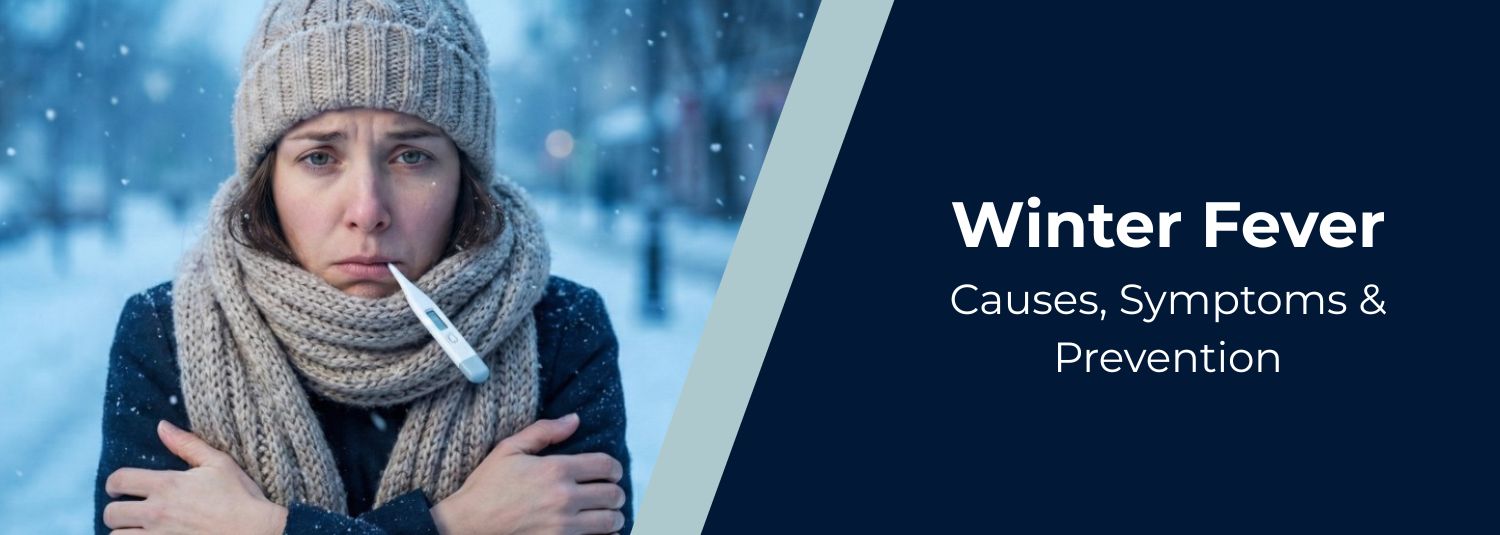
When the temperature gets lower, a lot of people catch a seasonal disease, which is mostly called winter fever. It is becoming more and more common during the cold months since viruses spread quicker in dry, cold air and people usually stay in closed rooms, which increases the number of people that have close contact with each other. Usually kids, elderly people and those who have weak immune systems are the most affected. Quickly switching between heated rooms and cold outdoor air can also affect the body in such a way that it becomes more vulnerable to infections.
However, a winter cold is mostly a mild condition, albeit it may be quite uncomfortable, and can interfere with your daily routine for a few days. It is common for this kind of situation to have some of the symptoms such as fever, body pain, sore throat, nasal congestion, and fatigue.
Causes of Winter Fever
Winter fever is largely attributable to the less agreeable factors in life during the cold season:
1. Viral Infections
Cold weather is the time when viruses spread quickly. Influenza is one of the most common viruses along with rhinoviruses and adenoviruses. These viruses live for longer times in cold and dry air and that is why more people get infection.
2. Low Immunity
Our immune system is less strong during the winter because we get less sunlight, and therefore the level of Vitamin D in our body is lower. As the immune system is low, the body is infected and a fever is the reaction.
3. Dry Air
The winter air is terribly dry. And, as dry air is quite harmful to the respiratory tract, it worsens even more the situation of the cracks in the mucous membranes where microorganisms are being absorbed.
4. Temperature Changes
Going from a warm room to the cold outside and vice versa exposes a person to sudden temperature changes. This puts pressure on the body and the likelihood of a fever is increased.
5. Poor Hydration
Water consumption in the winter is low. Due to this the body becomes dehydrated and the immune system is weakened, thus the chance of a fever increases.
Symptoms of Winter Fever
The symptoms may differ from one person to another and they may also depend on the type of infection and the health of the person. Most of the times, these include:
- Low or high fever
- Headache or feeling of heaviness in the head
- Sore throat
- Running nose or nasal congestion
- Aching or feeling of tiredness
- Cough
- Feeling of cold with shivering
- Decreased appetite
One may have any of these symptoms or even a combination of them with a winter fever. If the fever is going to be more than three days, it is thought to be a wise decision to take a doctor's advice.
How to Prevent Winter Fever
It is much simpler to keep away from winter fever than to take medicines for it. A few lifestyle changes will work wonders for your immune system during the cold season.
1. Maintain Hygiene
Keep washing your hands regularly especially when you have just come home, used the washroom or touched surfaces like door handles. Infections are rapidly transmitted through contact in the winter period.
2. Keep Yourself Warm
Wrap ears, neck and feet while going out. Cold wind makes the respiratory system vulnerable and thus the risk of winter fever is increased.
3. Stay Hydrated
Even if you are not feeling thirsty, do not forget to consume sufficient amount of water. Drinking warm water or herbal tea can be very helpful in keeping your throat hydrated and safe from infections.
4. Boost Your Immunity
Make sure the diet is replete with Vitamin C, zinc and antioxidant rich foods. Along with Vitamin C-rich sources like oranges and amla, ginger, garlic and warm soup are also very good during winter. They help the body to resist pathogens causing fever.
5. Avoid Sudden Temperature Changes
Don’t go directly from a very warm room into an extremely cold one.
6. Use a Humidifier
In case the air is too dry in your place, with the help of a humidifier that works by adding moisture to the air, you will reduce the chances of throat infections and irritation.
7. Take Flu Vaccines
The necessity of a flu shot every year cannot be stressed enough as it is one of the ways that one can be effectively protected from viral infections that cause winter fever.
8. Keep Your Home Ventilated
Even during winter it is important to keep letting fresh air in your room. Viruses spread faster in closed spaces.
9. Avoid Sharing Personal Items
Do not share towels, bottles, utensils or handkerchiefs, especially if the person is having a fever.
10. Get Enough Rest
Insufficient sleep results in less strength for the body to fight off infections. A good sleeping regime will help you be less prone to seasonal fevers.
Winter Fever: Causes, Symptoms & Prevention
When the temperature gets lower, a lot of people catch a seasonal disease, which is mostly called winter fever. It is becoming more and more common during the cold months since viruses spread quicker in dry, cold air and people usually stay in closed rooms, which increases the number of people that have close contact with each other. Usually kids, elderly people and those who have weak immune systems are the most affected. Quickly switching between heated rooms and cold outdoor air can also affect the body in such a way that it becomes more vulnerable to infections.
However, a winter cold is mostly a mild condition, albeit it may be quite uncomfortable, and can interfere with your daily routine for a few days. It is common for this kind of situation to have some of the symptoms such as fever, body pain, sore throat, nasal congestion, and fatigue.
Causes of Winter Fever
Winter fever is largely attributable to the less agreeable factors in life during the cold season:
1. Viral Infections
Cold weather is the time when viruses spread quickly. Influenza is one of the most common viruses along with rhinoviruses and adenoviruses. These viruses live for longer times in cold and dry air and that is why more people get infection.
2. Low Immunity
Our immune system is less strong during the winter because we get less sunlight, and therefore the level of Vitamin D in our body is lower. As the immune system is low, the body is infected and a fever is the reaction.
3. Dry Air
The winter air is terribly dry. And, as dry air is quite harmful to the respiratory tract, it worsens even more the situation of the cracks in the mucous membranes where microorganisms are being absorbed.
4. Temperature Changes
Going from a warm room to the cold outside and vice versa exposes a person to sudden temperature changes. This puts pressure on the body and the likelihood of a fever is increased.
5. Poor Hydration
Water consumption in the winter is low. Due to this the body becomes dehydrated and the immune system is weakened, thus the chance of a fever increases.
Symptoms of Winter Fever
The symptoms may differ from one person to another and they may also depend on the type of infection and the health of the person. Most of the times, these include:
- Low or high fever
- Headache or feeling of heaviness in the head
- Sore throat
- Running nose or nasal congestion
- Aching or feeling of tiredness
- Cough
- Feeling of cold with shivering
- Decreased appetite
One may have any of these symptoms or even a combination of them with a winter fever. If the fever is going to be more than three days, it is thought to be a wise decision to take a doctor's advice.
How to Prevent Winter Fever
It is much simpler to keep away from winter fever than to take medicines for it. A few lifestyle changes will work wonders for your immune system during the cold season.
1. Maintain Hygiene
Keep washing your hands regularly, especially when you have just come home, used the washroom or touched surfaces like door handles. Infections are rapidly transmitted through contact in the winter period.
2. Keep Yourself Warm
Wrap ears, neck, and feet while going out. Cold wind makes the respiratory system vulnerable, and thus, the risk of winter fever is increased.
3. Stay Hydrated
Even if you are not feeling thirsty, do not forget to consume a sufficient amount of water. Drinking warm water or herbal tea can be very helpful in keeping your throat hydrated and safe from infections.
4. Boost Your Immunity
Make sure the diet is replete with Vitamin C, zinc, and antioxidant-rich foods. Along with Vitamin C-rich sources like oranges and amla, ginger, garlic, and warm soup are also very good during winter. They help the body to resist pathogens, causing fever.
5. Avoid Sudden Temperature Changes
Don’t go directly from a very warm room into an extremely cold one.
6. Use a Humidifier
In case the air is too dry in your place, with the help of a humidifier that works by adding moisture to the air, you will reduce the chances of throat infections and irritation.
7. Take Flu Vaccines
The necessity of a flu shot every year cannot be stressed enough as it is one of the ways that one can be effectively protected from viral infections that cause winter fever.
8. Keep Your Home Ventilated
Even during winter, it is important to keep fresh air in your room. Viruses spread faster in closed spaces.
9. Avoid Sharing Personal Items
Do not share towels, bottles, utensils or handkerchiefs, especially if the person is having a fever.
10. Get Enough Rest
Insufficient sleep results in less strength for the body to fight off infections. A good sleeping regime will help you be less prone to seasonal fevers.
Conclusion
Winter fever is a standard seasonal problem that can be handled without important difficulty if the correct treatment is applied and the right preventative measures are taken. Flash back to keep your hygiene, drink plenitude of water, and take resistance builders during the cold season. piecemeal from that, make sure you're dressed duly when going out, and do n't expose yourself to unforeseen changes in temperature. However, you surely need to see a croaker If the symptoms get worse or the fever lasts for more than two days. By incorporating these sensible habits into your life and giving yourself some care at the veritably first sign of trouble, you'll be suitable to enjoy the downtime season without the apprehension of catching a downtime fever.
Frequently Asked Questions
In News
Get Our Mobile App
for Easy Access
Book tests, view reports, and manage your health records on the go. Experience convenient healthcare with Molecular Diagnostics and Therapy.
- ✔ Book tests & home collection
- ✔ View reports instantly
- ✔ Track health history
- ✔ Get notifications & reminders
- ✔ Easy appointment management