Airborne Diseases: Causes, Symptoms, Prevention, and How to Stay Protected
Talk to Health Expert

Dr. Nikunj Jain
Co-Founder and HOD - Nuclear Medicine ,MBBS, DRM, DNB, FEBNM, FANMB, Dip. CBNC
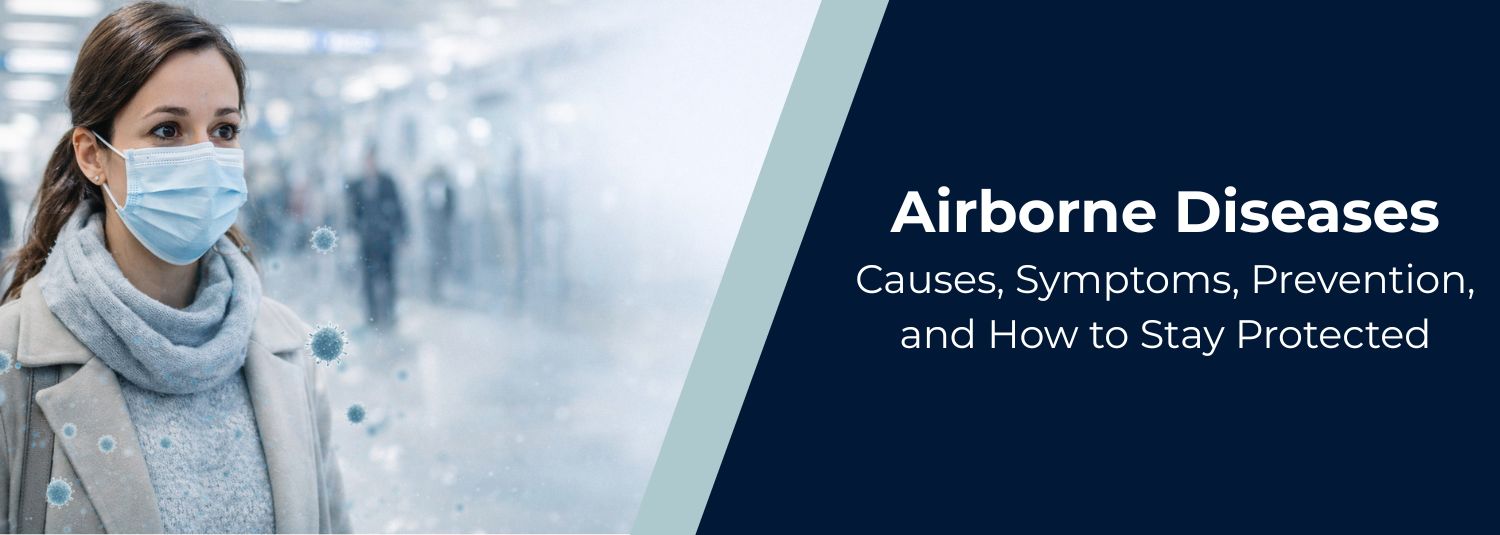
It always comes as a surprise when one catches a cold and flu without coming in contact with anyone, since cold and flu viruses may be air-borne.
Airborne illnesses are those carried through the air-small particles or droplets that harbor disease-causing components may be suspended in the air and thus make anyone inhaling them sick.
Because today we live in a world so prevalent with air pollution, changes of season, and compactness of dwelling conditions, knowledge about these infections of the respiratory system and ways and means for their prevention has never been so important.
“Back to the basics, let's explain it clearly.
What is an Airborne Disease?
Airborne infections are contagious illnesses caused by air-transported pathogens such as viruses, bacteria, and fungi.
The minute viral particles are freed when the infected individual coughs, laughs, sneezes, or even talks. Such droplets can hang suspended in the air for minutes and even hours-just waiting for a host.
Once they are inhaled, these microorganisms attack the respiratory system.
Common Examples of Airborne Diseases
Here are some of the most common and clinically significant airborne infections:
|
Disease |
Caused By |
Common Symptoms |
|
Influenza (Flu) |
Influenza virus |
Fever, chills, fatigue, cough |
|
COVID-19 |
SARS-CoV-2 virus |
Cough, fever, loss of taste/smell |
|
Tuberculosis (TB) |
Mycobacterium tuberculosis |
Chronic cough, weight loss, night sweats |
|
Common Cold |
Rhinovirus |
Sneezing, sore throat, mild fever |
|
Measles |
Measles virus |
Rash, high fever, cough |
|
Chickenpox (Varicella) |
Varicella-zoster virus |
Itchy rash, fever, fatigue |
|
Whooping Cough (Pertussis) |
Bordetella pertussis |
Persistent cough, vomiting |
|
Diphtheria |
Corynebacterium diphtheriae |
Sore throat, breathing problems |
These diseases can range from mild to life-threatening, especially in infants, elderly people, and those with weak immune systems.
How Airborne Diseases Spread
There are two main methods by which airborne infections are transmitted:
- Droplet Transmission
○ With a sneeze and cough, larger particles within a 1-meter radius can transmit disease from the infected person to another.
- Aerosol Transmission
○ Tiny particles (aerosols) remain suspended in the air for a longer period - even when the sick person leaves the room.
○ Examples of infectious diseases that are known to be transmitted as outlined above include COVID-19 and tuberculosis.
Just talking or singing indoors can raise the risk of airborne transmission — that.’
Why ventilation and masking have been so critical.
Symptoms of Airborne Diseases
Symptoms can vary depending on the infection, but most share these common respiratory signs:
● Coughing or sneezing
● Sore throat
● Fever or chills
● Runny or congested nose
● Shortness of breath
● Fatigue or weakness
● Body aches
● Headache
● Rash (in measles or chickenpox)
If symptoms persist for more than a week or you experience chest pain or difficulty breathing, it’s important to get a medical diagnosis and possibly a lab test for confirmation.
Diagnosis: How Airborne Infections Are Detected
It is because modern diagnostic tools enable scientists to detect airborne diseases effectively and efficiently.
As Molecular Diagnostics, we employ highly advanced molecular and serological techniques for detecting infection-causing agents.
Common diagnostic procedures are:
● RT-PCR Test for viral infections like COVID-19 or influenza
● Chest X-Ray/CT scan for Tuberculosis and Pneumonia
● Blood Tests (CBC, ESR, CRP) to determine the level of
● Sputum and Swab Tests Bacterial Analysis
● Antibody and Antigen Tests for immune response detection
A diagnosis will allow doctors to treat the disease effectively and prevent complications as well as transmission within society.
Prevention of Airborne Diseases: Practical Tips
Thankfully, there are ways for you to protect yourself and others around you.
1. Personal and General Hygiene Practices
● Use soap and water as much as possible.
● Do not touch your face.
● Cough/sneeze with tissues or elbows.
2. Use Masks in Crowded or Enclosed Spaces
Masks are capable of filtering out droplets and aerosols.
3. Ensure Proper Ventilation
· Open windows for fresh air. Use air purifiers.
· A good flow of air helps to dilute any airborne pathogens
4. Vaccination Update
· Vaccines against measles, flu (influenza), diphtheria, pertussis, and COVID-19 are highly effective in preventing serious infection.
5. Boosting Immunity the Natural Way
· Eat healthy food with high contents of vitamin C, zinc, and antioxidants.
· Stay hydrated and get adequate sleep. A healthy immune system will be your greatest protector.
6. Disinfect High-Touch
· Cleaning door handles, phones, and countertops on a regular basis can be helpful in preventing indirect contact contamination.
Lifestyle Tips to Stay Protected
● Incorporate immunity-boosting foods like citrus fruits, turmeric, garlic, and green tea.
● Exercise on a regular basis.
● Don’t smoke or be around people who do.
● Manage stress - stress affects your immune system.
When to Consult a Doctor
Seek immediate medical care if you have:
● Persistent high fever
● Shortness of breath
● Chest pain
● · Continuous coughing for more than two weeks
● Fatigue and weight loss
It can prevent serious complications, particularly if it is a case involving tuberculosis or pneumonia.
Key Facts & Health Insights
· Airborne infections make up more than 70% of infectious respiratory illnesses.
· From World Health Organization reports, tuberculosis still ranks among the top 10 causes of mortality worldwide.
· Indoor air quality contributes significantly to airborne transmission.
· Immunizations and early testing can greatly reduce the dissemination and severity
Trusted Sources:
● World Health Organization (WHO)
● Centers for Disease Control and Prevention (CDC)
● National Institutes of Health (NIH)
● Indian Council of Medical Research (ICMR)
Conclusion: Stay Informed, Stay Protected
Airborne diseases are part of our everyday environment — but awareness, hygiene, and preventive healthcare can keep you and your family safe.
If you experience prolonged respiratory symptoms, get tested early through a trusted diagnostic center like Molecular Diagnostics, where accurate results and expert guidance help protect your health.
Frequently Asked Questions
In News
Get Our Mobile App
for Easy Access
Book tests, view reports, and manage your health records on the go. Experience convenient healthcare with Molecular Diagnostics and Therapy.
- ✔ Book tests & home collection
- ✔ View reports instantly
- ✔ Track health history
- ✔ Get notifications & reminders
- ✔ Easy appointment management