Balanced Diet Guide: What to Eat for Optimal Health
Talk to Health Expert

Dr. Nikunj Jain
Co-Founder and HOD - Nuclear Medicine ,MBBS, DRM, DNB, FEBNM, FANMB, Dip. CBNC
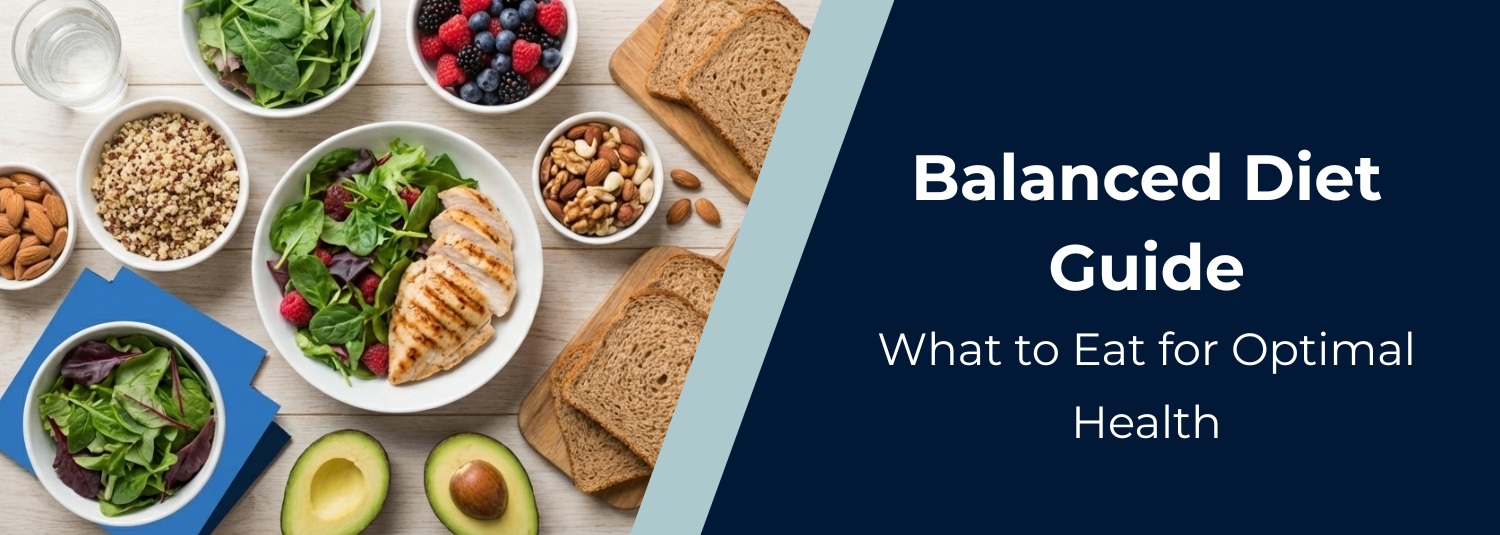
Eating well isn’t just about following the latest diet trend. A balanced diet provides your body with all the nutrients it needs to function optimally, boost energy, and prevent chronic diseases. Whether your goal is weight management, stronger immunity, or better overall health, understanding what to eat is the first step toward a healthier lifestyle.
In this guide, we’ll break down what a balanced diet really is, the key food groups, portion sizes, and practical tips to help you eat for optimal health every day.
What is a Balanced Diet?
A balanced diet is one that provides all the essential nutrients your body needs in the right proportions. It combines macronutrients like carbohydrates, proteins, and fats, with micronutrients such as vitamins and minerals, along with fiber and water.
According to the World Health Organization (WHO), a balanced diet is crucial for maintaining body weight, energy levels, and overall wellness. It ensures your body gets enough fuel to function while preventing nutrient deficiencies.
Key Components of a Balanced Diet
1. Carbohydrates – The Body’s Primary Energy Source
Carbohydrates fuel your muscles, brain, and other vital organs. Choosing complex carbs over refined sugars helps maintain steady energy and blood sugar levels.
- Sources: Whole grains (brown rice, oats, quinoa), fruits, vegetables, legumes.
2. Proteins – Building Blocks for Growth and Repair
Proteins are essential for muscle development, tissue repair, and immunity.
-
Sources: Lean meats, fish, eggs, dairy, beans, lentils, nuts, seeds.
3. Fats – Healthy Fats for Brain and Hormonal Health
Healthy fats help with hormone production, brain function, and absorption of fat-soluble vitamins.
- Sources: Avocados, olive oil, nuts, seeds, fatty fish.
- Avoid trans fats and limit saturated fats.
4. Fiber – For Digestive Health
Fiber aids digestion, regulates blood sugar, and reduces cholesterol.
-
Sources: Whole grains, fruits, vegetables, legumes, seeds.
5. Vitamins & Minerals – Tiny but Mighty Nutrients
Vitamins and minerals are crucial for immunity, bone health, and energy metabolism.
- Key vitamins: A, C, D, E, K, B-complex
- Key minerals: Calcium, Iron, Magnesium, Potassium, Zinc
- Sources: Colorful fruits and vegetables, dairy, nuts, seeds, whole grains, fish.
6. Water – Essential for Life
Hydration is key for digestion, temperature regulation, and detoxification.
- Sources: Water, fruits, vegetables, herbal teas.
- Aim for 8–10 glasses daily, more if you’re active.
The Balanced Plate Method
A practical way to visualize a balanced diet is the Balanced Plate method:
- Half your plate: Fruits and vegetables
- One-quarter: Whole grains
- One-quarter: Lean proteins
- Small portion: Healthy fats
- Include: Water with every meal
This approach, recommended by Harvard School of Public Health, ensures you get all essential nutrients in proper proportions.
Foods to Include Daily
- Whole grains: Brown rice, oats, quinoa
- Fruits & vegetables: Aim for a colorful variety
- Lean proteins: Fish, eggs, beans, nuts
- Healthy fats: Olive oil, avocado, nuts, seeds
- Dairy or alternatives: Milk, yogurt, soy products
- Hydration: Water, coconut water, fruits high in water content
Foods to Limit or Avoid
- Sugary drinks and snacks
- Processed and packaged foods
- Excess salt and fried foods
- Red meat in large amounts
- Alcohol in excess
Balanced Diet by Age & Lifestyle
- Children: Support growth and brain development. Include protein, calcium, iron, and vitamins.
- Adults: Maintain energy and metabolism. Focus on balanced meals with portion control.
- Seniors: Prioritize bone health, heart health, and memory. Include calcium, vitamin D, and antioxidants.
- Active individuals & athletes: Require higher protein and carbohydrates for energy and muscle repair.
Common Mistakes People Make
- Skipping meals, which can cause overeating later.
- Overeating “healthy” foods like nuts or whole grains.
- Relying solely on supplements instead of nutrient-rich foods.
- Ignoring portion sizes and calorie balance.
FAQs About a Balanced Diet
What foods should I eat for a balanced diet?
Include whole grains, fruits, vegetables, lean proteins, healthy fats, and plenty of water.
What is the best balanced meal for breakfast?
Oatmeal with fruits and nuts, or eggs with whole-grain toast and a side of vegetables.
Can vegetarians have a balanced diet?
Yes, by including legumes, grains, nuts, seeds, dairy, and vegetables. Supplements like B12 may be needed.
How many meals a day should I eat for health?
3 main meals with 1–2 healthy snacks are generally recommended to maintain energy and prevent overeating.
What is the importance of a balanced diet?
It provides all essential nutrients for growth, energy, immunity, and disease prevention.
What happens if you don’t eat a balanced diet?
You may experience fatigue, nutrient deficiencies, weight gain or loss, and a higher risk of chronic diseases.
How much protein do I need daily?
Typically, 0.8–1 gram per kilogram of body weight, adjusted for activity level.
Can a balanced diet help with weight loss?
Yes, eating nutrient-dense foods in proper portions helps manage weight sustainably.
What is the difference between a balanced diet and a healthy diet?
A balanced diet ensures all nutrients are included in correct proportions, whereas a healthy diet may focus on overall nutritious choices without strict proportion rules.
How do I create a balanced diet plan at home?
Use the balanced plate method, include all food groups, track portions, and consult a dietitian if needed.
Conclusion
A balanced diet is not about restriction or fad diets—it’s about variety, proportion, and nutrient density. By focusing on whole foods, colorful fruits and vegetables, lean proteins, healthy fats, and proper hydration, you can achieve optimal health, energy, and longevity.
For personalized guidance, diagnostic testing, and nutrition advice, consult experts at Molecular. Remember, small, consistent dietary changes today lead to a healthier tomorrow.
In News
Get Our Mobile App
for Easy Access
Book tests, view reports, and manage your health records on the go. Experience convenient healthcare with Molecular Diagnostics and Therapy.
- ✔ Book tests & home collection
- ✔ View reports instantly
- ✔ Track health history
- ✔ Get notifications & reminders
- ✔ Easy appointment management