Breast MRI in High-Risk Cancer Patients: Role, Procedure and Benefits
Talk to Health Expert

Dr. Nikunj Jain
Co-Founder and HOD - Nuclear Medicine ,MBBS, DRM, DNB, FEBNM, FANMB, Dip. CBNC
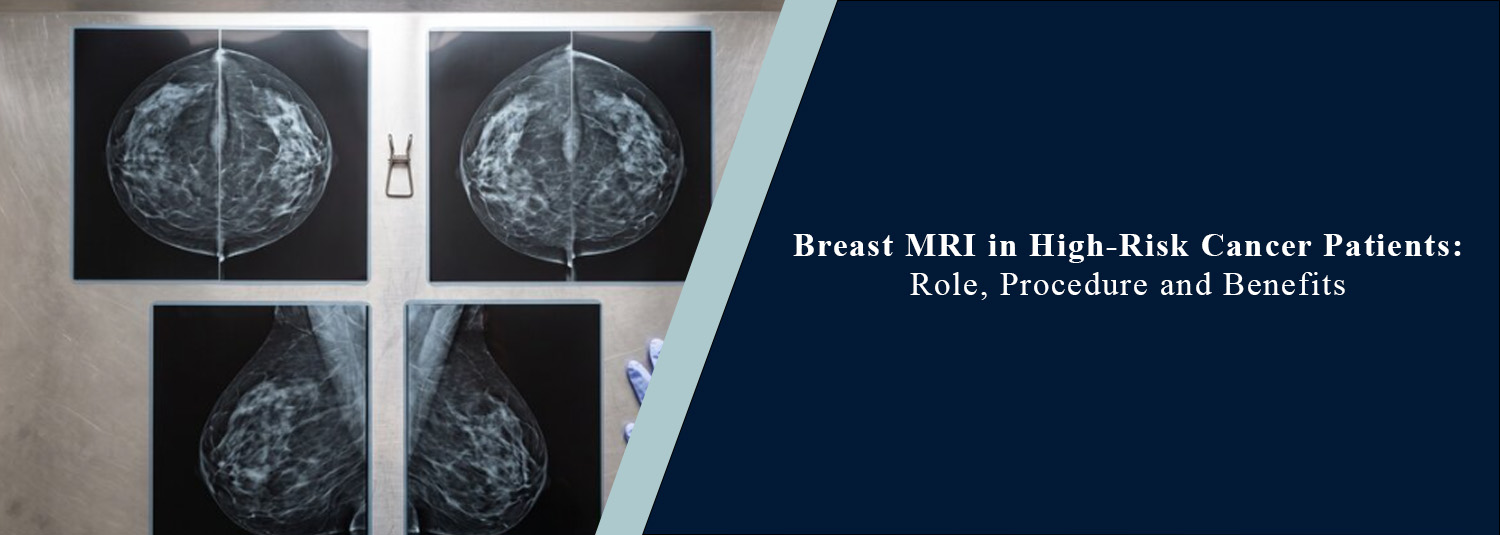
Breast cancer is a common cancer in women, and early detection is of
great value in treating the disease. Mammography is an important breast cancer
screening exam, but there are also certain women with a greater-than-normal
risk of breast cancer who require other imaging tests. Breast MRI is a modern
imaging system that employs strong magnets and radio waves to form images of
the breast tissue.
Women who are at very high risk for breast cancer should also have
breast MRI tests in addition to their usual mammograms to help detect abnormal
changes early. Molecular Diagnostics and Therapy provides advanced diagnostic
imaging services, including MRI examinations, based on the clinical
requirements of patients and recommendations from their healthcare professionals.
What Is a Breast MRI?
Breast MRI is the magnetic resonance
imaging (MRI) of the breast, which is a non-invasive imaging exam that makes
detailed images of breast tissue. Unlike X-rays and CT scans, MRI is a
non-radiating scan. Instead, it employs a powerful magnetic field, radio waves,
and computer processing.
Doctors perform a breast MRI screening
or breast cancer evaluation, typically using a gadolinium-based contrast agent,
which is injected into a vein. The difference makes it easier to see abnormal
breast tissue and allows for the easier detection of certain cancers. Breast
MRI is not a substitute for mammography. It is typically ordered as a
supplemental imaging study when there is a certain clinical indication, or when
a woman's risk of developing breast cancer is unusually high.
Who May Need a Breast
MRI?
For women at high risk for breast
cancer, breast magnetic resonance imaging (MRI) is beneficial. In some women at
high risk for breast cancer (estimated risk of around 20%–25% or more), breast
MRI is recommended in addition to mammography and is performed annually. This
includes women who have certain inherited genes or a family history of breast
cancer.
Other cancer risk factors, such as
radiation therapy to the chest at a young age or specific cancer hereditary
syndromes, also warrant high-risk screening. A person's decision to get a
breast MRI depends upon her overall risk, personal and family medical history,
and screening recommendations from a health care professional.
Why Is Breast MRI
Important for High-Risk Patients?
Women at high-risk have a higher
likelihood of getting breast cancer at some time in their lives. An early
diagnosis gives greater opportunity for appropriate treatment in time. Among
the benefits of breast MRI is the fact that it can discover some breast cancers
that cannot be identified on mammography or ultrasound.
In addition, MRI is not contraindicated
for pregnant women or patients with metal implants, and it also helps to
acquire detailed information on soft tissues and does not use X-rays, gamma
rays, or alpha particles. But breast MRI often also identifies regions that
look suspicious but turn out to be harmless. This results in more imaging or
biopsies. Thus, it is important to be screened by MRI if medically appropriate
and to be read by trained breast imagers.
Breast MRI Benefits
Breast MRI offers several potential benefits, particularly for selected
high-risk patients.
Detailed Breast
Imaging
Women who are at a higher risk for
breast cancer are offered extra screenings.
Additional Screening
for High-Risk Women
MRI is an addition to annual
mammography and enhances the screening effort for women at a considerably
elevated risk of developing breast cancer.
No Ionizing Radiation
MRI does not use X-rays and therefore
does not expose patients to ionizing radiation.
Evaluation of
Suspicious Findings
Breast MRI is suggested if the
mammogram, ultrasound, physical exam, or other test results indicate that
additional tests are necessary.
Assessment of Known
Breast Cancer
For women with previously diagnosed
breast cancer, MRI is used to help determine the extent or location of disease
and/or to assess the opposite breast, when clinically indicated.
How Is a Breast MRI
Procedure Performed?
Breast MRI is typically done in an outpatient
setting. The patient is instructed on attire prior to the scan and to remove
potentially interfering articles of metal (jewelry, watches, hair accessories,
etc.) before the scanning session. A brief IV is inserted in the arm (or hand)
for a breast MRI in which contrast dye is administered. The patient is then
placed face down on a particular magnetic resonance imaging (MRI) bed. Breasts
lie in a special cut-out in the table and are not compressed for imaging.
The table gently comes into the MRI
scanner. The patient must be as still as possible as they are being examined.
The scanner makes loud tapping/humming noises; earplugs or earphones are
available if necessary. If it is needed for contrast, it is injected during the
examination. The whole process of breast MRI typically takes about 20 to 30
minutes, and may take longer if there is a need for further imaging study.
Preparation for
Breast MRI
Preparation requirements may vary between imaging centres and according
to the reason for the examination. Patients should inform the radiologist or
MRI technologist about any medical implants, previous surgeries, kidney
problems, allergies, medications, or the possibility of pregnancy. Certain
implanted devices or metallic objects may require additional safety assessment
before MRI.
If contrast is planned, the healthcare team may ask about previous
reactions to contrast material and kidney function. Women who are pregnant or
may be pregnant should inform their healthcare provider before undergoing the
examination. Gadolinium contrast is generally avoided during pregnancy unless
there is a strong medical reason to use it.
Conclusion
Breast MRI is a cutting-edge diagnostic
tool that is a valuable component of breast cancer screening and evaluation,
especially for high-risk women. Uses in detail-desk images of the breast
without ionizing radiation and can detect some abnormalities that cannot be
seen on mammography or ultrasound. Women who have a high risk of developing
breast cancer need an annual breast MRI, in addition to yearly mammograms. But
MRI is not appropriate for everyone and sometimes yields false positive results
which need to be further investigated.
Discuss your screening options if you have a breast cancer history of family members, or you have known risk factors for breast cancer (genetic risk or chest radiation). Advanced MRI and diagnostic imaging services, based on each patient's clinical needs, are provided at Molecular Diagnostics and Therapy.
Frequently Asked Questions
In News
Get Our Mobile App
for Easy Access
Book tests, view reports, and manage your health records on the go. Experience convenient healthcare with Molecular Diagnostics and Therapy.
- ✔ Book tests & home collection
- ✔ View reports instantly
- ✔ Track health history
- ✔ Get notifications & reminders
- ✔ Easy appointment management