Calcium Test: Normal Levels, Causes of Low & High Calcium
Talk to Health Expert

Dr. Nikunj Jain
Co-Founder and HOD - Nuclear Medicine ,MBBS, DRM, DNB, FEBNM, FANMB, Dip. CBNC
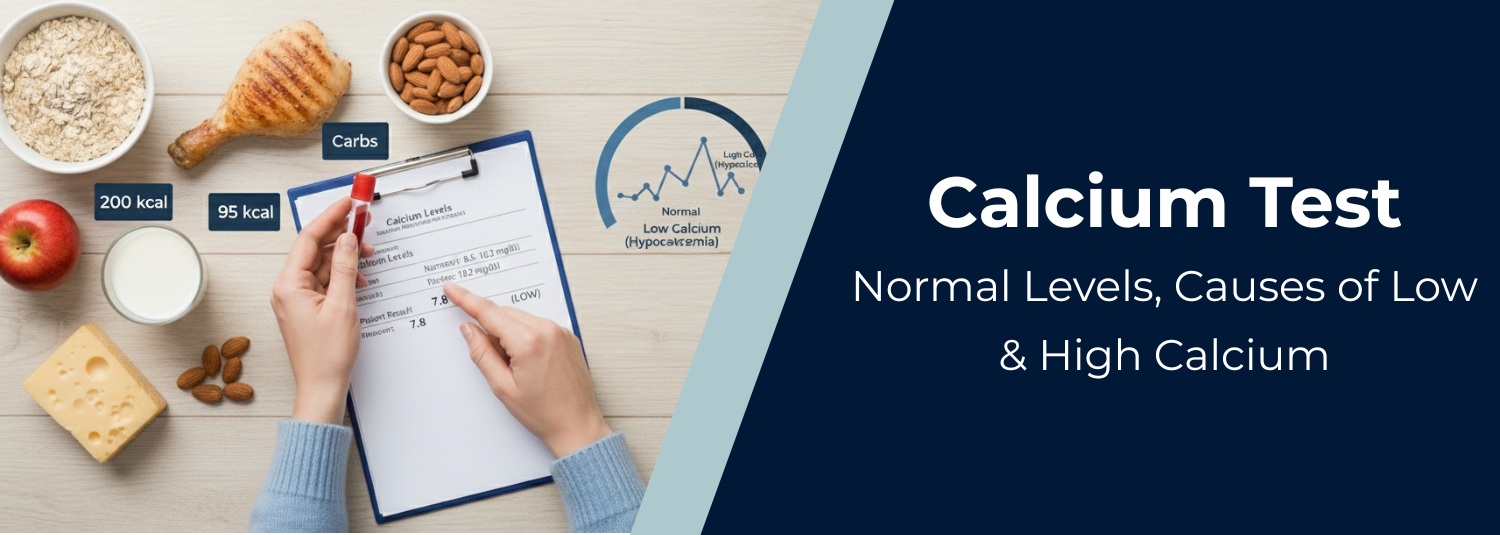
Calcium is one of the most important minerals in your body. It’s not just for strong bones and teeth—calcium also plays a vital role in muscle function, nerve signaling, and heart health.
A Calcium Test measures the amount of calcium in your blood to ensure your body has the right balance. Imbalances can lead to health problems like osteoporosis, kidney issues, or muscle cramps.
In this blog, we’ll explain what a calcium test is, normal levels, causes of low and high calcium, symptoms, and how to interpret your results.
What Is a Calcium Test?
A Calcium Test measures the total amount of calcium in your blood. Calcium exists in two forms:
- Bound calcium – attached to proteins like albumin
- Free (ionized) calcium – active form that supports body functions
Doctors may recommend a calcium test to:
- Detect calcium imbalances
- Evaluate bone and kidney health
- Monitor parathyroid gland function
- Assess risk for osteoporosis or kidney stones
Why Is Calcium Important?
Calcium is crucial for:
- Bone and teeth strength – 99% of calcium is stored in bones
- Muscle function – helps muscles contract and relax
- Nerve signaling – transmits signals between nerves
- Blood clotting – essential for healing wounds
- Heart function – supports proper heart rhythm
Normal Calcium Levels
Calcium levels are measured in milligrams per deciliter (mg/dL):
| Age Group | Normal Range (mg/dL) |
|---|---|
| Adults | 8.5–10.5 |
| Children | 8.8–10.8 |
| Infants | 9–11 |
Note: Labs may have slight variations depending on measurement methods.
Causes of Low Calcium (Hypocalcemia)
Low calcium can occur due to:
- Vitamin D deficiency
- Vitamin D is essential for calcium absorption in the gut
- Parathyroid gland disorders
- Low parathyroid hormone levels reduce calcium regulation
- Kidney disease
- Impaired kidney function affects calcium and phosphate balance
- Magnesium deficiency
- Magnesium helps regulate calcium levels
- Certain medications
- Diuretics, chemotherapy, or anticonvulsants
Symptoms of Low Calcium
- Muscle cramps or spasms
- Tingling in fingers or lips
- Fatigue and weakness
- Brittle nails or hair loss
- Seizures (in severe cases)
- Abnormal heart rhythms
Causes of High Calcium (Hypercalcemia)
High calcium may occur due to:
- Overactive parathyroid glands (hyperparathyroidism)
- Excessive calcium or vitamin D supplementation
- Cancer – certain types can increase calcium levels
- Thiazide diuretics – medications that raise calcium
- Prolonged immobility – bone breakdown releases calcium
Symptoms of high calcium:
- Nausea or vomiting
- Increased thirst and frequent urination
- Constipation
- Fatigue or confusion
- Heart rhythm abnormalities
How Is a Calcium Test Done?
- A blood sample is drawn from a vein in your arm.
- No special preparation is usually needed, but sometimes fasting is recommended.
- Test results are usually available within 24–48 hours.
Interpreting Calcium Test Results
- Low calcium → Hypocalcemia, may need supplements or treatment
- Normal calcium → Balanced and healthy calcium levels
- High calcium → Hypercalcemia, requires further investigation
Doctors may also check albumin levels and ionized calcium for a more accurate assessment.
Health Importance of Maintaining Normal Calcium
- Prevents osteoporosis and bone fractures
- Supports muscle and nerve function
- Maintains heart rhythm and blood clotting
- Reduces risk of kidney stones and calcium imbalances
- Supports overall metabolic health
Key Facts About Calcium
- About 99% of body calcium is in bones and teeth.
- Vitamin D and magnesium are essential for calcium absorption.
- Calcium imbalance can affect the heart, nerves, and muscles, not just bones.
- Regular testing is important for older adults, people with kidney disease, or those on supplements.
FAQs About Calcium Test (Voice Search Optimized)
What is a calcium test?
It measures the amount of calcium in your blood to assess bone and metabolic health.
What are normal calcium levels?
Adults: 8.5–10.5 mg/dL, Children: 8.8–10.8 mg/dL, Infants: 9–11 mg/dL.
What causes low calcium?
Vitamin D deficiency, parathyroid disorders, kidney disease, magnesium deficiency, or certain medications.
What causes high calcium?
Hyperparathyroidism, excessive supplements, cancer, certain medications, or prolonged immobility.
What are symptoms of low calcium?
Muscle cramps, tingling fingers, fatigue, brittle nails, abnormal heart rhythms.
What are symptoms of high calcium?
Nausea, increased thirst, constipation, confusion, heart rhythm issues.
Do I need to fast for a calcium test?
Usually not, but follow your doctor’s instructions.
How often should calcium be tested?
As advised, especially for people with bone, kidney, or parathyroid conditions.
Can diet affect calcium levels?
Yes, foods like dairy, leafy greens, and fortified products support healthy calcium.
Is vitamin D important for calcium?
Yes, vitamin D helps your body absorb calcium effectively.
Trusted Sources
- National Institutes of Health (NIH) – ods.od.nih.gov
- Mayo Clinic – mayoclinic.org
- Centers for Disease Control and Prevention (CDC) – cdc.gov
- Endocrine Society – endocrine.org
Conclusion
The Calcium Test is a simple and effective way to monitor your bone, muscle, nerve, and heart health. Maintaining normal calcium levels through diet, supplements if needed, and regular testing helps prevent complications and supports overall wellness.
At Molecular, we provide accurate Calcium testing and diagnostics to help you maintain strong bones, healthy muscles, and optimal metabolic health.
In News
Get Our Mobile App
for Easy Access
Book tests, view reports, and manage your health records on the go. Experience convenient healthcare with Molecular Diagnostics and Therapy.
- ✔ Book tests & home collection
- ✔ View reports instantly
- ✔ Track health history
- ✔ Get notifications & reminders
- ✔ Easy appointment management