Glaucoma: Causes, Symptoms, Diagnosis, and Treatment Options
Talk to Health Expert

Dr. Nikunj Jain
Co-Founder and HOD - Nuclear Medicine ,MBBS, DRM, DNB, FEBNM, FANMB, Dip. CBNC
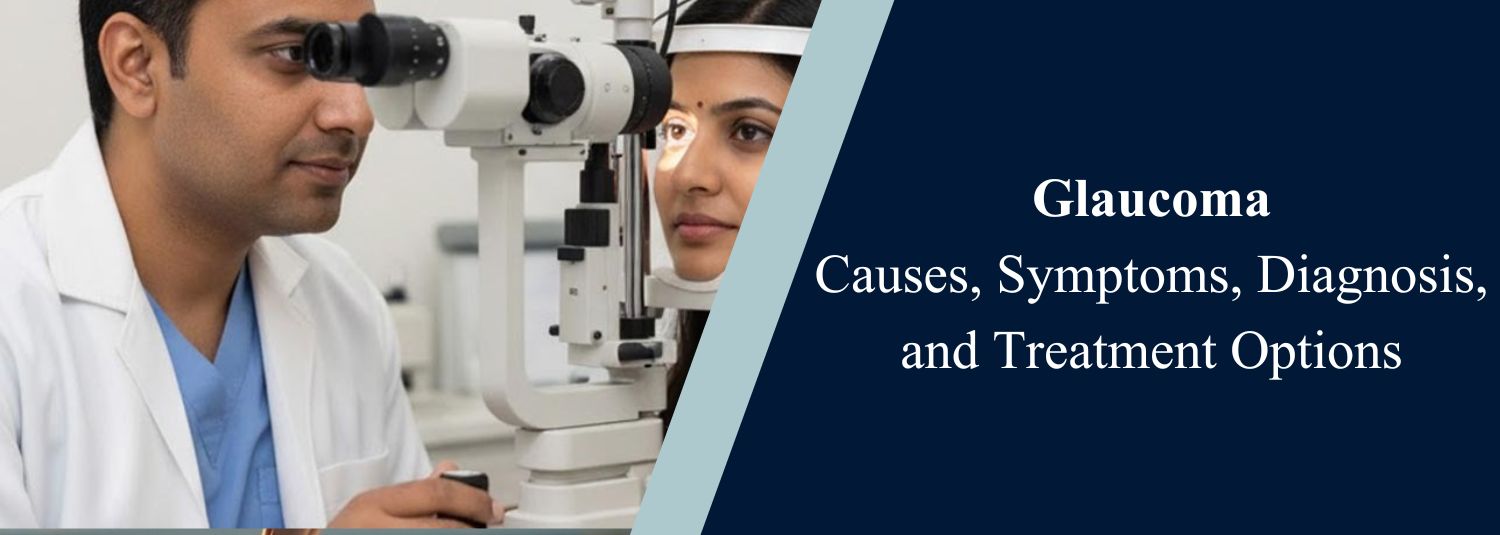
Have you ever wondered why regular eye checkups are so important — even when you see clearly?
One reason is glaucoma, a silent eye disease that can damage your optic nerve and cause permanent vision loss if not detected early.
Often called the “silent thief of sight”, glaucoma develops gradually and painlessly — many people don’t realize they have it until it’s too late.
Let’s explore what glaucoma is, its causes, symptoms, diagnostic tests, and treatment options.
What Is Glaucoma?
Glaucoma is a group of eye conditions that damage the optic nerve, which connects your eye to your brain.
This damage usually happens because of high pressure inside the eye (intraocular pressure) — though it can also occur even when pressure is normal.
Over time, this pressure damages the optic nerve fibers, leading to gradual loss of vision, often starting from the sides (peripheral vision).
Why Glaucoma Matters
- It’s one of the leading causes of irreversible blindness worldwide.
- According to the World Health Organization (WHO), over 80 million people globally have glaucoma.
- Many people don’t notice symptoms until significant vision loss has occurred — making early detection essential.
Types of Glaucoma
Glaucoma isn’t a single disease but a group of related eye disorders. Here are the main types:
1. Open-Angle Glaucoma (Primary Open-Angle)
- The most common form.
- The drainage canals of the eye become clogged over time, leading to increased pressure.
- Develops slowly and painlessly.
- Symptoms: Gradual loss of side vision, later affecting central vision.
2. Angle-Closure Glaucoma (Closed-Angle)
- Occurs when the drainage angle between the iris and cornea becomes blocked suddenly.
- Symptoms: Sudden eye pain, headache, nausea, blurred vision, and halos around lights.
- A medical emergency — immediate treatment is needed to prevent permanent damage.
3. Normal-Tension Glaucoma
- Optic nerve damage occurs even when eye pressure is normal.
- The exact cause is unclear — possibly due to poor blood flow to the optic nerve.
- Common in people with low blood pressure or circulation issues.
4. Congenital Glaucoma
- A rare form that appears in infants or children.
- Caused by abnormal eye development.
- Symptoms: Cloudy eyes, tearing, light sensitivity.
5. Secondary Glaucoma
- Results from another eye condition (e.g., injury, infection, inflammation, or medication).
- Example: Long-term use of steroid eye drops can increase the risk.
What Causes Glaucoma?
The exact cause of glaucoma isn’t always known, but it’s often related to elevated intraocular pressure (IOP).
This pressure builds up when the eye’s drainage system doesn’t work properly.
Other contributing factors:
- Genetics: Family history of glaucoma
- Age: Risk increases after 40
- Ethnicity: More common in African, Hispanic, and Asian populations
- Medical conditions: Diabetes, high blood pressure, or migraines
- Eye injuries or long-term steroid use
Common Symptoms of Glaucoma
The early stages of glaucoma often show no obvious symptoms.
That’s why regular eye exams are essential for early detection.
Possible symptoms include:
- Gradual loss of peripheral (side) vision
- Tunnel vision in advanced stages
- Blurred vision or halos around lights
- Redness or eye pain (especially in angle-closure glaucoma)
- Headaches or nausea
If you notice sudden severe pain or vision changes, seek medical help immediately — it may be an emergency.
Glaucoma Diagnosis: Tests You Should Know
Early diagnosis is key to preventing vision loss. An eye specialist can perform several painless tests:
- Tonometry
- Measures intraocular pressure (IOP) using a gentle puff of air or a probe.
- Ophthalmoscopy
- Examines the optic nerve for damage using a special light.
- Perimetry (Visual Field Test)
- Tests your side vision — one of the first areas affected by glaucoma.
- Pachymetry
- Measures corneal thickness; thinner corneas can increase glaucoma risk.
- Gonioscopy
- Examines the drainage angle of the eye to determine the type of glaucoma.
- Optical Coherence Tomography (OCT)
- Provides detailed imaging of the optic nerve and retinal layers.
At Molecular Diagnostics, these tests help in early and accurate detection of glaucoma and other eye disorders.
Glaucoma Treatment Options
While glaucoma can’t be cured, it can be managed effectively to prevent further vision loss.
- Eye Drops
- The first line of treatment.
- Help lower eye pressure by reducing fluid production or improving drainage.
- Must be used regularly as prescribed.
- Oral Medications
- Used when eye drops alone aren’t enough.
- Help decrease fluid production in the eye.
- Laser Therapy
- Laser Trabeculoplasty: Improves fluid drainage.
- Laser Iridotomy: Creates a small opening in the iris for fluid flow (for angle-closure glaucoma).
- Surgery
- Trabeculectomy: Creates a new drainage channel for fluid.
- Drainage implants: Used in severe or complex cases.
- Lifestyle Tips
- Maintain a healthy diet rich in antioxidants.
- Regular exercise helps reduce eye pressure.
- Avoid smoking and limit caffeine.
- Protect eyes from injury and wear sunglasses outdoors.
Prevention and Early Detection
While you can’t always prevent glaucoma, early detection and management are key.
- Get a comprehensive eye exam every 1–2 years after age 40.
- Know your family history.
- Manage diabetes and blood pressure.
- Avoid long-term steroid use without supervision.
Key Facts & Reliable Sources
- WHO: Over 80 million people have glaucoma worldwide.
- National Eye Institute (NEI): Early treatment can prevent vision loss in 90% of cases.
- American Academy of Ophthalmology (AAO): Regular screening is vital for those over 40.
- CDC: Only half of people with glaucoma know they have it.
FAQs About Glaucoma
What causes glaucoma?
Glaucoma is mainly caused by increased eye pressure due to poor fluid drainage, damaging the optic nerve.
Can glaucoma be cured?
No, but early diagnosis and treatment can stop or slow vision loss.
Who is at risk for glaucoma?
People over 40, with a family history, diabetes, or high blood pressure are at higher risk.
How is glaucoma diagnosed?
Through eye pressure tests, optic nerve exams, and visual field testing.
Is glaucoma hereditary?
Yes, family history increases your risk. Regular screening is recommended.
What are the early signs of glaucoma?
Gradual loss of side vision and difficulty seeing in dim light.
Can glaucoma cause blindness?
Yes, untreated glaucoma can lead to permanent blindness.
What foods help prevent glaucoma?
Leafy greens, citrus fruits, omega-3s, and foods rich in antioxidants.
How often should I get an eye exam?
Every 1–2 years after age 40, or more often if you’re high-risk.
Does screen time affect glaucoma?
Screen time doesn’t cause glaucoma but can strain your eyes. Take breaks regularly.
Final Thoughts
Glaucoma is one of the most preventable causes of blindness, but only if caught early.
Since it often develops silently, regular comprehensive eye checkups are your best protection.
If you experience vision changes or are at risk, visit Molecular Diagnostics for accurate eye screening and early glaucoma detection.
Protect your sight today — your future self will thank you.
In News
Get Our Mobile App
for Easy Access
Book tests, view reports, and manage your health records on the go. Experience convenient healthcare with Molecular Diagnostics and Therapy.
- ✔ Book tests & home collection
- ✔ View reports instantly
- ✔ Track health history
- ✔ Get notifications & reminders
- ✔ Easy appointment management