Hypertension Test: Diagnosis, Normal Range, and Why Early Detection Matters
Talk to Health Expert

Dr. Nikunj Jain
Co-Founder and HOD - Nuclear Medicine ,MBBS, DRM, DNB, FEBNM, FANMB, Dip. CBNC
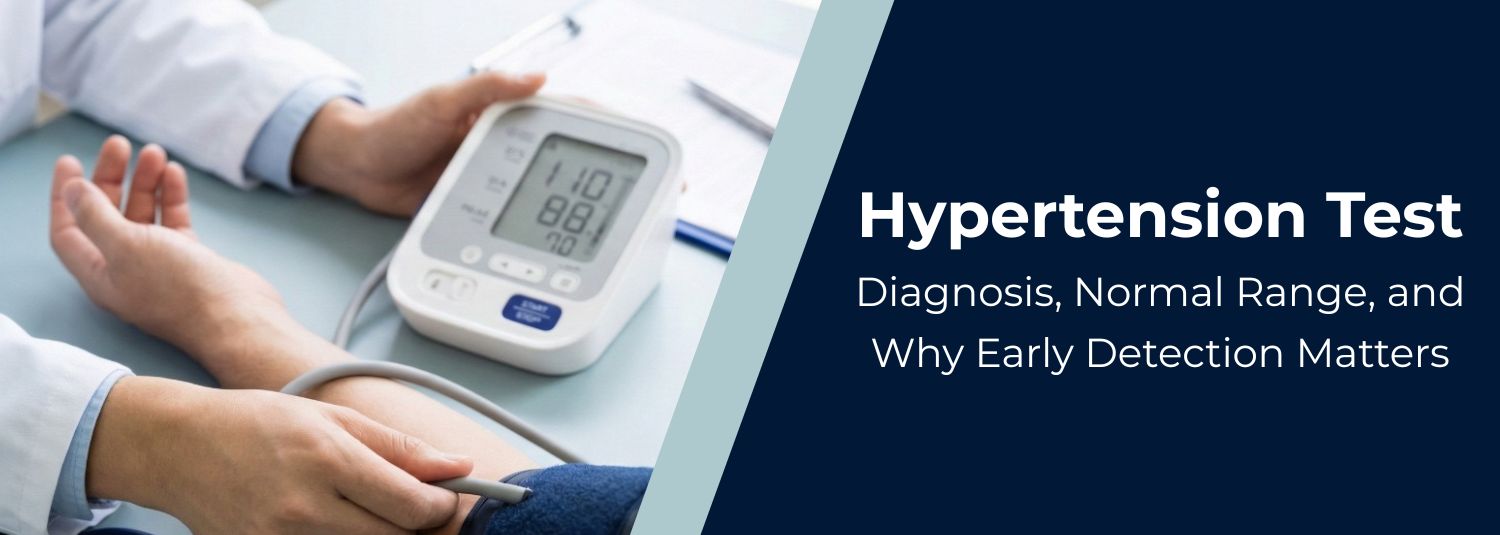
High blood pressure — or hypertension — is one of the most common yet often undiagnosed health conditions in the world.
It quietly damages your arteries and heart for years before showing any symptoms.
That’s why regular blood pressure testing is one of the most important steps in preventive healthcare.
A simple, non-invasive test can help detect hypertension early, allowing timely treatment and lifestyle changes to prevent complications like heart attack, stroke, or kidney failure.
What Is a Hypertension Test?
A Hypertension Test (also known as a Blood Pressure Test) measures the force of blood pushing against the walls of your arteries.
It’s expressed in two numbers:
- Systolic Pressure (top number): Pressure when your heart beats.
- Diastolic Pressure (bottom number): Pressure when your heart rests between beats.
For example, a reading of 120/80 mmHg means:
- 120 = Systolic pressure
- 80 = Diastolic pressure
This test is usually done using a sphygmomanometer (manual or digital BP monitor).
Normal Blood Pressure Range
| Category | Systolic (mmHg) | Diastolic (mmHg) |
|---|---|---|
| Normal | Less than 120 | Less than 80 |
| Elevated | 120–129 | Less than 80 |
| Stage 1 Hypertension | 130–139 | 80–89 |
| Stage 2 Hypertension | 140 or higher | 90 or higher |
| Hypertensive Crisis | Above 180 | Above 120 |
Source: American Heart Association (AHA), 2024.
What Happens During a Hypertension Test?
The test is quick, painless, and takes less than 5 minutes.
Step-by-step process:
- You’ll sit calmly for 5 minutes before the reading.
- A cuff is wrapped around your upper arm.
- The cuff inflates, restricting blood flow briefly.
- The pressure is slowly released, and the monitor records your blood pressure.
You might be asked to take two or three readings a few minutes apart for accuracy.
Types of Hypertension Tests
1. Office Blood Pressure Measurement
- Done at a clinic or diagnostic center.
- May use a manual or digital device.
2. Home Blood Pressure Monitoring
- You can use a digital BP monitor at home for regular tracking.
- Helps detect “white coat hypertension” (when BP rises due to anxiety in clinics).
3. Ambulatory Blood Pressure Monitoring (ABPM)
- A portable device worn for 24 hours.
- Records readings throughout the day and night.
- Provides the most accurate picture of your blood pressure behavior.
Why Hypertension Testing Is Important
Regular testing can help you:
- Detect high blood pressure early
- Monitor the effectiveness of treatment
- Identify underlying causes (like kidney disease or hormonal imbalance)
- Prevent heart and organ damage before it’s too late
Hypertension often shows no symptoms, which is why it’s known as the silent killer.
Early detection can reduce the risk of stroke by 35–40% and heart attack by 20–25%.
Who Should Get a Hypertension Test?
You should get your blood pressure tested if you:
- Are over 30 years old
- Have a family history of hypertension
- Are overweight or obese
- Experience stress, anxiety, or irregular sleep
- Have diabetes or high cholesterol
- Consume excessive salt, alcohol, or caffeine
Even healthy adults should have their BP checked:
- Every 2 years if normal
- Every 6–12 months if elevated
Symptoms of Hypertension
Most people feel fine — but in severe or prolonged cases, you may experience:
- Frequent headaches
- Dizziness or blurred vision
- Nosebleeds
- Chest pain or shortness of breath
- Fatigue or confusion
If you notice these symptoms, seek medical advice immediately.
Lifestyle Tips to Manage High Blood Pressure
1. Eat Heart-Healthy Foods
- Include fruits, vegetables, whole grains, and low-fat dairy.
- Limit salt (sodium) to less than 1,500 mg per day.
2. Maintain a Healthy Weight
Even a 5–10% weight loss can significantly lower BP.
3. Stay Active
Aim for 30 minutes of exercise daily — walking, yoga, or swimming.
4. Limit Alcohol and Quit Smoking
Both increase your blood pressure and damage arteries.
5. Manage Stress
Practice deep breathing, meditation, or music therapy.
Additional Diagnostic Tests for Hypertension
Your doctor may recommend these to identify causes or assess organ impact:
| Test Name | Purpose |
|---|---|
| Kidney Function Test (KFT) | Check kidney health (common cause of secondary hypertension) |
| Lipid Profile | Measure cholesterol and triglyceride levels |
| ECG / Echocardiogram | Assess heart function |
| Blood Sugar Test / HbA1c | Screen for diabetes |
| Urine Test | Detect protein or kidney-related issues |
All these tests are available at Molecular Diagnostics with complete report analysis.
Key Takeaways
- Hypertension test = Blood pressure measurement.
- Normal BP: Below 120/80 mmHg.
- Regular testing prevents silent damage to heart, brain, and kidneys.
- Combine testing with lifestyle changes for best results.
- Available through clinic, home, or ambulatory monitoring.
Conclusion: A Small Test That Can Save Your Life
High blood pressure often gives no warning until it’s too late.
Regular Hypertension Testing helps detect issues early and prevents long-term heart, brain, and kidney damage.
Monitoring your blood pressure regularly — at home or through routine checkups — is one of the simplest yet most powerful ways to protect your heart.
Take control of your numbers before they control you.
Book your Hypertension or Heart Health Screening today at Molecular Diagnostics — your trusted partner in preventive healthcare.
Frequently Asked Questions
In News
Get Our Mobile App
for Easy Access
Book tests, view reports, and manage your health records on the go. Experience convenient healthcare with Molecular Diagnostics and Therapy.
- ✔ Book tests & home collection
- ✔ View reports instantly
- ✔ Track health history
- ✔ Get notifications & reminders
- ✔ Easy appointment management