Importance of Bone Density Scan in Preventing Osteoporosis
Talk to Health Expert

Dr. Nikunj Jain
Co-Founder and HOD - Nuclear Medicine ,MBBS, DRM, DNB, FEBNM, FANMB, Dip. CBNC
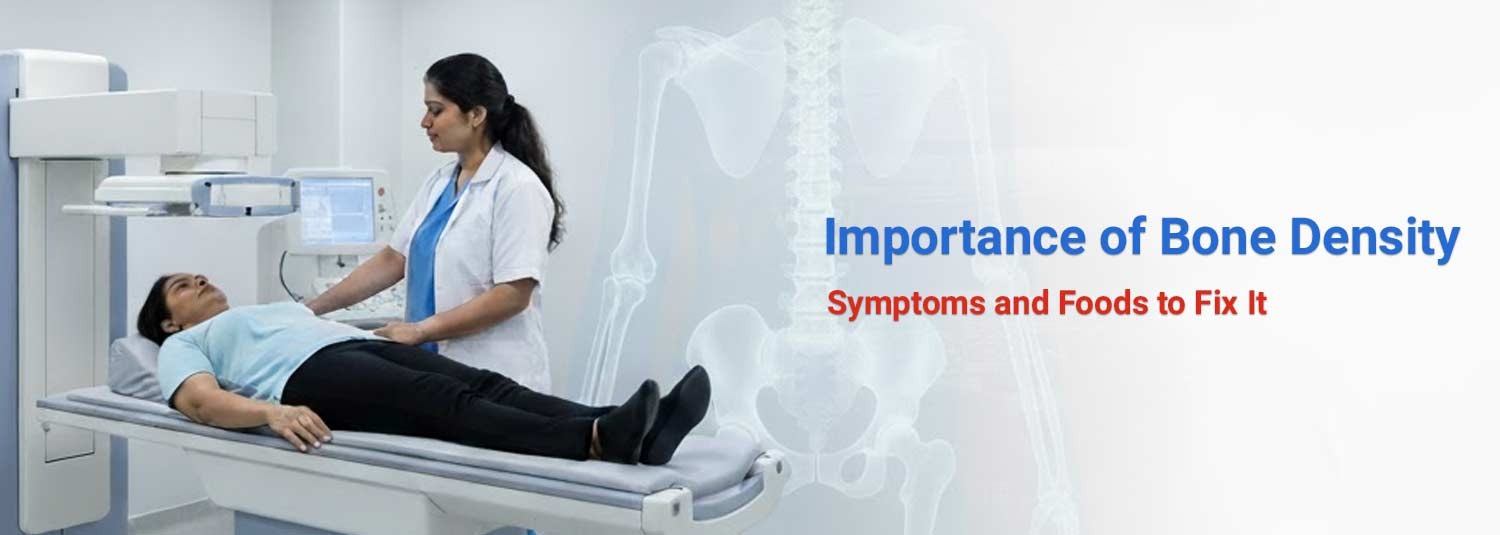
Strong bones are the foundation of a healthy life. But as we age, our bones naturally lose strength, putting us at risk of osteoporosis—a condition that makes bones weak and fragile, increasing the chances of fractures. The good news is that osteoporosis can often be prevented or managed if detected early.
One of the most effective tools for early detection is the bone density scan, also called a DEXA scan (Dual-Energy X-ray Absorptiometry). This simple, non-invasive test measures bone mineral density (BMD) and helps identify people at risk of osteoporosis before a fracture occurs.
In this article, we’ll explain why bone density scans matter, how the test works, who should get it, and how it helps in preventing osteoporosis.
What Is a Bone Density Scan?
A bone density scan (DEXA scan) is a quick and painless test that measures the strength of your bones. It uses low-dose X-rays to check the bone mineral density (BMD) in areas most at risk of fractures—usually the hip, spine, or wrist.
Unlike a regular X-ray, which only shows bone structure, a DEXA scan can detect tiny changes in bone density, making it the gold standard test for osteoporosis diagnosis.
Why Is Bone Density Scan Important in Preventing Osteoporosis?
Osteoporosis is often called a “silent disease” because bone loss happens gradually without noticeable symptoms. Many people don’t realize they have it until they suffer a fracture.
A bone density test is important because it:
- Detects osteoporosis early – before a fracture occurs
- Identifies risk factors – especially for women after menopause and men over 65
- Predicts fracture risk – using tools like the FRAX score
- Guides treatment – helps doctors decide if lifestyle changes, supplements, or medication are needed
- Monitors bone health – tracks changes over time to see if treatment is working
Who Should Get a Bone Density Scan?
According to the National Osteoporosis Foundation (NOF) and the World Health Organization (WHO), a bone density scan is recommended for:
- Women aged 65 and older
- Men aged 70 and older
- Postmenopausal women under 65 with risk factors (family history, smoking, low weight)
- Adults with fractures after age 50
- People on long-term steroid medications
- Patients with conditions like rheumatoid arthritis or thyroid disorders
Even younger adults may need screening if they have multiple risk factors.
How Does a Bone Density Test Work?
Here’s what typically happens during a DEXA scan:
- Preparation: No special prep is needed. You may be asked to avoid calcium supplements for 24 hours before the test.
- Procedure: You’ll lie flat on a padded table. A scanning arm passes over your body, focusing on the hip and spine.
- Duration: The test usually takes 10–20 minutes.
- Safety: The radiation exposure is very low—less than a chest X-ray.
The results are given as:
- T-score: Compares your bone density to that of a healthy young adult.
- Normal: -1.0 and above
- Osteopenia (low bone mass): -1.0 to -2.5
- Osteoporosis: -2.5 or lower
- Z-score: Compares your bone density to others your age, sex, and size.
Benefits of a Bone Density Scan
- Non-invasive and painless
- Quick results
- Highly accurate for diagnosing osteoporosis
- Helps avoid serious fractures like hip fractures, which can lead to long recovery times or disability
- Provides a baseline for monitoring bone health over time
Risks and Safety
- Radiation exposure is minimal and considered safe.
- No side effects in most cases.
- Not recommended during pregnancy.
Overall, a DEXA scan is one of the safest medical imaging tests available.
Key Facts About Bone Density Scans & Osteoporosis
- Osteoporosis affects over 200 million people worldwide (WHO).
- 1 in 2 women and 1 in 4 men over 50 will experience a fracture due to osteoporosis (National Osteoporosis Foundation).
- DEXA scan is the gold standard for measuring bone mineral density.
- The American Bone Health organization recommends screening women at menopause if they have risk factors.
- Lifestyle changes like calcium-rich diet, vitamin D, weight-bearing exercise, and quitting smoking can significantly improve bone health.
The Role of Molecular Diagnostics in Bone Health
While bone density scans measure bone strength, molecular diagnostic tests can provide deeper insights at the genetic and biochemical level. These tests can:
- Identify inherited risk factors for osteoporosis
- Detect molecular changes affecting bone metabolism
- Help personalize treatments for better results
- Monitor bone health alongside imaging scans
Ask your doctor about molecular diagnostic testing in addition to bone density scans. Together, they offer the most complete approach to preventing osteoporosis and protecting your bone health.
Final Word: A bone density scan is one of the most effective tools for preventing osteoporosis and fractures. Quick, safe, and accurate, it helps detect problems early so you can take control of your bone health. Combined with molecular diagnostics, it empowers patients and doctors to build stronger bones for life.
FAQs About Bone Density Scan
What is a bone density scan used for?
To measure bone strength and detect osteoporosis early.
At what age should you get a bone density test?
Women 65+, men 70+, or earlier if you have risk factors.
Is a bone density scan painful?
No, it’s painless and non-invasive.
How long does a DEXA scan take?
Usually 10–20 minutes.
Is a bone density scan safe?
Yes, it uses very low radiation.
Can a bone density scan detect arthritis?
No, it specifically measures bone mineral density, not joint health.
How often should you get a bone density test?
Every 1–2 years, depending on your risk and doctor’s advice.
Does insurance cover bone density scans?
In many countries, yes, especially for high-risk groups.
What foods help improve bone density?
Foods rich in calcium and vitamin D—like dairy, leafy greens, and fish.
Can osteoporosis be reversed?
While bone loss can’t always be fully reversed, early detection, treatment, and lifestyle changes can slow or stop its progression.
In News
Get Our Mobile App
for Easy Access
Book tests, view reports, and manage your health records on the go. Experience convenient healthcare with Molecular Diagnostics and Therapy.
- ✔ Book tests & home collection
- ✔ View reports instantly
- ✔ Track health history
- ✔ Get notifications & reminders
- ✔ Easy appointment management