Iron Test: Normal Levels, Causes of Deficiency & Health Importance
Talk to Health Expert

Dr. Nikunj Jain
Co-Founder and HOD - Nuclear Medicine ,MBBS, DRM, DNB, FEBNM, FANMB, Dip. CBNC
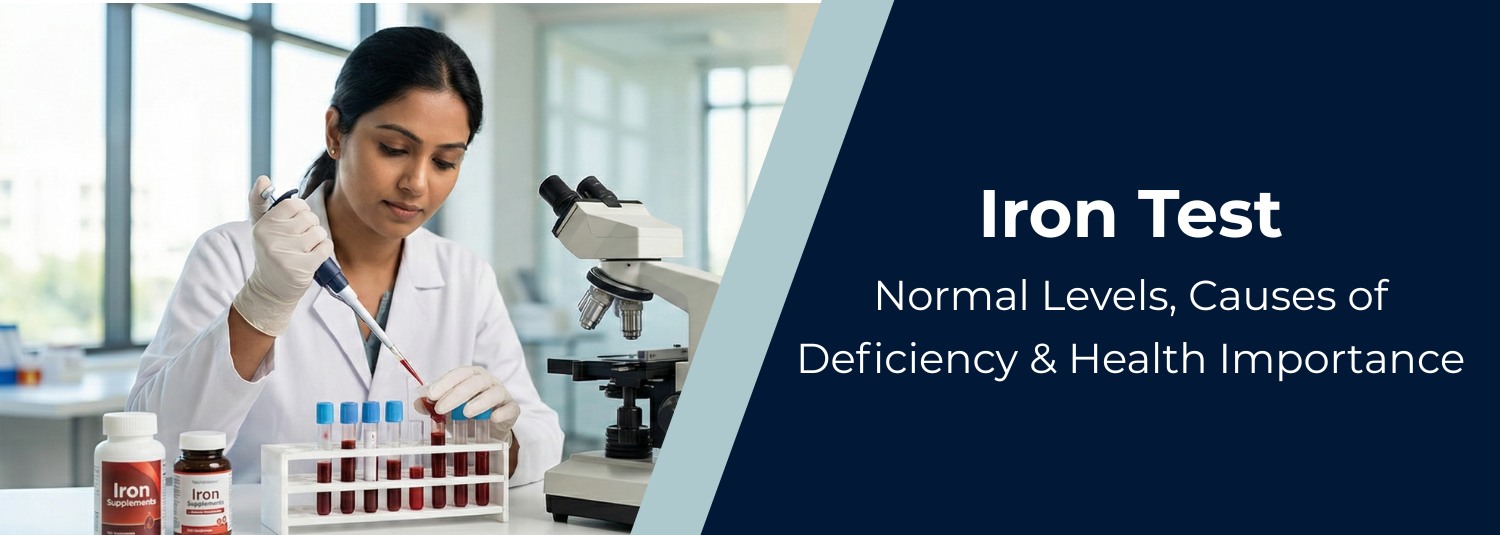
Iron is an essential mineral that plays a key role in transporting oxygen through the blood and supporting overall health. Low iron levels can lead to fatigue, weakness, and anemia, while high iron levels may indicate other health concerns.
A Blood Iron Test helps measure the amount of iron in your blood and assess whether your body has enough to function properly.
In this blog, we’ll explain what an Iron Test is, normal levels, causes of deficiency or excess, symptoms, and health importance.
What Is an Iron Test?
An Iron Test measures the amount of iron in your blood. Iron is essential for producing hemoglobin, the protein in red blood cells that carries oxygen.
Doctors may recommend an Iron Test to:
- Detect iron deficiency or overload
- Diagnose anemia or other blood disorders
- Monitor treatment for iron deficiency or supplementation
- Evaluate fatigue, weakness, or unexplained symptoms
Why Is Iron Important?
Iron is crucial for:
- Oxygen transport: Hemoglobin carries oxygen to tissues and organs
- Energy production: Supports metabolism and reduces fatigue
- Immune function: Helps fight infections
- Brain health: Supports cognition and memory
- Red blood cell production: Prevents anemia and supports overall vitality
Normal Iron Levels
Iron levels can vary depending on age, gender, and lab standards. Typical serum iron levels are:
| Group | Normal Range (µg/dL) |
|---|---|
| Men | 65–176 |
| Women | 50–170 |
| Children | 50–120 |
| Infants | 100–250 |
Note: Your doctor may also check Total Iron Binding Capacity (TIBC) and ferritin levels for a complete assessment.
Causes of Iron Deficiency
Iron deficiency is the most common nutritional deficiency worldwide. Causes include:
- Poor Diet
- Low intake of iron-rich foods like red meat, beans, and leafy greens
- Blood Loss
- Menstruation, gastrointestinal bleeding, or trauma
- Pregnancy
- Higher iron demand for fetal development
- Malabsorption
- Conditions like celiac disease or Crohn’s disease reduce iron absorption
- Chronic Diseases
- Kidney disease or chronic inflammation can reduce iron levels
Symptoms of Iron Deficiency
- Fatigue and weakness
- Pale skin or gums
- Shortness of breath
- Dizziness or headache
- Cold hands and feet
- Brittle nails or hair loss
- Poor concentration
Causes of High Iron
High iron levels, also called iron overload, may occur due to:
- Excess supplementation
- Genetic conditions like hemochromatosis
- Frequent blood transfusions
- Liver disease
Symptoms of iron overload:
- Joint pain
- Fatigue
- Abdominal pain
- Heart problems
- Skin discoloration
How Is an Iron Test Done?
- A blood sample is taken from a vein in your arm.
- No fasting is required for most iron tests, but some labs may request it.
- Results are usually available within 24–48 hours.
Interpreting Iron Test Results
- Low Iron → Iron deficiency or anemia
- Normal Iron → Healthy iron status
- High Iron → Possible iron overload or other conditions
Doctors may combine iron, TIBC, and ferritin results for a complete picture of your iron status.
Health Importance of Maintaining Normal Iron
- Prevents anemia and fatigue
- Supports healthy immune function
- Ensures proper oxygen delivery to tissues
- Reduces risk of developmental delays in children
- Supports heart, brain, and muscle function
Key Facts About Iron
- Iron deficiency affects over 1.6 billion people worldwide, according to WHO.
- Women of reproductive age, children, and pregnant women are most at risk.
- Excess iron can damage organs like the liver, heart, and pancreas.
- Testing iron levels regularly helps prevent complications and maintain optimal health.
FAQs About Iron Test (Voice Search Optimized)
What is an Iron Test?
It measures the amount of iron in your blood to assess deficiency or overload.
What are normal iron levels?
Men: 65–176 µg/dL, Women: 50–170 µg/dL, Children: 50–120 µg/dL.
What causes low iron?
Poor diet, blood loss, pregnancy, malabsorption, or chronic disease.
What causes high iron?
Excess supplementation, genetic disorders, liver disease, or frequent transfusions.
What are symptoms of iron deficiency?
Fatigue, pale skin, dizziness, shortness of breath, brittle nails.
Can too much iron be harmful?
Yes, it can cause organ damage, joint pain, and heart problems.
Do I need to fast for an Iron Test?
Usually not, but follow your doctor’s instructions.
How often should iron levels be checked?
As advised, especially for those at risk of deficiency or overload.
Which foods are rich in iron?
Red meat, beans, lentils, spinach, fortified cereals, and eggs.
Can iron deficiency affect children?
Yes, it can cause fatigue, developmental delays, and poor concentration.
Conclusion
The Iron Test is a simple, effective tool to monitor your iron status and prevent anemia or iron overload. Maintaining normal iron levels supports energy, immunity, and overall health.
At Molecular, we provide accurate Iron testing and diagnostics to help you maintain a healthier and stronger life.
In News
Get Our Mobile App
for Easy Access
Book tests, view reports, and manage your health records on the go. Experience convenient healthcare with Molecular Diagnostics and Therapy.
- ✔ Book tests & home collection
- ✔ View reports instantly
- ✔ Track health history
- ✔ Get notifications & reminders
- ✔ Easy appointment management