Kidney Stones: Causes, Symptoms, Diagnosis, and Treatment
Talk to Health Expert

Dr. Nikunj Jain
Co-Founder and HOD - Nuclear Medicine ,MBBS, DRM, DNB, FEBNM, FANMB, Dip. CBNC
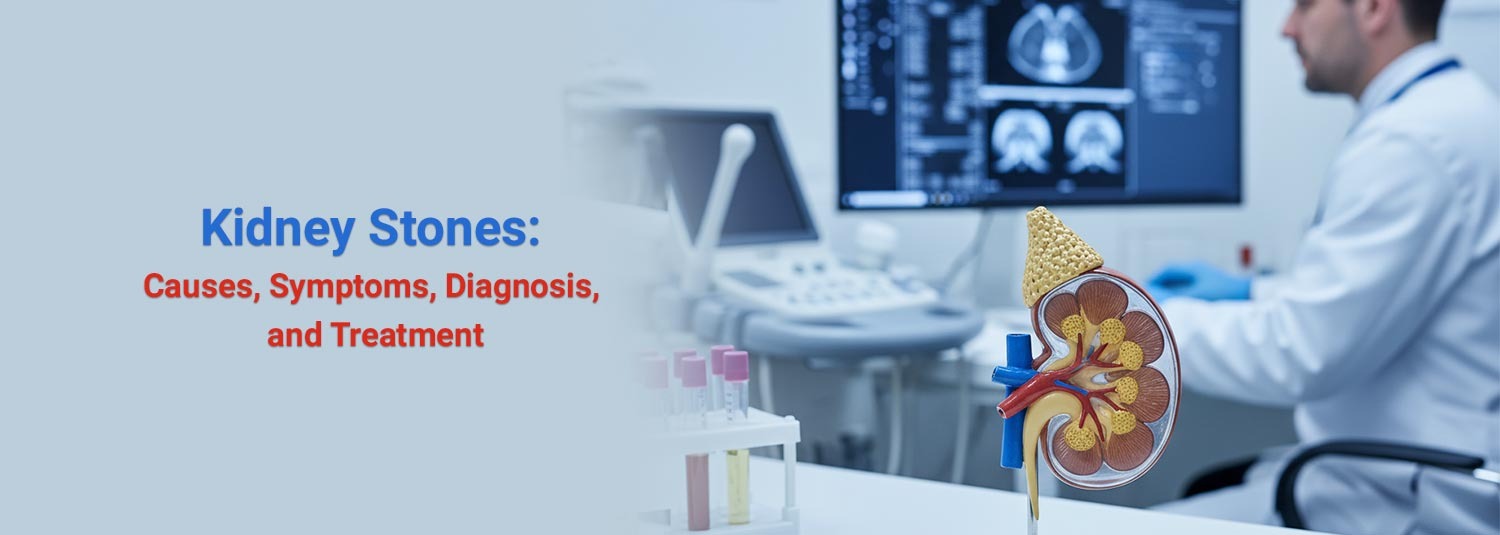
Kidney stones are hard mineral deposits that form in the kidneys and can affect anyone, though they are more common in men. These stones vary in size and can cause intense pain, urinary problems, and sometimes infection. Understanding the causes, symptoms, diagnosis, and treatment options can help prevent complications and manage kidney stones effectively.
What Are Kidney Stones?
Kidney stones, also known as renal calculi, are crystalized minerals and salts that form inside the kidneys. They develop when substances like calcium, oxalate, uric acid, or cystine become concentrated in urine, leading to solid deposits.
Some stones are small and pass unnoticed, while others grow larger, causing renal colic, urinary obstruction, or infection. Kidney stones can affect one or both kidneys and sometimes recur without preventive care.
Types of Kidney Stones
Understanding the type of kidney stone is important for treatment and prevention:
- Calcium Stones
- Most common type, often composed of calcium oxalate.
- High oxalate foods like spinach, nuts, and chocolate can contribute.
- Uric Acid Stones
- Formed due to high uric acid levels in the urine.
- Common in people with gout or high-protein diets.
- Struvite Stones
- Often develop after urinary tract infections (UTIs).
- Can grow quickly and become large.
- Cystine Stones
- Rare and caused by genetic disorders that increase cystine in urine.
Causes and Risk Factors
Kidney stones can develop due to multiple factors:
- Dehydration: Insufficient water intake concentrates urine, promoting stone formation.
- Diet: High salt, sugar, and oxalate-rich foods increase risk.
- Medical conditions: Obesity, gout, chronic UTIs, and digestive disorders.
- Genetics: Family history increases susceptibility.
- Medications: Some diuretics or calcium-based supplements may contribute.
Prevention often starts with lifestyle modifications, especially hydration and diet control.
Symptoms of Kidney Stones
Kidney stones can be painful and disruptive, though small stones may cause no symptoms. Common signs include:
- Severe pain in the back, side, or lower abdomen (renal colic)
- Painful urination (dysuria)
- Blood in urine (hematuria)
- Nausea and vomiting
- Frequent urination or urinary urgency
- Fever and chills if an infection is present
Pain often comes in waves and can radiate to the groin or lower abdomen as the stone moves through the urinary tract.
Diagnosis of Kidney Stones
Proper diagnosis is crucial to determine stone size, type, and location, guiding treatment:
1. Urine Tests
- Detect blood, crystals, infection, or high mineral levels
- Helps identify the type of stone
2. Blood Tests
- Check kidney function (creatinine, urea)
- Detect high calcium or uric acid levels
3. Imaging Tests
- Ultrasound: Non-invasive, identifies most stones
- CT Scan: Highly accurate, reveals size and location
- X-ray (KUB): Detects some types of stones
4. Stone Analysis
- If a stone passes naturally, laboratory analysis identifies its composition
- Helps tailor preventive strategies
Treatment Options
Treatment depends on stone size, type, and symptoms:
1. Small Stones
- Often pass naturally with hydration and pain management
- Pain relievers like paracetamol or ibuprofen
- Alpha-blockers may relax the ureter to help stones pass
2. Large or Obstructive Stones
- Extracorporeal Shock Wave Lithotripsy (ESWL): Breaks stones into smaller pieces
- Ureteroscopy: Thin scope used to remove stones
- Percutaneous Nephrolithotomy: Surgical removal for large or complicated stones
3. Preventive Measures
- Drink 2–3 liters of water daily
- Reduce salt and sugar intake
- Limit oxalate-rich foods if prone to calcium stones
- Maintain a healthy weight and balanced diet
- Regular check-ups if you have a history of kidney stones
When to See a Doctor
Seek medical attention if you experience:
- Severe or persistent pain
- Blood in urine
- Fever or chills (possible infection)
- Nausea or vomiting preventing hydration
- Stones not passing naturally within a few days
Early medical intervention prevents complications such as urinary tract obstruction, kidney infection, or chronic kidney disease.
Key Facts About Kidney Stones
- Kidney stones are more common in men than women
- Most stones are small and pass naturally, but larger stones may need treatment
- Recurrence is common without dietary and lifestyle adjustments
- Early detection through diagnostics and imaging ensures effective management
- Preventive care and hydration are critical for long-term kidney health
Conclusion
Kidney stones are painful but manageable when detected early. Understanding the causes, symptoms, diagnostic tests, and treatment options is key to effective management.
In News
Get Our Mobile App
for Easy Access
Book tests, view reports, and manage your health records on the go. Experience convenient healthcare with Molecular Diagnostics and Therapy.
- ✔ Book tests & home collection
- ✔ View reports instantly
- ✔ Track health history
- ✔ Get notifications & reminders
- ✔ Easy appointment management