PCOS vs PCOD: Key Differences Every Woman Should Know
Talk to Health Expert

Dr. Nikunj Jain
Co-Founder and HOD - Nuclear Medicine ,MBBS, DRM, DNB, FEBNM, FANMB, Dip. CBNC
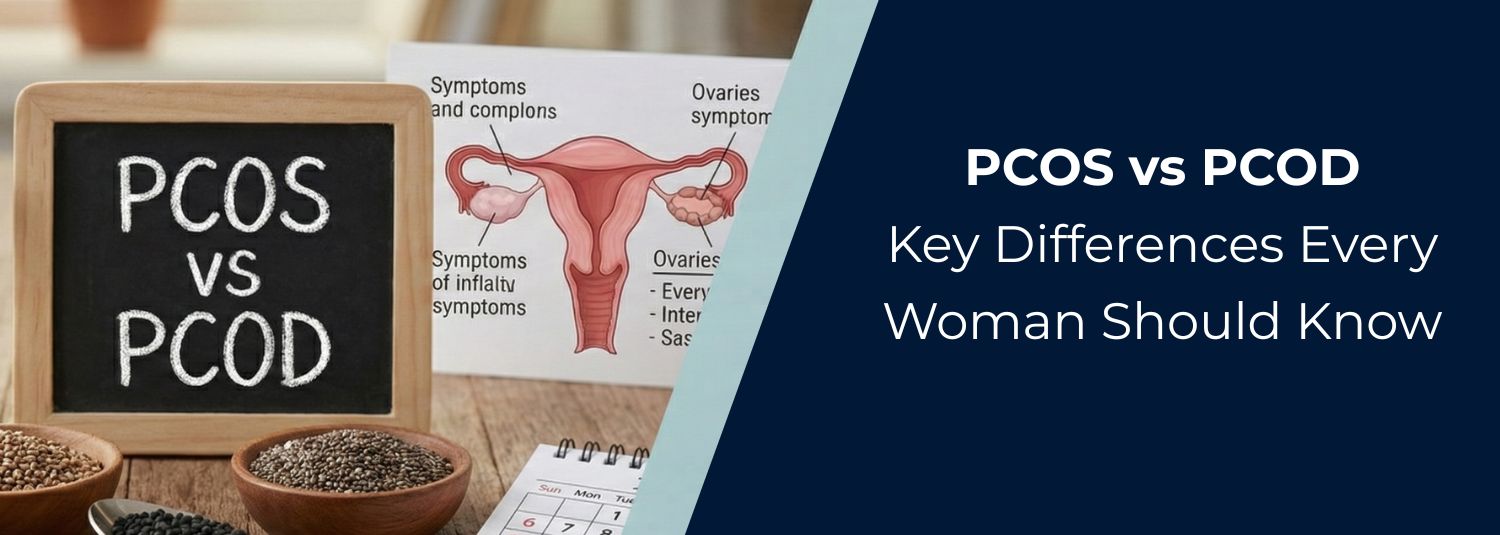
In today’s fast-paced lifestyle, hormonal disorders among women have become increasingly common.
Two such conditions — PCOS (Polycystic Ovary Syndrome) and PCOD (Polycystic Ovarian Disease) — are often used interchangeably, but they are not the same.
While both affect the ovaries and hormonal balance, their causes, severity, and long-term effects differ significantly.
If you’ve ever wondered:
“Do I have PCOS or PCOD?”
This detailed guide will help you understand the key differences, causes, symptoms, and treatments for both conditions — so you can take charge of your reproductive health.
What Is PCOD?
PCOD (Polycystic Ovarian Disease) is a condition where a woman’s ovaries produce many immature or partially mature eggs, which over time become cysts.
How It Happens:
- The ovaries enlarge and release excess androgens (male hormones).
- This hormonal imbalance can interfere with normal egg release during ovulation.
- As a result, fertility may be mildly affected, but with lifestyle changes, it’s manageable.
Common Symptoms of PCOD:
- Irregular or delayed periods
- Weight gain, especially around the abdomen
- Acne and oily skin
- Hair thinning or hair loss
- Difficulty conceiving (in some cases)
- Mood swings or fatigue
Is PCOD Common?
Yes — PCOD is extremely common and affects 1 in 3 women during their reproductive years.
It is often mild and can be reversed with proper diet, exercise, and hormonal balance.
What Is PCOS?
PCOS (Polycystic Ovary Syndrome) is a more severe metabolic and hormonal disorder.
It involves endocrine system dysfunction, where the ovaries produce higher levels of male hormones, disrupting ovulation completely.
How It Happens:
- PCOS is often linked to insulin resistance, inflammation, and genetic predisposition.
- The body produces more insulin, leading to higher androgen levels.
- This causes multiple cysts in the ovaries and prevents regular ovulation.
Common Symptoms of PCOS:
- Missed or absent menstrual cycles
- Excess facial or body hair (hirsutism)
- Severe acne and oily skin
- Rapid weight gain
- Infertility or anovulation (no egg release)
- Mood disorders like anxiety or depression
- Dark skin patches (especially around the neck and armpits)
PCOS vs PCOD: Key Differences at a Glance
| Category | PCOD (Polycystic Ovarian Disease) | PCOS (Polycystic Ovary Syndrome) |
|---|---|---|
| Nature | Mild hormonal imbalance | Severe endocrine disorder |
| Cause | Poor lifestyle, diet, stress | Genetic + hormonal + metabolic causes |
| Ovulation | Often delayed | Often absent |
| Fertility Impact | Generally not affected | Can lead to infertility |
| Weight Issues | Moderate | More pronounced (insulin resistance) |
| Menstrual Cycle | Irregular or delayed | May completely stop |
| Hormone Levels | Slightly elevated androgens | High androgens, insulin, and LH |
| Long-Term Risks | Manageable with lifestyle | May cause diabetes, hypertension, infertility |
| Reversibility | Easily reversible | Requires long-term management |
Causes of PCOD and PCOS
Both PCOD and PCOS arise from hormonal imbalances, but the triggers differ.
Common Triggers:
- Unhealthy diet (high sugar and processed foods)
- Lack of exercise
- Chronic stress
- Sleep disturbances
- Obesity or rapid weight changes
PCOS-Specific Triggers:
- Genetic factors — runs in families
- Insulin resistance — leads to excess androgen production
- Endocrine disorders — such as thyroid imbalance
Diet and Lifestyle Management for PCOS and PCOD
Diet and lifestyle changes play a crucial role in controlling both PCOD and PCOS naturally.
Best Diet Tips:
- Eat high-fiber foods like oats, fruits, and vegetables
- Include lean proteins (eggs, fish, paneer)
- Avoid refined sugars and processed foods
- Add healthy fats (avocado, nuts, olive oil)
- Stay hydrated and limit caffeine
Lifestyle Tips:
- Exercise for 30–45 minutes daily (yoga, strength training, walking)
- Get 7–8 hours of sleep
- Manage stress through meditation or deep breathing
- Track menstrual cycles using apps
- Avoid smoking and alcohol
Diagnosis: How to Know If You Have PCOS or PCOD
A gynecologist or endocrinologist may suggest the following tests:
Common Diagnostic Tests:
- Pelvic Ultrasound – To check for ovarian cysts
- Hormonal Blood Tests – LH, FSH, testosterone, prolactin
- Blood Sugar & Insulin Tests – To check insulin resistance
- Thyroid Function Test – To rule out thyroid imbalance
- Lipid Profile – For cholesterol and triglyceride levels
At Molecular IT Diagnostics, you can get a Complete Hormone Profile Test that detects imbalances early — helping you manage PCOD or PCOS effectively.
Treatment Options for PCOD and PCOS
Treatment depends on the severity, symptoms, and fertility goals.
For PCOD:
- Focus on lifestyle changes (diet + exercise)
- Hormonal therapy (birth control pills for regular cycles)
- Ayurvedic or natural supplements (with doctor approval)
For PCOS:
- Metformin for insulin resistance
- Birth control pills for hormonal balance
- Anti-androgen medications (like spironolactone)
- Fertility treatment if planning pregnancy
- Regular monitoring of blood sugar and cholesterol
Long-Term Health Risks
If left untreated, PCOS and PCOD can lead to:
- Type 2 diabetes
- High cholesterol and heart disease
- Infertility
- Endometrial cancer (in rare cases)
- Depression and anxiety
Early diagnosis and consistent management significantly reduce these risks.
When to See a Doctor
You should consult a gynecologist or endocrinologist if you experience:
- Missed or irregular periods for 3+ months
- Rapid weight gain
- Excess hair growth or acne
- Difficulty getting pregnant
Timely medical help ensures better control over symptoms and long-term health.
Conclusion: PCOS or PCOD — Take Charge of Your Hormones
While PCOD is a common lifestyle-related issue, PCOS is a complex hormonal disorder that requires medical attention.
Both are manageable with early diagnosis, proper diet, and regular exercise.
Remember, your body speaks — listen to it.
If you notice changes in your cycle, weight, or skin, it’s time to consult your doctor and get tested.
A balanced life can bring your hormones — and your confidence — back into harmony.
FAQs: PCOS vs PCOD
Are PCOS and PCOD the same?
No. PCOD is a mild condition, while PCOS is a severe hormonal disorder.
Can PCOD turn into PCOS?
Not necessarily, but poor lifestyle habits can worsen PCOD symptoms.
Can women with PCOS get pregnant?
Yes, but they may need medical help or fertility treatments.
Does PCOD cause weight gain?
Yes, due to hormonal imbalance and insulin resistance.
Can PCOS be cured permanently?
PCOS can be managed, but not permanently cured. Healthy living helps control symptoms.
What is the best diet for PCOS?
High in fiber, low in sugar, and rich in protein and healthy fats.
Which test confirms PCOS or PCOD?
A pelvic ultrasound and hormone blood tests are usually recommended.
Can PCOS cause hair loss?
Yes, due to excess androgen levels.
At what age does PCOS start?
It usually appears between ages 15–30.
Where can I get tested for PCOS/PCOD?
Visit Molecular Diagnostics for a Complete Hormone Profile Test.
In News
Get Our Mobile App
for Easy Access
Book tests, view reports, and manage your health records on the go. Experience convenient healthcare with Molecular Diagnostics and Therapy.
- ✔ Book tests & home collection
- ✔ View reports instantly
- ✔ Track health history
- ✔ Get notifications & reminders
- ✔ Easy appointment management