PET CT Scan: Purpose, Procedure, Benefits, and Safety
Talk to Health Expert

Dr. Nikunj Jain
Co-Founder and HOD - Nuclear Medicine ,MBBS, DRM, DNB, FEBNM, FANMB, Dip. CBNC
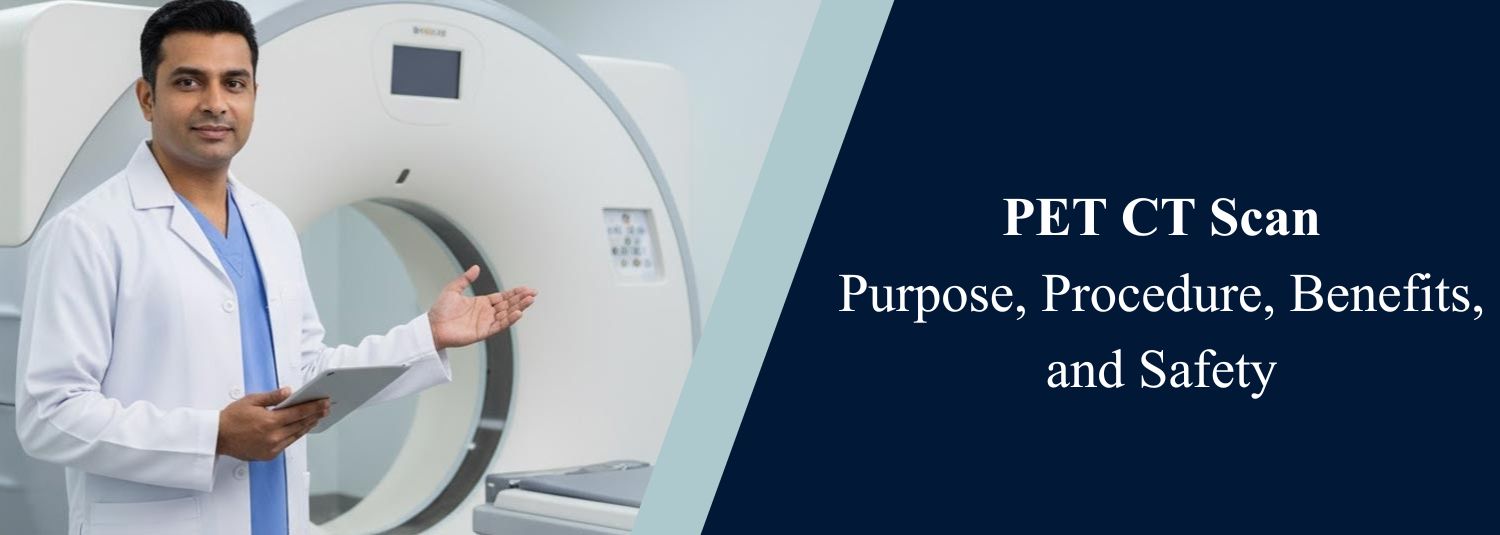
Modern medicine relies heavily on advanced imaging to detect and monitor diseases.
Among these, the PET CT scan stands out as a powerful diagnostic tool that provides detailed insights into both structure and function of the body’s organs and tissues.
Whether you’re dealing with cancer, neurological issues, or cardiac concerns, a PET CT scan helps doctors make accurate and timely decisions.
What Is a PET CT Scan?
A PET CT scan combines two imaging techniques:
- PET (Positron Emission Tomography):
Measures metabolic activity in tissues. Cancer cells, for example, consume more glucose and appear brighter on the scan. - CT (Computed Tomography):
Provides detailed anatomical images, showing the exact location of abnormalities.
By combining both, a PET CT scan gives doctors a comprehensive view of your body — structural and functional — making it one of the most advanced diagnostic tools available today.
Why Is a PET CT Scan Done?
PET CT scans are commonly recommended for:
- Cancer Diagnosis and Staging: Detect tumors, monitor growth, and check for metastasis.
- Assessing Treatment Response: Evaluate if chemotherapy, radiation, or other treatments are effective.
- Cardiac Health: Identify areas of reduced blood flow in heart disease.
- Neurological Conditions: Detect Alzheimer’s, Parkinson’s, epilepsy, and brain tumors.
- Infection and Inflammation: Locate areas of infection or inflammation in the body.
How Does a PET CT Scan Work?
The procedure involves a few key steps:
-
Preparation
- Avoid eating for 4–6 hours prior to the scan (water is allowed).
- Avoid strenuous exercise for 24 hours.
- Inform your doctor about medications, allergies, or pregnancy.
-
Injection of Radiotracer
- A small amount of radioactive glucose (FDG) is injected into the bloodstream.
- The radiotracer travels to areas with high metabolic activity, like cancer cells.
-
Waiting Period
- Wait 30–60 minutes for the tracer to distribute in the body.
- Relax during this time; avoid talking or moving excessively.
-
Scanning
- You lie on a table that slides into the PET CT machine.
- The CT scan maps your anatomy, while the PET scan detects metabolic activity.
- Total scan time: 20–45 minutes.
-
Analysis
- Doctors interpret images to identify abnormal activity, tumors, or areas of concern.
- Results are typically available within 24–48 hours.
Benefits of PET CT Scan
- Early Detection: Can detect disease before structural changes appear on regular imaging.
- Comprehensive View: Combines anatomical and functional information.
- Accurate Staging: Essential for planning cancer treatment.
- Treatment Monitoring: Helps doctors know if therapies are working.
- Non-Invasive: Simple injection and scan — no surgery required.
- Guides Biopsies: Helps locate the most active part of a tumor for accurate sampling.
Safety and Side Effects
PET CT scans are generally safe, but it’s important to follow precautions:
- Radiation Exposure: Low-dose exposure, but generally safe for adults. Pregnant women should avoid unless necessary.
- Allergic Reactions: Rare, mild reactions to radiotracers.
- Discomfort: Mostly related to lying still during the scan.
- Hydration: Drinking plenty of water afterward helps flush the tracer from the body.
Preparing for a PET CT Scan
- Fasting: 4–6 hours before the test.
- Clothing: Wear comfortable, loose clothing. Remove metal objects.
- Medication: Inform the doctor about diabetes or other conditions; insulin adjustments may be needed.
- Hydration: Drink water to stay hydrated but avoid sugary drinks.
Key Facts & Trusted Sources
- World Health Organization (WHO): PET CT is essential for cancer detection and monitoring.
- American College of Radiology (ACR): PET CT combines metabolic and anatomical imaging for precise diagnosis.
- National Cancer Institute (NCI): PET CT improves staging accuracy and guides treatment decisions.
FAQs About PET CT Scan
What is a PET CT scan used for?
It detects cancer, heart problems, neurological disorders, infections, and inflammation.
Is PET CT scan safe?
Yes, it’s safe with low radiation exposure. Pregnant women should avoid unless necessary.
How should I prepare for a PET CT scan?
Fasting for 4–6 hours, staying hydrated, avoiding strenuous activity, and informing your doctor about medications.
How long does the scan take?
Typically 20–45 minutes for scanning, plus 30–60 minutes waiting for the tracer.
Does PET CT scan hurt?
No, the procedure is non-invasive. You might feel a small pinch during the injection.
Can children undergo PET CT?
Yes, with special precautions and low-dose tracers.
How soon will I get results?
Results are usually available within 24–48 hours.
Are there any side effects?
Side effects are rare. Some may experience mild allergic reaction or discomfort lying still.
Can I continue my medications before the scan?
Inform your doctor. Some medications, like insulin, may need adjustment.
How is PET CT different from regular CT or MRI?
PET CT shows metabolic activity while CT/MRI shows structure only. The combination improves diagnosis accuracy.
Final Thoughts
The PET CT scan is a revolutionary diagnostic tool, giving doctors a detailed and functional view of your body’s organs.
Whether for early cancer detection, monitoring treatment, or evaluating heart and brain health, PET CT enables informed, life-saving decisions.
If you or a loved one needs a PET CT scan, visit Molecular Diagnostics for advanced imaging, accurate results, and professional care.
In News
Get Our Mobile App
for Easy Access
Book tests, view reports, and manage your health records on the go. Experience convenient healthcare with Molecular Diagnostics and Therapy.
- ✔ Book tests & home collection
- ✔ View reports instantly
- ✔ Track health history
- ✔ Get notifications & reminders
- ✔ Easy appointment management