Sabja Seeds Benefits: The Hidden Superfood for Digestion, Weight Loss, and More
Talk to Health Expert

Dr. Nikunj Jain
Co-Founder and HOD - Nuclear Medicine ,MBBS, DRM, DNB, FEBNM, FANMB, Dip. CBNC
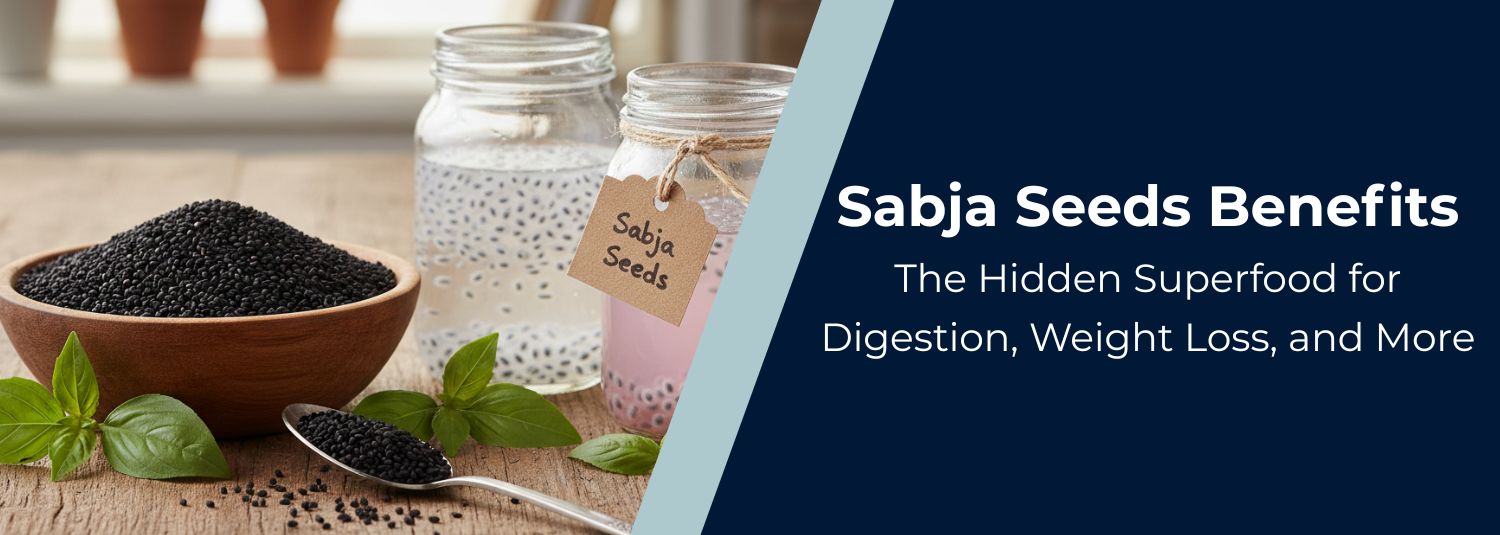
You’ve probably seen tiny black sabja seeds floating in drinks like falooda or lemon water — but did you know they’re a nutritional powerhouse?
Sabja seeds (also known as sweet basil seeds or tukmaria seeds) have been used in Ayurvedic and traditional medicine for centuries. Packed with fiber, omega-3 fatty acids, and plant-based protein, these seeds offer numerous benefits for digestion, skin health, and even blood sugar control.
Unlike chia seeds, sabja seeds swell instantly in water, forming a gel-like texture that’s soothing for your stomach — and that’s just one of their many health secrets.
Let’s explore the science-backed benefits of this humble yet mighty superseed.
What Are Sabja Seeds?
Sabja seeds come from the sweet basil plant (Ocimum basilicum), commonly used as a culinary and medicinal herb.
They’re tiny, black, and resemble chia seeds, but they’re different in nutritional composition and texture.
When soaked in water for 10–15 minutes, sabja seeds expand up to 20 times their size, forming a jelly-like coating. This makes them incredibly hydrating and beneficial for digestion.
Nutritional Value (per tablespoon of soaked sabja seeds):
- Calories: ~40
- Fiber: 3.5 g
- Protein: 2 g
- Omega-3 Fatty Acids: 1.2 g
- Calcium, Iron, Magnesium: Present in good amounts
Top 10 Health Benefits of Sabja Seeds
1. Improves Digestion Naturally
Sabja seeds are loaded with soluble fiber, which promotes smooth bowel movement and prevents constipation.
The mucilaginous gel formed after soaking the seeds acts as a natural soothing agent for the stomach lining, easing acidity and indigestion.
Pro tip: Drink soaked sabja seeds in lukewarm water 30 minutes before meals to aid digestion.
2. Supports Healthy Weight Loss
Trying to lose weight naturally? Sabja seeds can help!
Their high fiber content keeps you full for longer, reducing hunger pangs and unnecessary snacking.
When soaked, they expand in your stomach, creating a sense of fullness and helping manage calorie intake.
Try this: Mix one tablespoon of soaked sabja seeds in a glass of lemon water or buttermilk for a low-calorie fat-burning drink.
3. Regulates Blood Sugar Levels
For people with diabetes or insulin resistance, sabja seeds are a smart dietary addition.
The gel-like fiber slows down the absorption of sugar into the bloodstream, preventing sudden glucose spikes.
Studies show that daily consumption of basil seeds may improve post-meal glucose control — an easy preventive step against Type 2 diabetes.
4. Keeps You Cool and Hydrated
In Ayurvedic tradition, sabja seeds are known as a natural body coolant.
They help lower body heat, making them perfect for summer or after workouts.
Add them to coconut water, milk, or fruit juices to restore hydration and electrolytes.
5. Enhances Skin and Hair Health
Rich in antioxidants and flavonoids, sabja seeds protect your skin from oxidative stress and premature aging.
Their detoxifying properties also promote clearer, acne-free skin and stronger hair roots.
Regular intake helps your body flush out toxins that can lead to dullness and hair fall.
6. Promotes Heart Health
Sabja seeds are an excellent source of omega-3 fatty acids (alpha-linolenic acid), which reduce inflammation and help regulate cholesterol levels.
They may lower LDL (bad cholesterol) and improve HDL (good cholesterol) — protecting your heart naturally.
7. Improves Sleep and Reduces Stress
These seeds have adaptogenic properties, meaning they help your body adapt to stress.
They also contain magnesium, which supports muscle relaxation and better sleep quality.
Try sabja seeds in warm milk before bedtime for a calming, restorative drink.
8. Good for Oral and Bone Health
Sabja seeds contain calcium, magnesium, and iron, all crucial for strong teeth and bones.
They also have antibacterial properties that may prevent bad breath and gum infections.
9. Boosts Brain Function
Omega-3 fats in sabja seeds support brain development and focus.
They also improve memory retention and protect against age-related cognitive decline.
10. Natural Detox for the Body
The fiber and antioxidants in sabja seeds aid detoxification by flushing out toxins and cleansing the digestive tract.
This also helps improve metabolism and skin clarity.
How to Eat Sabja Seeds (The Right Way)
Step 1: Take 1 tablespoon of sabja seeds.
Step 2: Soak in 1 cup of water for 10–15 minutes (they’ll swell and form a gel).
Step 3: Add to beverages like:
- Lemon water or coconut water
- Smoothies or shakes
- Milk or yogurt
- Herbal teas
Avoid eating them dry, as they can choke your throat. Always soak before consuming.
Sabja Seeds vs Chia Seeds: What’s the Difference?
| Feature | Sabja Seeds | Chia Seeds |
|---|---|---|
| Origin | Basil plant | Salvia hispanica |
| Soaking Time | 10–15 minutes | 2–3 hours |
| Texture | Jelly-like | Thick pudding-like |
| Calories | Lower | Higher |
| Best For | Digestion, Cooling | Energy, Fiber boost |
Both are healthy, but sabja seeds are better for quick hydration and digestion.
Precautions and Side Effects
While sabja seeds are safe, overconsumption can lead to:
- Bloating or stomach discomfort (if eaten in excess)
- Choking risk (if not soaked properly)
- Mild drop in blood sugar (monitor if diabetic)
Pregnant or breastfeeding women should consult a doctor before adding them regularly to the diet.
Conclusion: Tiny Seeds, Tremendous Health Power
Sabja seeds may look small, but their nutritional value is huge.
From improving digestion to balancing blood sugar and supporting glowing skin — this natural superfood is a simple way to boost your overall well-being.
“Sometimes, the smallest changes in your diet make the biggest difference.”
For expert-backed Vitamin, Metabolism, or Nutritional Tests, visit Molecular Diagnostics — your trusted partner in preventive wellness and nutrition-based diagnostics.
Frequently Asked Questions
In News
Get Our Mobile App
for Easy Access
Book tests, view reports, and manage your health records on the go. Experience convenient healthcare with Molecular Diagnostics and Therapy.
- ✔ Book tests & home collection
- ✔ View reports instantly
- ✔ Track health history
- ✔ Get notifications & reminders
- ✔ Easy appointment management