Tea Tree Oil Benefits: Nature’s Powerful Remedy for Skin, Hair, and Health
Talk to Health Expert

Dr. Nikunj Jain
Co-Founder and HOD - Nuclear Medicine ,MBBS, DRM, DNB, FEBNM, FANMB, Dip. CBNC
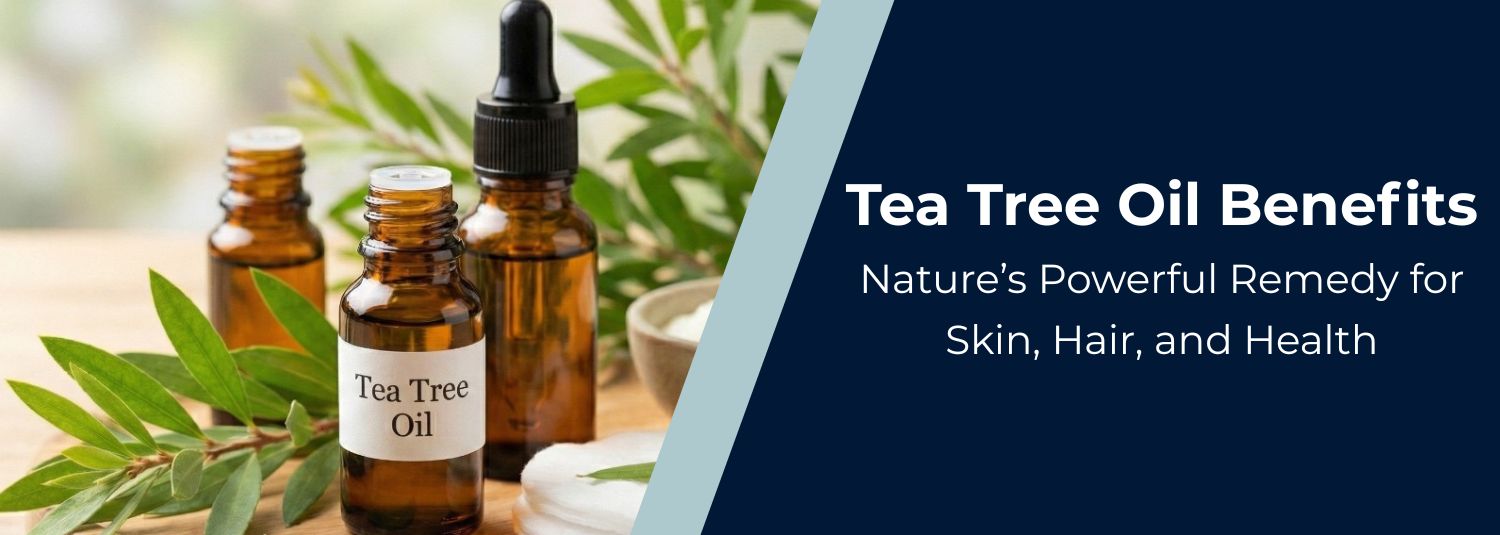
Tea Tree Oil — also known as Melaleuca Oil — is extracted from the leaves of the Melaleuca alternifolia tree, native to Australia.
For centuries, it’s been used by Aboriginal people for its antimicrobial, antifungal, and healing properties.
Today, it’s one of the most popular essential oils used in natural skincare, haircare, and aromatherapy.
Its main active ingredient, terpinen-4-ol, is known to kill bacteria, viruses, and fungi, making it a natural alternative to harsh chemicals.
Top 10 Benefits of Tea Tree Oil
Let’s explore how this small bottle of essential oil can offer big benefits for your skin, hair, and overall health.
1. Fights Acne and Breakouts
One of the most famous uses of tea tree oil is its ability to fight acne.
It helps reduce:
- Bacteria that cause pimples (Propionibacterium acnes)
- Inflammation and redness
- Sebum (oil) production
How to use:
Mix 1 drop of tea tree oil with 10 drops of a carrier oil (like coconut or jojoba oil) and apply to affected areas using a cotton swab.
Pro tip:
Always dilute tea tree oil — it’s strong and may irritate skin if used directly.
2. Controls Dandruff and Itchy Scalp
If your scalp feels dry or flaky, tea tree oil can help. Its antifungal properties fight dandruff-causing yeast (Malassezia).
How to use:
Add a few drops to your shampoo or mix with coconut oil and massage into your scalp. Rinse after 15 minutes.
Result:
Cleaner, fresher scalp and stronger, shinier hair.
3. Treats Fungal Infections (Nails & Feet)
Tea tree oil is a natural antifungal — effective for conditions like athlete’s foot, nail fungus, and ringworm.
How to use:
Apply diluted oil to affected areas twice daily. For nail fungus, use a cotton swab under the nail bed.
4. Relieves Congestion and Cough
Inhaling steam with tea tree oil can help clear nasal passages and relieve sinus congestion.
How to use:
Add 3–4 drops to hot water and inhale deeply (cover your head with a towel).
It acts as a natural decongestant and antimicrobial, supporting respiratory health.
5. Soothes Cuts, Wounds, and Bug Bites
Thanks to its antiseptic and anti-inflammatory properties, tea tree oil helps heal minor cuts, insect bites, and skin irritations faster.
How to use:
Mix with aloe vera gel or a carrier oil before applying.
6. Acts as a Natural Hand Sanitizer
Because it kills several types of bacteria and viruses, tea tree oil is a natural addition to DIY hand sanitizers and surface cleaners.
Fun Fact:
Studies show tea tree oil can neutralize E. coli and Staphylococcus aureus — common bacteria that cause illness.
7. Improves Skin Conditions like Eczema & Psoriasis
Tea tree oil reduces itching, dryness, and redness associated with eczema and psoriasis.
How to use:
Add 2–3 drops to a tablespoon of olive oil or coconut oil and gently apply to affected areas.
8. Helps Treat Oral Health Issues
Though not for swallowing, diluted tea tree oil mouth rinses can reduce bad breath and gum inflammation caused by bacteria.
How to use:
Add 1 drop to warm water, rinse for 30 seconds, and spit it out.
(Never swallow tea tree oil!)
9. Promotes Relaxation and Stress Relief
In aromatherapy, tea tree oil helps promote mental clarity, calmness, and focus.
When diffused, it purifies indoor air while reducing feelings of anxiety and fatigue.
How to use:
Add a few drops to a diffuser or warm bath.
10. Natural Household Cleaner
Tea tree oil’s antibacterial and antifungal nature makes it ideal for cleaning kitchen and bathroom surfaces.
DIY Cleaner Recipe:
Mix:
-
1 cup water
-
½ cup vinegar
-
10 drops tea tree oil
Spray on surfaces to disinfect naturally.
Precautions and Side Effects
Although tea tree oil is natural, it’s highly concentrated and must be used safely:
- Always dilute with a carrier oil before applying to skin.
- Avoid direct eye or mouth contact.
- Never ingest — it can be toxic if swallowed.
- Do a patch test before first use to check for allergies.
If you experience redness, itching, or rash, stop use immediately and consult a dermatologist.
Key Takeaways
- Tea tree oil is a natural antiseptic and antifungal essential oil.
- Effective for acne, dandruff, fungal infections, and wound care.
- Also supports respiratory health, oral hygiene, and mental relaxation.
- Must always be diluted before topical use.
- A safe, eco-friendly alternative for skincare and household cleaning.
Conclusion: A Drop of Nature’s Power
From fighting acne to cleansing the air, tea tree oil is a natural multitasker that deserves a place in every home.
Its broad antibacterial and antifungal effects make it a safe, effective, and versatile solution for skin, hair, and wellness.
Harness nature’s healing power — one drop at a time.
For more expert-backed health and wellness insights, visit Molecular Diagnostics — your trusted partner in preventive health and natural care.
Frequently Asked Questions
In News
Get Our Mobile App
for Easy Access
Book tests, view reports, and manage your health records on the go. Experience convenient healthcare with Molecular Diagnostics and Therapy.
- ✔ Book tests & home collection
- ✔ View reports instantly
- ✔ Track health history
- ✔ Get notifications & reminders
- ✔ Easy appointment management