Understanding Alzheimer’s Disease: Symptoms, Causes, Diagnosis, and Treatment
Talk to Health Expert

Dr. Nikunj Jain
Co-Founder and HOD - Nuclear Medicine ,MBBS, DRM, DNB, FEBNM, FANMB, Dip. CBNC
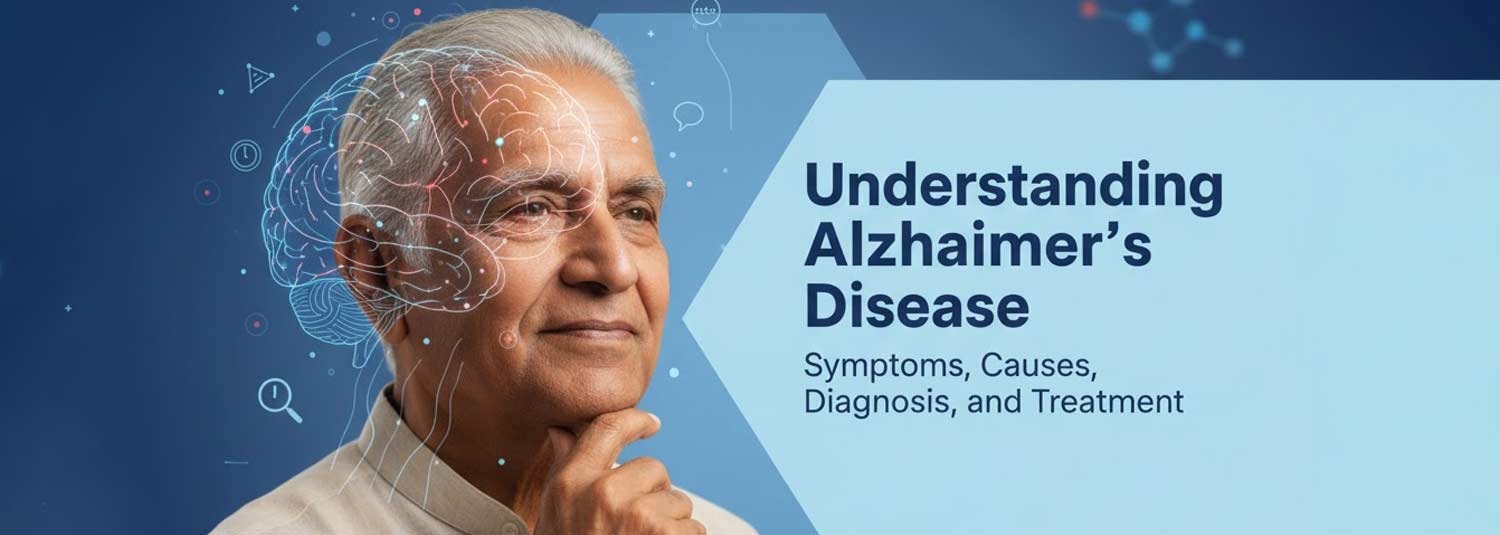
Alzheimer’s disease is one of the most common health challenges facing older adults today. Many people ask: “What is Alzheimer’s disease?” or “How do you know if memory loss is normal aging or something more serious?”
In this guide, we’ll walk through everything you need to know — the definition of Alzheimer’s, early warning signs, causes and risk factors, diagnosis process, and treatment options. We’ll also share important facts and figures, along with resources from trusted organizations. This article is written in a jargon-free, conversational tone, so you can understand Alzheimer’s disease without feeling overwhelmed.
What is Alzheimer’s Disease?
Alzheimer’s disease is a progressive brain disorder that slowly destroys memory, thinking, and the ability to carry out daily tasks. It’s the leading cause of dementia, accounting for 60–80% of dementia cases worldwide.
Unlike normal forgetfulness that comes with age, Alzheimer’s disease worsens over time. The changes start in the brain years before symptoms appear, and once they begin, they gradually interfere with independence and daily living.
Key Facts About Alzheimer’s Disease
- Over 7 million Americans currently live with Alzheimer’s. By 2060, this number could reach nearly 14 million.
- Globally, 55 million people live with dementia, and Alzheimer’s is the most common type.
- Women are more affected — nearly two-thirds of Alzheimer’s patients are female.
- Average life expectancy after diagnosis is 4 to 8 years, but some live 10 to 20 years with proper care.
- Alzheimer’s is the 6th leading cause of death in the United States.
- More than 11 million family members and friends act as unpaid caregivers to people with Alzheimer’s.
Causes and Risk Factors of Alzheimer’s Disease
Alzheimer’s doesn’t have a single cause. Instead, it develops due to a combination of factors:
- Age – Risk increases after 60.
- Genetics – Family history and specific genes (like APOE-ε4) increase chances.
- Brain Changes – Abnormal buildup of proteins (amyloid plaques and tau tangles) damages neurons.
- Lifestyle – Poor heart health, smoking, obesity, diabetes, and lack of exercise raise risk.
- Gender – Women are more vulnerable.
- Head Injuries – Traumatic brain injury may increase long-term risk.
Early Signs and Symptoms of Alzheimer’s Disease
Many people wonder: “What are the early symptoms of Alzheimer’s disease?” Here are the most common ones:
- Forgetting recent conversations, names, or events
- Asking the same questions repeatedly
- Difficulty planning or solving simple problems
- Trouble completing familiar tasks
- Misplacing items and being unable to retrace steps
- Confusion with time or place
- Personality or mood changes, such as withdrawal or irritability
As the disease progresses, symptoms become more severe:
- Struggling to recognize family and friends
- Speech and language difficulties
- Wandering, agitation, or aggression
- Needing help with daily tasks (eating, bathing, dressing)
- Loss of mobility and eventually complete dependence on caregivers
How is Alzheimer’s Diagnosed?
Since there is no single test for Alzheimer’s, doctors use several approaches:
- Medical history and symptom review
- Cognitive tests (e.g., MMSE, MoCA)
- Brain imaging (MRI, CT, PET scans)
- Blood tests to rule out other conditions
- Biomarker testing for amyloid and tau proteins (in advanced centers)
Early diagnosis is essential because it allows treatment to start sooner and gives families time to plan for the future.
Stages of Alzheimer’s Disease
Alzheimer’s progresses in three main stages:
- Mild/Early Stage – Memory lapses, difficulty managing finances, forgetting words.
- Moderate/Middle Stage – Greater confusion, changes in sleep patterns, difficulty recognizing loved ones.
- Severe/Late Stage – Loss of speech, mobility, swallowing difficulties, and total dependence on caregivers.
Treatment Options for Alzheimer’s Disease
While there is no cure for Alzheimer’s disease, treatments can help manage symptoms and improve quality of life.
Medications
- Cholinesterase inhibitors (Donepezil, Rivastigmine)
- Memantine for moderate to severe stages
- New therapies (such as anti-amyloid drugs) are under research and selective use
Lifestyle and Non-Drug Interventions
- Regular physical exercise
- Brain-stimulating activities (reading, puzzles, games)
- Healthy diet (Mediterranean diet, rich in vegetables, fish, nuts)
- Quality sleep and stress management
- Staying socially engaged
Supportive Care
- Creating a safe home environment
- Establishing daily routines
- Using reminders, calendars, and visual cues
- Caregiver education and support
Can Alzheimer’s Disease Be Prevented?
There is no guaranteed way to prevent Alzheimer’s, but research shows that a healthy lifestyle can lower risk:
- Maintain a balanced diet
- Exercise regularly
- Control blood pressure, cholesterol, and diabetes
- Stay socially and mentally active
- Protect your brain from injury
Trusted Organizations and Sources
For more information and support, visit these leading organizations:
- Alzheimer’s Association (alz.org)
- National Institute on Aging (nia.nih.gov)
- Alzheimer’s Disease International (alzint.org)
- BrightFocus Foundation (brightfocus.org)
- Alzheimers.gov
Frequently Asked Questions (Voice-Search Friendly)
- What is Alzheimer’s disease in simple words?
It’s a brain disorder that causes memory loss and affects daily life. - What are the first signs of Alzheimer’s disease?
Forgetting recent events, repeating questions, and confusion with time or place. - At what age does Alzheimer’s usually start?
Most cases start after age 60, though early-onset Alzheimer’s can appear earlier. - Is Alzheimer’s disease curable?
No, there is no cure yet, but treatments can slow progression. - How is Alzheimer’s diagnosed?
Through memory tests, brain scans, and medical history review. - How long can a person live with Alzheimer’s disease?
Typically 4 to 8 years after diagnosis, but some live 10–20 years. - What causes Alzheimer’s disease?
A mix of age, genetics, brain changes, and lifestyle factors. - How do you care for someone with Alzheimer’s?
Provide structure, ensure safety, offer emotional support, and manage daily tasks. - Can exercise help prevent Alzheimer’s?
Yes, regular exercise may lower risk and support brain health. - Where can I find Alzheimer’s support groups?
The Alzheimer’s Association and local healthcare organizations provide caregiver resources and support groups.
Conclusion
Alzheimer’s disease is a complex condition, but understanding it helps families and caregivers provide the best support. While we don’t yet have a cure, early detection, treatment, and lifestyle choices can make a big difference.
If you or a loved one shows symptoms of memory loss or confusion, consult a healthcare professional. Knowledge, awareness, and support are key in facing Alzheimer’s together.
In News
Get Our Mobile App
for Easy Access
Book tests, view reports, and manage your health records on the go. Experience convenient healthcare with Molecular Diagnostics and Therapy.
- ✔ Book tests & home collection
- ✔ View reports instantly
- ✔ Track health history
- ✔ Get notifications & reminders
- ✔ Easy appointment management