Vaccination: Importance, Types, and How It Protects Your Health
Talk to Health Expert

Dr. Nikunj Jain
Co-Founder and HOD - Nuclear Medicine ,MBBS, DRM, DNB, FEBNM, FANMB, Dip. CBNC
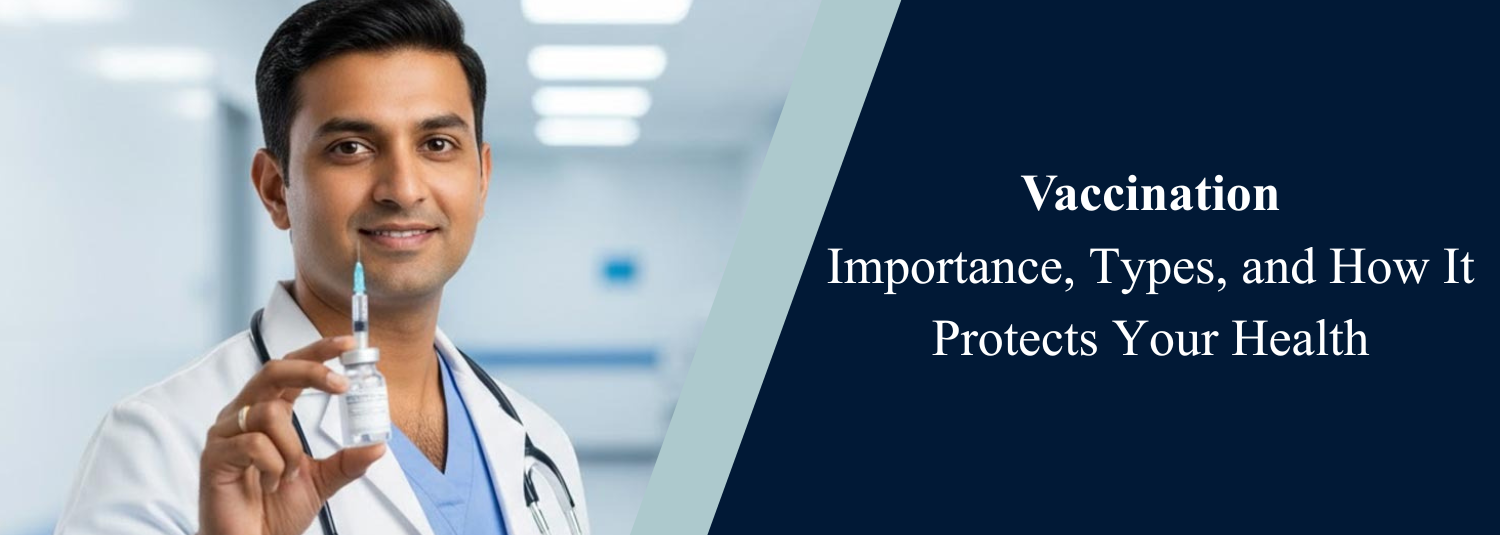
Vaccination is one of the greatest achievements of modern medicine. It has saved millions of lives by preventing deadly diseases, from smallpox to COVID-19. But how do vaccines actually work? Why are booster shots necessary? And what’s the difference between the types of vaccines available today?
Let’s decode the science behind vaccination, understand its types, and explore how it keeps both individuals and communities safe.
What Is Vaccination?
Vaccination is the process of administering a vaccine to help your body develop immunity against specific infections. Vaccines contain harmless versions (or parts) of a disease-causing microorganism — like a virus or bacterium. These “train” your immune system to recognize and fight the real infection if it ever enters your body.
In simple terms, vaccination prepares your immune system in advance, so it can protect you without you ever falling sick.
How Do Vaccines Work?
When you get vaccinated, your immune system recognizes the antigens (foreign substances) from the vaccine. In response, it produces antibodies — special proteins that can destroy or neutralize those antigens.
If your body encounters the real pathogen later, these antibodies quickly identify and destroy it. This response is called immunity.
Some vaccines provide lifelong protection (like the measles vaccine), while others require booster doses to maintain immunity (like the tetanus vaccine).
Types of Vaccines
Not all vaccines are created the same way. Modern medicine offers different types depending on the infection and immune response required.
1. Live Attenuated Vaccines
These contain a weakened form of the pathogen.
Examples: Measles, Mumps, Rubella (MMR), Chickenpox, and Yellow Fever vaccines.
Note: Not recommended for people with weak immune systems.
2. Inactivated Vaccines
These contain dead microorganisms or parts of them.
Examples: Polio (IPV), Hepatitis A, Rabies.
Benefit: Safe for people with compromised immunity.
3. Toxoid Vaccines
Instead of the microorganism, these use inactivated toxins produced by bacteria.
Examples: Tetanus and Diphtheria vaccines.
4. Subunit, Recombinant, or Conjugate Vaccines
These use specific parts (proteins or sugars) of the pathogen to trigger immunity.
Examples: HPV, Hepatitis B, and Pneumococcal vaccines.
5. mRNA Vaccines
A modern innovation that teaches cells to produce a harmless piece of the virus (like the COVID-19 spike protein) to trigger immunity.
Examples: Pfizer-BioNTech and Moderna COVID-19 vaccines.
6. Vector-Based Vaccines
These use a harmless virus (like an adenovirus) to deliver genetic material from the target pathogen.
Examples: Oxford-AstraZeneca COVID-19 vaccine.
Vaccination Schedule: From Birth to Adulthood
A proper immunization schedule ensures protection at every life stage.
In India, the National Immunization Schedule (NIS) recommends vaccines such as:
- At Birth: BCG, OPV (Polio), Hepatitis B
- 6 Weeks to 9 Months: DPT, IPV, Rotavirus, Measles
- 1–5 Years: MMR, Typhoid, DPT booster
- Adolescents: HPV (for girls), Tetanus booster
- Adults: Influenza, Hepatitis B, COVID-19 booster, etc.
Consult your healthcare provider for your personalized vaccination plan — especially if you have chronic illnesses or travel frequently.
Why Vaccination Is So Important
-
Prevents Life-Threatening Diseases
Vaccines have drastically reduced diseases like polio, diphtheria, and measles. For example, smallpox was eradicated worldwide thanks to global vaccination efforts. -
Protects Communities (Herd Immunity)
When most people are vaccinated, disease transmission drops — even protecting those who can’t be vaccinated, like newborns or immunocompromised individuals. -
Saves Healthcare Costs
Preventing diseases is far cheaper than treating them. Vaccination reduces hospitalization and long-term complications. -
Boosts Global Health
Vaccination programs prevent outbreaks, protect travelers, and support global health stability.
Common Myths vs. Facts About Vaccination
| Myth | Fact |
|---|---|
| Vaccines cause the diseases they prevent | Vaccines use inactive or weakened forms; they cannot cause the disease |
| Natural immunity is better | It comes with serious risks like infection or death |
| Vaccines cause autism | Numerous scientific studies have proven this false |
| Adults don’t need vaccines | Boosters and seasonal shots are crucial for adults too |
| Too many vaccines overload the immune system | The immune system can handle thousands of antigens daily |
Possible Side Effects and Safety
Most vaccines cause mild and short-lived side effects such as:
- Pain or swelling at the injection site
- Low-grade fever or fatigue
- Mild headache
Severe allergic reactions are extremely rare. Always inform your doctor about allergies or medical history before vaccination.
The Science Behind Immunization and Community Protection
When 80–90% of a population is immunized, it creates herd immunity — protecting even those who are unvaccinated. This principle is why vaccination campaigns are critical for eradicating diseases and preventing epidemics.
Vaccination and Modern Health Challenges
The COVID-19 pandemic highlighted how vital vaccination is for global health. Modern vaccines are now being developed for:
- Cancer prevention (HPV, Hepatitis B)
- Malaria
- RSV (Respiratory Syncytial Virus)
- Influenza variants
With ongoing research, personalized and genetic-based vaccines are expected to revolutionize preventive healthcare in the next decade.
Key Facts and Trusted Sources
- World Health Organization (WHO): Vaccines prevent 4–5 million deaths every year.
- Centers for Disease Control and Prevention (CDC): Recommends routine vaccination for all age groups.
- UNICEF: Vaccination is one of the safest and most cost-effective health interventions.
- Ministry of Health & Family Welfare (India): Oversees India’s Universal Immunization Programme (UIP).
FAQs About Vaccination
What is vaccination and how does it work?
Vaccination introduces harmless antigens into your body, helping your immune system learn to recognize and fight infections before they make you sick.
Why are vaccines important?
Vaccines protect you from serious diseases, prevent outbreaks, and save millions of lives globally every year.
What are the main types of vaccines?
They include live attenuated, inactivated, subunit, toxoid, mRNA, and vector-based vaccines.
Are vaccines safe for everyone?
Yes, vaccines go through rigorous testing and monitoring. However, people with specific health conditions should consult a doctor first.
How often should adults get vaccinated?
Adults need periodic boosters (like tetanus), annual flu shots, and specific vaccines based on age and health conditions.
Can vaccines cause side effects?
Minor side effects like mild fever or soreness are normal. Serious reactions are very rare.
What is herd immunity?
It’s when enough people are vaccinated to stop disease spread, protecting even the unvaccinated population.
Why do children need so many vaccines?
Children’s immune systems are still developing, and early vaccination helps protect them from potentially deadly infections.
Are COVID-19 vaccines safe?
Yes. All approved COVID-19 vaccines have been proven safe and effective in preventing severe illness and death.
Where can I get vaccinated in India?
Vaccines are available at government hospitals, health centers, and authorized private clinics nationwide.
Final Thoughts
Vaccination is not just a medical procedure — it’s a commitment to health and community safety. Whether it’s for your child, yourself, or your elderly parents, staying updated with vaccines is one of the most effective ways to protect your future.
If you’re unsure about your vaccination status, talk to your healthcare provider or book a preventive health checkup at Molecular Diagnostics to stay protected and informed.
In News
Get Our Mobile App
for Easy Access
Book tests, view reports, and manage your health records on the go. Experience convenient healthcare with Molecular Diagnostics and Therapy.
- ✔ Book tests & home collection
- ✔ View reports instantly
- ✔ Track health history
- ✔ Get notifications & reminders
- ✔ Easy appointment management