Dehydration Symptoms: How Much Water Is Enough?
Talk to Health Expert

Dr. Nikunj Jain
Co-Founder and HOD - Nuclear Medicine ,MBBS, DRM, DNB, FEBNM, FANMB, Dip. CBNC
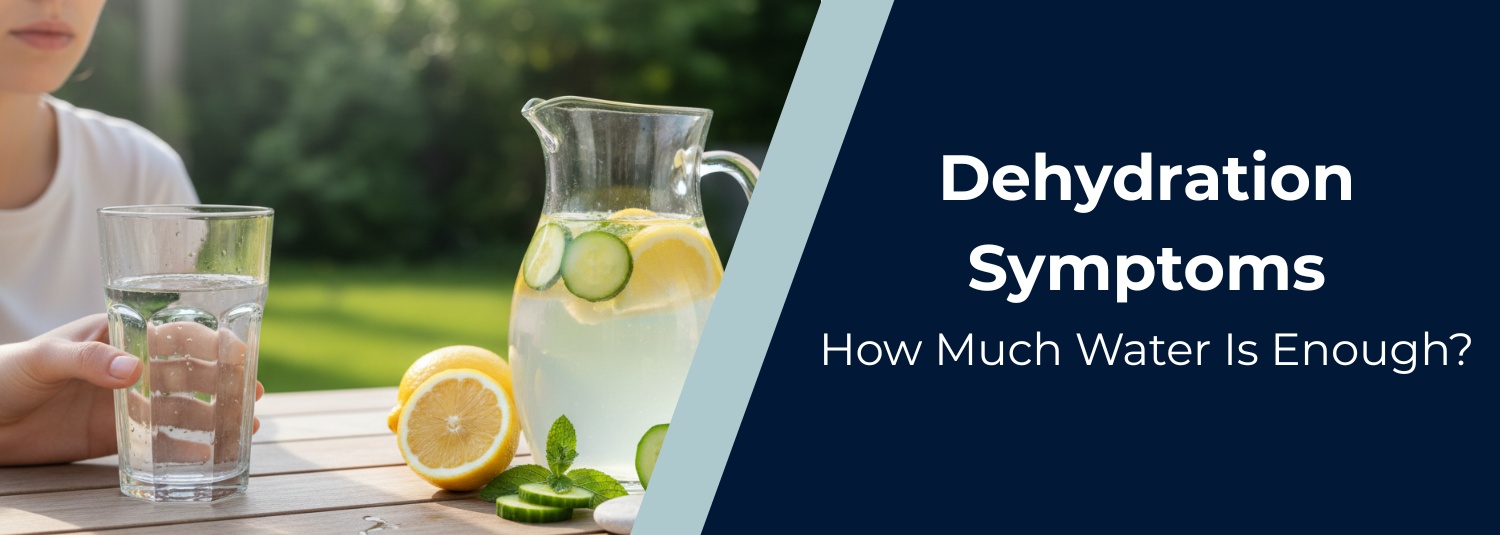
Water is the foundation of life. It keeps your body functioning smoothly — from digesting food and maintaining body temperature to protecting your organs and joints.
Yet, dehydration is one of the most common but most ignored health issues today. Many people mistake early signs like fatigue or dry skin as something else — when in reality, their bodies are simply craving water.
So, how do you know if you’re dehydrated? And how much water is “enough”?
Let’s dive into the science of hydration, early warning symptoms, and how to keep your body balanced.
What Is Dehydration?
Dehydration occurs when your body loses more fluids than it takes in — through sweating, urination, or even breathing.
Since the human body is about 60–70% water, losing even a small percentage can affect your energy, focus, and health.
Common Triggers of Dehydration:
- Not drinking enough water throughout the day
- Hot weather or excessive sweating
- Fever, vomiting, or diarrhea
- Certain medications (like diuretics)
- High caffeine or alcohol intake
- Intense workouts without fluid replacement
Early and Severe Symptoms of Dehydration
Recognizing the early signs of dehydration can help you act before it becomes serious.
Mild to Moderate Dehydration Symptoms:
- Dry mouth or sticky tongue
- Thirst and decreased urine output
- Dark yellow or strong-smelling urine
- Headache or dizziness
- Fatigue and sluggishness
- Dry or flaky skin
- Muscle cramps
- Poor concentration or irritability
Severe Dehydration Symptoms (Seek Immediate Help):
- Extremely dark urine or no urination for 8+ hours
- Rapid heartbeat or breathing
- Confusion or disorientation
- Fainting or dizziness when standing
- Sunken eyes or dry, shriveled skin
- Low blood pressure
If you or someone else experiences these symptoms, seek medical attention immediately. Severe dehydration can lead to heatstroke, kidney issues, or electrolyte imbalance.
How Much Water Do You Actually Need?
You’ve probably heard the classic “8 glasses a day” rule — but hydration isn’t one-size-fits-all.
The Right Water Intake Depends On:
- Age and gender
- Activity level
- Climate and temperature
- Overall health and medical conditions
According to the National Academies of Sciences, the general daily water intake is:
| Group | Recommended Daily Water (All Fluids) |
|---|---|
| Adult Men | About 3.7 liters (125 oz) |
| Adult Women | About 2.7 liters (91 oz) |
| Pregnant Women | About 3.0 liters (101 oz) |
| Breastfeeding Women | About 3.8 liters (128 oz) |
Remember: This includes all beverages (tea, juice, milk) and foods with high water content — not just plain water.
Foods That Keep You Hydrated
You don’t always need to drink plain water to stay hydrated!
Many fruits and vegetables contain high water content and essential electrolytes.
Top Hydrating Foods:
- Cucumber (96% water)
- Watermelon (92%)
- Tomatoes (94%)
- Lettuce (96%)
- Oranges and Grapefruit (86%)
- Yogurt and Soups (80%+)
Adding these to your diet can help you maintain hydration naturally throughout the day.
How Dehydration Affects Your Body
Even mild dehydration can affect how you feel and function.
Here’s what happens inside your body when you’re running low on fluids:
1. Brain and Mood
Dehydration reduces blood flow to the brain — causing headaches, fatigue, and mood swings.
2. Heart
The heart works harder to pump blood when you’re dehydrated, increasing your pulse and potentially causing dizziness.
3. Muscles
Lack of fluids leads to cramps, stiffness, and reduced physical performance.
4. Body Temperature
Dehydration limits your body’s ability to cool itself through sweating — increasing the risk of heatstroke.
5. Kidneys
Chronic dehydration can lead to kidney stones or urinary tract infections (UTIs).
How to Stay Hydrated Throughout the Day
Hydration is about consistency, not just drinking a big glass once in a while.
Here are some practical and science-backed ways to keep your fluid levels up:
- Start Your Day with Water
- Drink a glass right after waking up to rehydrate after 7–8 hours of sleep.
- Follow the 30-Minute Rule
- Drink water 30 minutes before meals to aid digestion and avoid overeating.
- Infuse for Flavor
- If plain water bores you, try lemon, cucumber, or mint-infused water.
- Use Hydration Reminders
- Apps or smart bottles can remind you to drink regularly throughout the day.
- Adjust Intake for Activity
- Drink before, during, and after workouts — especially in hot climates.
- Balance Electrolytes
- If you sweat heavily or are sick, include coconut water or electrolyte drinks to replace lost minerals.
When to See a Doctor
If dehydration becomes frequent or severe — even after drinking enough fluids — it may signal an underlying issue like:
- Diabetes
- Thyroid imbalance
- Kidney disorders
- Adrenal gland dysfunction
In such cases, consult a doctor and consider blood and urine tests to evaluate kidney and electrolyte health.
Hydration Myths Busted
Myth 1: You must drink 8 glasses of water daily.
Truth: Needs vary based on age, weather, and activity level.
Myth 2: Coffee and tea dehydrate you.
Truth: While caffeinated drinks are mild diuretics, they still contribute to your fluid intake.
Myth 3: Clear urine means you’re perfectly hydrated.
Truth: Pale yellow urine is ideal — completely clear may mean overhydration.
Conclusion: Listen to Your Body’s Thirst Signals
Hydration is one of the simplest and most effective ways to improve your health, focus, and energy.
Your body constantly gives you signals — thirst, fatigue, headaches — that it needs water.
By staying aware, eating hydrating foods, and maintaining consistent fluid intake, you can keep your body functioning at its best.
So the next time you feel tired or dizzy, reach for a glass of water — your body will thank you.
FAQs: Dehydration and Water Intake
What are the first signs of dehydration?
Thirst, dark urine, fatigue, and dry mouth are early warning signs.
How much water should I drink daily?
About 3.7 liters for men and 2.7 liters for women, including all fluids and foods.
Can you drink too much water?
Yes, overhydration can dilute sodium levels (hyponatremia), which is dangerous.
Does coffee count as water intake?
Yes, moderate coffee and tea contribute to your hydration levels.
What’s the best way to stay hydrated in summer?
Drink water frequently and eat fruits like watermelon and cucumber.
Is thirst a reliable indicator of dehydration?
Not always — by the time you feel thirsty, you’re already slightly dehydrated.
What’s the color of healthy urine?
Pale yellow indicates good hydration; dark yellow means drink more water.
Can dehydration cause headaches?
Yes, low fluid levels reduce brain oxygenation and cause headaches.
Does dehydration affect skin health?
Yes, it leads to dull, dry, and flaky skin.
When should I see a doctor for dehydration?
If you have dizziness, confusion, or very little urine output even after drinking fluids.
In News
Get Our Mobile App
for Easy Access
Book tests, view reports, and manage your health records on the go. Experience convenient healthcare with Molecular Diagnostics and Therapy.
- ✔ Book tests & home collection
- ✔ View reports instantly
- ✔ Track health history
- ✔ Get notifications & reminders
- ✔ Easy appointment management