HbA1c vs Fasting Blood Sugar: Which Test Is More Accurate for Diabetes?
Talk to Health Expert

Dr. Nikunj Jain
Co-Founder and HOD - Nuclear Medicine ,MBBS, DRM, DNB, FEBNM, FANMB, Dip. CBNC
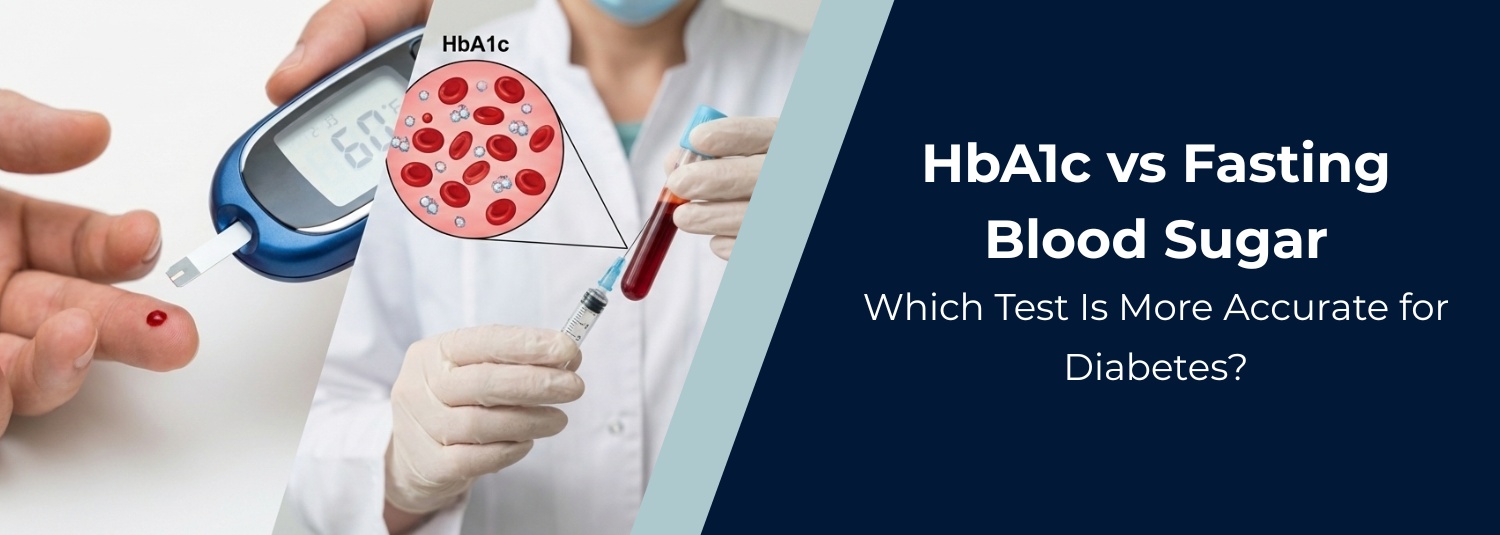
Blood sugar testing is a cornerstone of diabetes diagnosis and management.
But with so many test options — especially the HbA1c test and Fasting Blood Sugar (FBS) — it’s easy to wonder which one gives the most accurate picture of your health.
In short:
- The Fasting Blood Sugar test shows your glucose level at one moment in time.
- The HbA1c test reflects your average blood sugar levels over 2–3 months.
Understanding how these two differ helps you (and your doctor) make better decisions about prevention, diagnosis, and treatment.
What Is the Fasting Blood Sugar (FBS) Test?
The Fasting Blood Sugar (FBS) test measures the amount of glucose in your blood after fasting (not eating or drinking anything except water) for at least 8–10 hours.
Normal FBS Range (According to ADA):
| Category | Blood Sugar Level (mg/dL) |
|---|---|
| Normal | 70 – 99 |
| Prediabetes | 100 – 125 |
| Diabetes | ≥126 (on two or more occasions) |
Purpose of FBS Test:
- To detect diabetes or prediabetes early
- To monitor sugar control in diagnosed diabetics
- To assess insulin resistance and fasting glucose metabolism
Limitations of FBS:
- Reflects only your current blood sugar level
- Can be influenced by stress, illness, or temporary diet changes
- Misses long-term fluctuations and hidden spikes
What Is the HbA1c Test?
The HbA1c test, also called the Glycated Hemoglobin Test, measures the percentage of hemoglobin coated with sugar (glucose) in your red blood cells.
Because red blood cells live for about 90–120 days, HbA1c gives an average of your blood sugar levels over the past 3 months.
Normal HbA1c Range:
| Category | HbA1c Percentage (%) |
|---|---|
| Normal | < 5.7% |
| Prediabetes | 5.7 – 6.4% |
| Diabetes | ≥ 6.5% |
Purpose of HbA1c Test:
- To monitor long-term glucose control
- To evaluate diabetes management effectiveness
- To help predict risks of diabetes-related complications
Limitations of HbA1c:
- May be less accurate in conditions like anemia, kidney disease, or hemoglobin variants
- Doesn’t capture daily sugar fluctuations
- May not be ideal for pregnant women or children
HbA1c vs Fasting Blood Sugar: Key Differences
| Parameter | HbA1c Test | Fasting Blood Sugar (FBS) |
|---|---|---|
| What It Measures | Average glucose over 2–3 months | Glucose at a single point in time |
| Fasting Required? | No | Yes (8–10 hours) |
| Best For | Monitoring long-term diabetes control | Detecting immediate glucose spikes |
| Accuracy | More stable over time | Can vary day-to-day |
| Frequency | Every 3–6 months | As advised or routine checkups |
| Cost | Slightly higher | Generally affordable |
| Used For | Long-term assessment | Screening & diagnosis |
Quick Summary:
If FBS is a snapshot, HbA1c is like a movie of your blood sugar over time.
Which Test Is More Accurate for Diagnosing Diabetes?
Both tests are essential — but HbA1c offers a more comprehensive picture because it tracks your long-term sugar patterns, not just a single reading.
However:
- For initial screening, doctors often recommend FBS + HbA1c together.
- For ongoing monitoring, HbA1c is preferred to evaluate how well diabetes is controlled.
The American Diabetes Association (ADA) recommends HbA1c testing at least twice a year for diabetic patients — and every 6 months for those at risk.
When Should You Take These Tests?
You should consider an HbA1c or FBS test if you experience any of the following:
- Excessive thirst or urination
- Constant fatigue
- Blurred vision
- Unexplained weight loss
- Frequent infections
- Family history of diabetes
- Overweight or sedentary lifestyle
Preventive testing is especially important if you’re above 35 years old or have risk factors like PCOS, thyroid issues, or high blood pressure.
How to Maintain Healthy Blood Sugar and HbA1c Levels Naturally
- Eat a balanced diet — Focus on fiber-rich foods, whole grains, and protein.
- Avoid refined sugar — Limit sugary drinks, desserts, and processed foods.
- Stay active — 30 minutes of brisk walking or yoga daily improves insulin sensitivity.
- Sleep well — 7–8 hours of rest helps regulate hormones and sugar metabolism.
- Stay hydrated — Water helps flush out excess glucose.
- Monitor regularly — Keep a log of your test results to track trends.
Conclusion: Both Tests Matter — But HbA1c Gives the Bigger Picture
While Fasting Blood Sugar provides instant insights, HbA1c reveals your long-term glucose trends — making it more valuable for diabetes monitoring.
Together, they give a full picture of your blood sugar control and help prevent serious complications.
So if you want to understand your true sugar health, don’t rely on just one test — do both.
Stay informed, stay proactive, and keep your health in balance with Molecular Diagnostics.
Frequently Asked Questions
In News
Get Our Mobile App
for Easy Access
Book tests, view reports, and manage your health records on the go. Experience convenient healthcare with Molecular Diagnostics and Therapy.
- ✔ Book tests & home collection
- ✔ View reports instantly
- ✔ Track health history
- ✔ Get notifications & reminders
- ✔ Easy appointment management