Thyroid Disorders: Signs, Tests, and Natural Management Tips
Talk to Health Expert

Dr. Nikunj Jain
Co-Founder and HOD - Nuclear Medicine ,MBBS, DRM, DNB, FEBNM, FANMB, Dip. CBNC
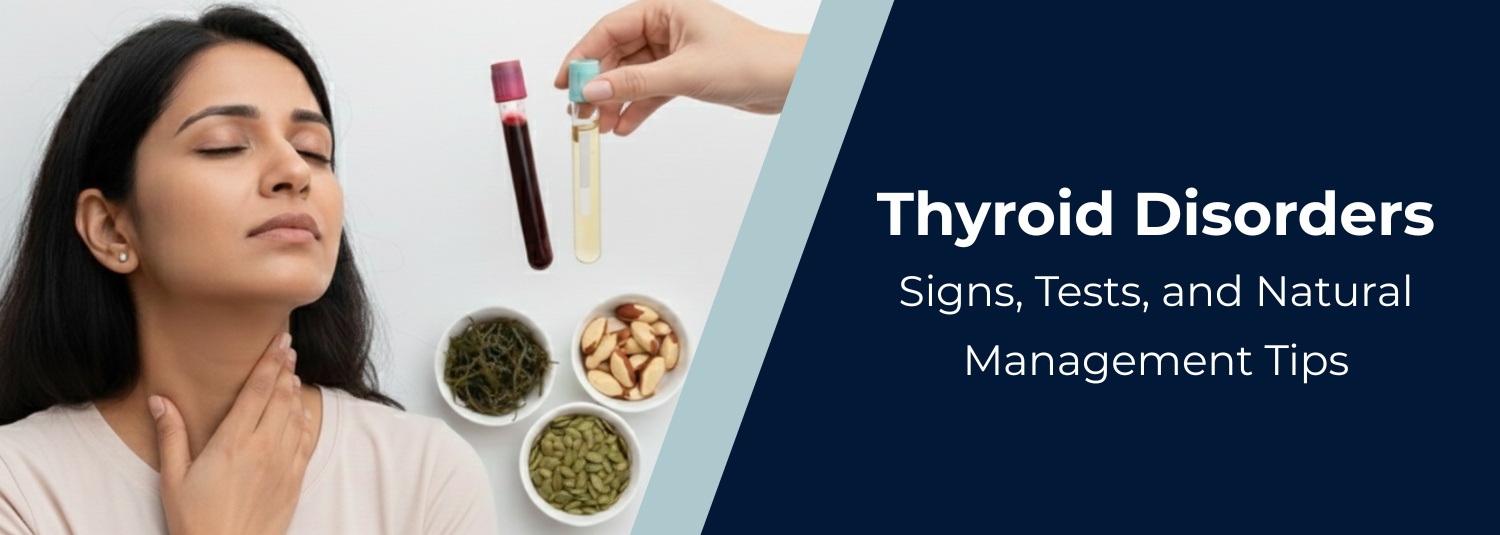
The thyroid may be small — just a butterfly-shaped gland at the base of your neck — but it plays a massive role in keeping your body running smoothly. It controls metabolism, energy, mood, heart rate, and even body temperature.
When the thyroid stops functioning properly, it can throw your entire system off balance. Millions of people, especially women, live with thyroid disorders — often without realizing it.
In this guide, we’ll help you understand:
- Common thyroid symptoms
- Thyroid blood tests (T3, T4, TSH) and their normal ranges
- Natural lifestyle tips to support thyroid function
What Does the Thyroid Gland Do?
Your thyroid produces two key hormones — T3 (triiodothyronine) and T4 (thyroxine) — which regulate how your body uses energy. These hormones affect nearly every organ system, including:
- Brain and mood
- Heart rate
- Digestion
- Reproductive system
- Skin and hair health
When the thyroid produces too much or too little hormone, it leads to hyperthyroidism or hypothyroidism, respectively.
Types of Thyroid Disorders
1. Hypothyroidism (Underactive Thyroid)
Your thyroid doesn’t produce enough hormones.
Common causes: Hashimoto’s disease, iodine deficiency, or medications.
Symptoms include:
- Fatigue and sluggishness
- Weight gain
- Dry skin and hair loss
- Depression or low mood
- Sensitivity to cold
- Constipation
2. Hyperthyroidism (Overactive Thyroid)
Your thyroid produces too much hormone.
Common causes: Graves’ disease, thyroid nodules, or inflammation.
Symptoms include:
- Unintentional weight loss
- Rapid heartbeat or palpitations
- Nervousness or anxiety
- Excessive sweating
- Trembling hands
- Trouble sleeping
3. Goiter and Thyroid Nodules
- Goiter: An enlarged thyroid, often due to iodine deficiency.
- Nodules: Small lumps that can form inside the thyroid; most are harmless but should be checked.
4. Thyroid Cancer
While less common, thyroid cancer can occur, especially in women. Most cases are treatable when diagnosed early through ultrasound and biopsy.
Thyroid Function Tests: T3, T4, and TSH Explained
Thyroid blood tests are the most accurate way to detect thyroid disorders. These measure the levels of hormones your thyroid and pituitary gland produce.
| Test | What It Measures | Normal Range | What High/Low Means |
|---|---|---|---|
| TSH (Thyroid Stimulating Hormone) | Produced by the pituitary gland to regulate thyroid function | 0.4 – 4.5 mIU/L | High TSH = Hypothyroidism; Low TSH = Hyperthyroidism |
| Free T4 (Thyroxine) | Main hormone secreted by thyroid | 0.8 – 2.0 ng/dL | Low = Hypothyroidism; High = Hyperthyroidism |
| Free T3 (Triiodothyronine) | Active form of thyroid hormone | 2.3 – 4.2 pg/mL | Low = Hypothyroidism; High = Hyperthyroidism |
| Anti-TPO Antibodies | Checks for autoimmune thyroid disease | < 35 IU/mL | High = Hashimoto’s or Graves’ disease |
You can get a complete thyroid profile test (T3, T4, TSH, and antibodies) at Molecular Diagnostics to assess your thyroid health accurately.
Common Signs You Should Get Tested
Wondering if you should check your thyroid? You might, if you experience:
- Unexplained weight changes
- Fatigue or low energy
- Hair thinning or loss
- Irregular menstrual cycles
- Mood swings or anxiety
- Puffy face or swelling in the neck
Thyroid symptoms can often mimic stress, menopause, or nutritional deficiencies — so a blood test is the only way to be sure.
Natural Management Tips for Thyroid Health
Medication is often necessary for diagnosed thyroid disorders, but lifestyle and nutrition play a major supportive role. Here’s how to take care of your thyroid naturally:
1. Get Enough Iodine — But Not Too Much
Iodine is essential for making thyroid hormones. However, too much iodine can also trigger thyroid imbalance.
Sources: Iodized salt, seaweed, fish, and dairy products.
2. Balance Selenium and Zinc Levels
These minerals help activate thyroid hormones.
Good sources:
- Selenium: Brazil nuts, eggs, sunflower seeds
- Zinc: Pumpkin seeds, lentils, chickpeas
3. Avoid Processed Foods and Excess Sugar
High sugar and processed foods increase inflammation, which can worsen thyroid symptoms. Focus on whole foods, lean proteins, and plenty of vegetables.
4. Get Enough Vitamin D
Low vitamin D levels are linked to autoimmune thyroid disease.
Spend 15–20 minutes in sunlight daily or consider a Vitamin D test and supplement if required.
5. Manage Stress
Stress hormones (like cortisol) can disrupt thyroid function.
Try meditation, yoga, or even short walks to keep stress under control.
6. Sleep and Exercise Matter
A good night’s rest (7–8 hours) and moderate exercise (like brisk walking or swimming) help regulate metabolism and hormone balance.
Understanding Test Reports and Next Steps
Once your test results are ready:
- High TSH + Low T3/T4 = Hypothyroidism
- Low TSH + High T3/T4 = Hyperthyroidism
Your doctor may recommend:
- Thyroxine medication (for hypothyroidism)
- Antithyroid drugs or radioiodine therapy (for hyperthyroidism)
It’s important to retest every 6–12 months to ensure your levels remain stable.
Conclusion: Take Charge of Your Thyroid Health
Your thyroid may be small, but its impact is huge. Recognizing symptoms early and getting the right thyroid function tests (T3, T4, TSH) can prevent complications and improve your quality of life.
Alongside medical advice, maintaining a balanced diet, managing stress, and checking your vitamin and mineral levels can help you naturally support thyroid health.
Book a Thyroid Function Test today at Molecular Diagnostics — your trusted partner in accurate diagnosis and preventive care.
Frequently Asked Questions
In News
Get Our Mobile App
for Easy Access
Book tests, view reports, and manage your health records on the go. Experience convenient healthcare with Molecular Diagnostics and Therapy.
- ✔ Book tests & home collection
- ✔ View reports instantly
- ✔ Track health history
- ✔ Get notifications & reminders
- ✔ Easy appointment management